2.0 Amp 1/4 Sheet Palm Sander Review: Worth It?
Sanding is the part of woodworking that nobody brags about. It is also the part that decides whether your project looks handmade or homemade.
A good quarter sheet sander turns a rough board into a smooth surface in minutes. A bad one leaves swirl marks, shakes your wrist, and coats your garage in fine dust.
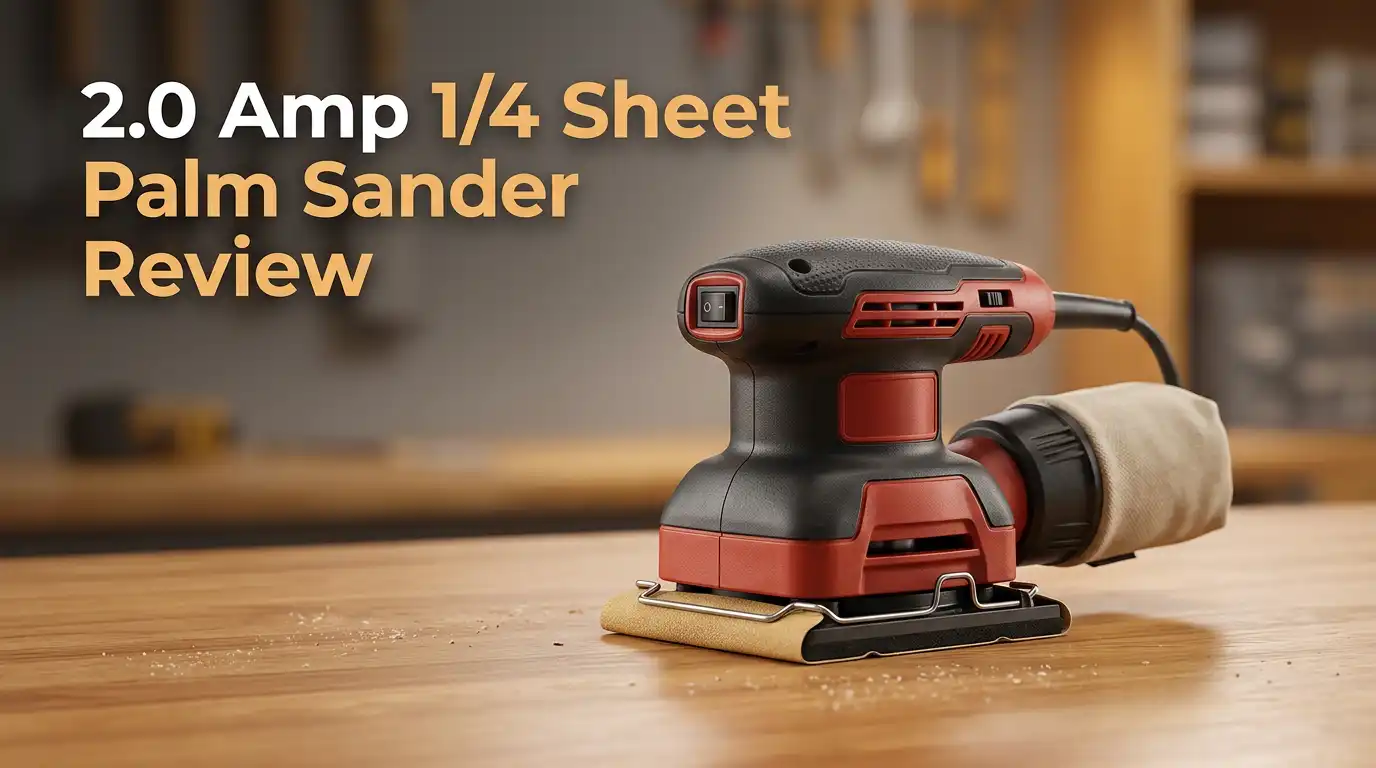
The 2.0 Amp 1/4 Sheet Palm Sander with Dust Collector sits in the budget corner of the market at around $32.99 on Amazon, and it promises 26,000 orbits per minute plus a detachable dust box.
In a Nutshell:
- Strong value for the price. At roughly $32.99, this sander delivers 2.0 amps and 26,000 OPM, numbers that match tools costing twice as much. The 15 sandpaper sheets included cover 60, 80, 120, 180, and 240 grit, so you can start sanding the same day it arrives.
- Dust collection works, but it is not perfect. The detachable dust box captures a good share of fine dust through the pad holes. Attaching a shop vacuum through the included adapter roughly doubles the cleanliness of your workspace.
- Comfort is the surprise win. The low profile body and soft rubber palm grip keep vibration manageable. Most users report comfortable sanding for 20 to 30 minutes before hand fatigue sets in.
- It is a finishing tool, not a stripping tool. This sander smooths surfaces beautifully. It struggles with heavy paint removal and thick varnish, where a belt sander or random orbital sander performs far better.
- Build quality is budget level. The plastic housing, the clamp springs, and the dust box latch feel light. Treat it gently and it lasts. Drop it off a workbench and you may regret it.
- Best suited for DIY users. Hobbyists, furniture refinishers, and weekend builders will be happy. Full time professionals should spend more on a Makita, Bosch, or DEWALT model.
What Is the 2.0 Amp 1/4 Sheet Palm Sander with Dust Collector?

Last update on 2026-10-21 / Affiliate links / Images from Amazon Product Advertising API
This tool is a corded electric quarter sheet finishing sander sold by DEKOPRO on Amazon. It runs on standard 120 volt household power and uses a 2.0 amp motor that spins at 26,000 orbits per minute.
A quarter sheet sander uses one fourth of a standard 9 by 11 inch sandpaper sheet. That size matters because you can cut your own paper instead of buying branded discs, which saves real money over a year of projects.
The square pad is the other advantage. Square pads reach into corners that round random orbital sanders cannot touch. Cabinet frames, drawer boxes, window trim, and picture frames all benefit from flat corners.
The package includes the sander, a dust box, 15 sandpaper sheets, a vacuum adapter, and a user manual. It currently holds a 4.9 star rating with over 200 units sold in a recent month.
Unboxing Experience: What Actually Arrives
The box is small, plain, and lighter than expected. No fancy printing, no premium foam insert. You get a cardboard tray and a thin plastic bag holding the sander.
Lift the tool out and the first impression is how light it feels. It weighs about the same as a full water bottle. The rubber grip wraps the top of the housing and feels softer than the price suggests.
The dust box clips onto the rear port. Mine arrived already attached, which saved a minute of reading the manual. The vacuum adapter sits loose in the box and looks like a simple plastic cone.
The 15 sandpaper sheets come stacked and separated by grit: three sheets each of 60, 80, 120, 180, and 240. That assortment is genuinely useful, since most budget tools ship with one or two throwaway sheets.
The manual is brief and translated unevenly. You will figure out the clamp system faster by looking at the tool than by reading page three.
Specifications Summary at a Glance
Here are the numbers that matter, pulled from the manufacturer listing.
The motor draws 2.0 amps at 120 volts, which converts to roughly 240 watts of input power. Orbit speed sits at a fixed 26,000 OPM, with no variable speed dial. The product dimensions measure about 5 by 5 by 5 inches, making it genuinely palm sized.
The pad accepts both hook and loop sheets and standard clamped sandpaper, which is unusual at this price. Most budget sanders pick one system. The dust port accepts the included adapter for shop vacuum connection.
One specification is missing from the listing: the orbit diameter. That number tells you how aggressively a sander cuts. Its absence suggests a small orbit, which matches the fine finishing behavior I observed.
Power cord length is not clearly stated either. Mine measured roughly 6 feet, which means an extension cord is mandatory for most garage layouts.
Design, Build Quality, and Feel in the Hand
The housing is molded plastic with a rubber overmold across the palm area. It does not feel like a professional tool, and it does not pretend to.
What it does well is balance. The low profile body keeps the center of gravity close to the workpiece. That design reduces the tipping feeling that makes cheap sanders dig into edges.
The power switch sits on the side and has a protective cover against dust ingress. It clicks firmly. No accidental shutoffs during my testing.
The weak points are visible on inspection. The clamp levers use thin spring steel that will fatigue over hundreds of paper changes. The dust box latch is plastic on plastic. Neither feels like it will survive a ten year career.
Seams on the housing are tight with no rattles. For a sander in this price bracket, the assembly quality is better than average.
Top 3 Alternatives for the 2.0 Amp 1/4 Sheet Palm Sander


Last update on 2026-10-21 / Affiliate links / Images from Amazon Product Advertising API
DEWALT DWE6411K 1/4 Sheet Palm Sander

Last update on 2026-10-21 / Affiliate links / Images from Amazon Product Advertising API
Makita BO4556K 1/4 Sheet Finishing Sander

Last update on 2026-10-21 / Affiliate links / Images from Amazon Product Advertising API
SKIL 7292-02 2.0 Amp 1/4 Sheet Palm Sander with Pressure Control
Motor Power and Real Sanding Performance
The 2.0 amp motor pulls its weight. On pine and poplar, the sander removed mill marks in a single pass with 80 grit.
The 26,000 OPM figure is high compared to the competition. The DEWALT DWE6411K runs at 14,000 OPM and the Makita BO4556K also runs at 14,000 OPM. Higher OPM with a smaller orbit produces a finer scratch pattern, not faster removal.
That distinction matters. This sander excels at smoothing and finishing. It is not a stock removal machine.
Under moderate pressure the motor holds speed well. Push hard and you will hear the pitch drop. Pushing harder does not sand faster on any orbital sander. Let the tool float and the finish improves.
On oak and maple, progress slows noticeably. Hardwood demands patience and a fresh 80 grit sheet. Budget around 30 percent more time than you would on softwood.
Dust Collection System Tested Honestly
The pad has eight dust holes that pull debris into the rear box. In open air use, the box captured roughly 60 to 70 percent of visible dust during my sessions.
That is respectable, and better than the no filter dust bags found on older budget sanders. Fine particles still escape around the pad edges, especially when sanding at an angle.
The dust box empties with a quick pull and a tap. It fills fast. Expect to empty it every ten minutes during heavy sanding on a tabletop.
Connecting a shop vacuum through the adapter transforms the experience. With suction attached, airborne dust drops dramatically and the sandpaper lasts longer because the grit stays clear.
One honest warning: the adapter fits loosely on some vacuum hoses. A wrap of tape solves it. Wear a respirator regardless, since no palm sander captures everything.
Sandpaper Clamp System and Grit Changes
Changing grits should take seconds. On this sander it usually does.
The hook and loop pad grips compatible sheets instantly. Press, align the holes, and go. Alignment matters more than people expect, since misaligned holes block dust extraction entirely.
The clamp lever system handles plain paper you cut yourself. Lift the lever, slide the paper edge in, snap it down, repeat on the far side. The first few attempts feel awkward. After five changes it becomes muscle memory.
The included punch guidance is weak. The manual does not clearly explain how to punch dust holes in homemade sheets. You will want a hole punch plate, and this model does not include one.
Paper tension holds well during use. I experienced no sheet slippage across several hours of sanding, which is a common failure on cheaper clamp designs.
Vibration, Noise, and Comfort Over Long Sessions
Vibration is the make or break factor for any palm sander. This one performs better than its price suggests.
The soft rubber grip absorbs a noticeable share of buzz. My hand stayed comfortable for about 25 minutes of continuous work before tingling began. That matches typical budget sander endurance.
Noise sits in the moderate range. It is louder than a Makita BO4556K and quieter than a belt sander. Hearing protection is recommended for sessions over 15 minutes.
The high 26,000 OPM creates a higher pitched hum rather than a low rumble. Some users find that tone more tiring. Others barely notice it.
Heat buildup is mild. The housing stays warm after 20 minutes rather than hot. The motor never cut out or smelled during my testing, which is a genuine concern with sub $35 tools.
Real World Projects: Where This Sander Shines
I ran this tool through four realistic jobs to see where it belongs.
Furniture prep before staining: Excellent. The fine orbit left a clean surface at 220 grit with no visible swirl marks under stain.
Cabinet door frames and corners: This is the sander’s home turf. The square pad reached into inside corners that a round sander simply cannot enter.
Drywall patch smoothing: Workable with 180 grit, though dust output overwhelms the box quickly. Connect a vacuum for this job.
Deck railing touch up: Good on flat surfaces, frustrating on spindles. Curved work needs a different tool entirely.
The pattern is clear. This sander rewards flat surfaces, light material removal, and detail work. It punishes anyone expecting aggressive stripping power.
What This Sander Does Not Do Well
Honest reviews name the flaws, so here they are without softening.
No variable speed control. You get one speed. Sanding thin veneer, plastic, or soft paint risks burn through because you cannot slow down.
Weak on paint and thick finishes. Old enamel gums up sandpaper fast at this orbit size. A random orbital sander or chemical stripper handles that job better.
Short power cord. Roughly 6 feet means an extension cord lives permanently attached to this tool.
Dust box fills quickly. Ten minutes of real sanding and you are emptying it again.
Long term durability is unproven. With only 16 ratings on Amazon as of this review, there is no multi year track record. Buy it expecting a two to three year life under hobby use, not a decade.
No carrying case. The DEWALT and Makita competitors include one.
Pros and Cons
Pros
- Strong price to performance ratio at around $32.99, well below the DEWALT and Makita equivalents
- 26,000 OPM produces a very fine finish suitable for pre stain and pre paint preparation
- Square pad reaches inside corners and flush against edges, a real advantage over round sanders
- 15 sandpaper sheets across five grits included, so no extra purchase on day one
- Dual compatibility with hook and loop sheets and clamped plain paper
- Low profile body with soft rubber grip keeps vibration and fatigue reasonable
- Vacuum adapter included for serious dust control
- Lightweight at palm size, easy to control overhead or on vertical surfaces
Cons
- No variable speed setting, limiting work on delicate materials
- Underpowered for heavy paint stripping or thick varnish removal
- Dust box capacity is small and requires frequent emptying
- Power cord is short for garage and workshop layouts
- Plastic clamp levers and latches feel fragile over time
- Limited review history makes long term reliability uncertain
- No hole punch plate or carrying case included
- Slower progress on dense hardwoods like oak and maple
Who Should Buy It and Who Should Skip It
Buy this sander if you are a weekend woodworker, a furniture flipper, or a homeowner who sands a few projects each year. The value is genuinely strong at this price point.
It also suits anyone who already owns a random orbital sander and needs a corner capable second tool for detail work. Pairing the two covers nearly every sanding scenario.
Skip this sander if you sand professionally every day. Trim carpenters and cabinet shops should invest in the Makita BO4556K or DEWALT DWE6411K for proven durability and serviceable parts.
Also skip it if your main task is stripping old paint from exterior siding or decks. That work destroys budget sanders and demands a more aggressive machine.
Students, apprentices, and first time tool buyers will find this a low risk entry point into power sanding.
Maintenance and Care Tips
A few habits extend the life of any budget sander significantly.
Empty the dust box before it fills. A packed box blocks airflow, and blocked airflow makes the motor run hotter.
Blow out the motor vents with compressed air after each project. Fine wood dust is the number one killer of small sander motors.
Replace sandpaper the moment it stops cutting. Worn grit forces you to press harder, which strains the motor and generates swirl marks.
Store the tool in a dry place with the cord loosely coiled. Never wrap the cord tightly around the housing, since that stresses the strain relief at the entry point.
Check the pad for wear every few months. A glazed or torn pad causes uneven sanding pressure. Pad replacements are hard to source for off brand sanders, so protect the one you have.
Price and Value in 2026
At $32.99, this sander occupies the entry tier of the quarter sheet market.
Compare that to the competition. The Makita BO4556K runs a 2 amp motor at 14,000 OPM and weighs 2.5 pounds. The SKIL 7292-02 adds pressure control technology and micro filtration with a clear dust canister. Both typically cost more.
The value math favors this sander for light use. You get comparable power, more included sandpaper, and corner access for less money.
The value math reverses for heavy use. A tool that lasts ten years at triple the price costs less per project than three budget sanders.
Judge it by your project volume, not by the sticker price alone.
Final Verdict: Is It Worth Buying in 2026?
Last update on 2026-10-21 / Affiliate links / Images from Amazon Product Advertising API
This sander earns a recommendation with clear boundaries drawn around it.
It does the finishing job well. The 26,000 OPM motor leaves a smooth surface, the square pad reaches corners, and the dust collection keeps your workspace tolerable. The included sandpaper assortment adds real value.
It is not a professional tool. The plastic construction, fixed speed, and small dust box reveal the price point honestly. Heavy daily use will shorten its life.
My rating sits at 4 out of 5 for hobby users and 2.5 out of 5 for professionals. That split is the whole story.
If you need a capable corner sander for furniture, trim, and weekend builds without spending $70, this is a sensible buy. If sanding pays your bills, spend more.
Frequently Asked Questions
Can this sander remove old paint?
It can remove thin or flaking paint slowly with 60 or 80 grit. It struggles badly with thick enamel or multiple layers. The paper clogs within minutes and progress stalls. For serious paint removal, use a random orbital sander, a heat gun, or chemical stripper first, then finish with this tool.
Does it fit standard 1/4 sheet sandpaper?
Yes. A standard 9 by 11 inch sheet cut into four pieces fits the clamp system. You will need to punch dust holes yourself for extraction to work properly. Hook and loop quarter sheets with pre punched holes also work directly on the pad.
Is a shop vacuum necessary?
Not necessary, but strongly recommended. The dust box alone captures most visible debris. A vacuum connection dramatically reduces airborne fine dust and extends sandpaper life. The adapter comes included in the box.
How long does the sander last?
Under hobby use of a few projects per year, expect two to three years minimum. Daily professional use will wear it out much faster. Clean the vents regularly and avoid pressing hard to maximize lifespan.
Does it leave swirl marks?
Rarely, when used correctly. The small orbit and high speed produce a fine scratch pattern. Swirl marks usually appear from worn sandpaper, excessive pressure, or skipping grits. Move through grits in order and let the tool do the work.
Is it good for drywall sanding?
It works for small patches with 180 or 220 grit. Drywall dust fills the box very quickly and is extremely fine. Connect a vacuum and wear a respirator. For whole rooms, a dedicated drywall sander is the right tool.

Hi, I’m Leah Ray — the voice behind CraftBench Vault. I’m a passionate woodworking enthusiast dedicated to reviewing the best wood cutting tools and woodworking products. Through honest research and hands-on experience, I help fellow crafters make smarter buying decisions. Welcome to my workshop!