WEN LA3421 8″ x 13″ Variable Speed Mini Lathe Review 2026
Turning your own pens, bottle stoppers, and chess pieces sounds expensive until you price a mini lathe. The WEN LA3421 sits at the friendly end of that price list, and it keeps showing up in beginner shopping carts for a reason.
It is small, light, and it spins fast enough to leave a clean finish on hard maple. But a low price always hides a trade off somewhere.
This review digs into the motor, the castings, the tool rests, and the real problems owners report after a year of chips flying. You will learn exactly what this machine handles, where it quits, and whether your first project list matches its limits.
In a Nutshell:
- This is a wood lathe, not a metal lathe. The LA3421 turns pens, bowls, cups, handles, and chess pieces. It will not cut steel or aluminum like a 7×12 metal lathe does. Shoppers mix these categories up constantly, so check your project list first.
- The capacity is 8 inches of swing over the bed and 13 inches between centers. That covers pen blanks, small bowls, tool handles, and spindles. Longer table legs and large salad bowls need a bigger machine.
- Speed runs from 750 to 3200 RPM with a dial, and the soft start motor ramps up slowly instead of jerking the workpiece. No belt swapping is needed for speed changes, which beats many lathes at this price.
- The 3.2 amp motor is the weak link. It stalls under heavy roughing cuts, especially with dull chisels. Light passes are mandatory, not optional.
- Weight is only 45.9 pounds, so the lathe walks across a bench during unbalanced turning unless you bolt it down or add ballast.
- Value is strong for learners. You get a faceplate, MT1 tapers, two tool rests, a knockout rod, and a two year warranty for roughly the price of two good chisels.
WEN LA3421 8″ x 13″ Variable Speed Mini Lathe


Last update on 2026-10-15 / Affiliate links / Images from Amazon Product Advertising API
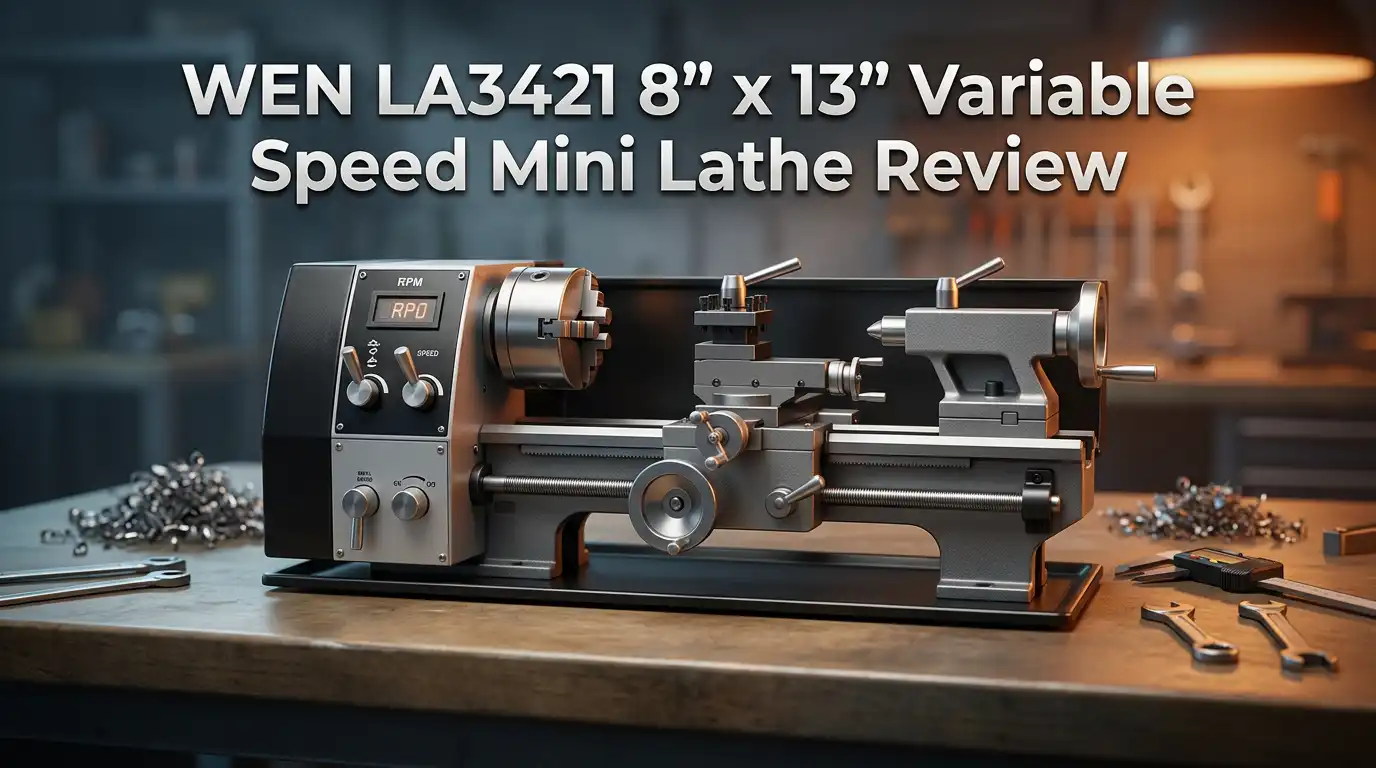
The LA3421 is WEN’s smallest benchtop wood lathe. The headstock and tailstock both accept MT1 tapers, which is the standard size for pen mandrels and small drill chucks.
A 2.3 inch faceplate ships in the box for bowl work and other non spindle projects. The bed is cast iron with machined ways, and the tool rest base locks down with a quick lever instead of a wrench.
WEN aims this machine squarely at pen turners and hobbyists with small shops. The whole unit fits on a two foot section of bench.
You can carry it with one hand and store it on a shelf, which matters a lot when your workshop doubles as a garage parking spot. Two tool rests ship inside, measuring 4.5 inches and 7 inches.
The Unboxing Experience
The box arrives heavier than it looks and smells strongly of machine oil. WEN packs the lathe in molded foam with the accessories in a separate cardboard tray.
Inside you find the lathe body, the 2.3 inch faceplate, an MT1 spur center, a cup style live center, a knockout rod, both tool rests, and a flat wrench. A printed manual sits on top.
Every machined surface wears a thick rust preventive coating. Plan on ten minutes with mineral spirits and shop rags before the first cut. The coating is sticky and it will transfer onto your hands and your first blank if you skip this step.
Check the bed ways, the tailstock quill, and the spindle threads closely during cleanup. Shipping damage happens, and WEN wants reports immediately. Assembly itself takes five minutes since the machine arrives mostly built.
Build Quality and Materials
The bed and headstock are cast iron, and that casting is the best part of the machine. It damps vibration far better than the stamped steel beds on some cheap imports. Machining on the ways is acceptable, though you may find casting flash along the edges that a file cleans up in a minute.
The plastic parts are where the budget shows. The speed dial housing, the switch cover, and the belt access panel all use molded plastic that feels thin. Fit and finish will not impress anyone coming from a Jet or a Rikon. Paint runs and small blemishes appear on some units.
None of this affects turning accuracy, but it signals the price point honestly. Owners also report that the handle pins on the tailstock lever can work loose over time, so check fasteners every few sessions.
Top 3 Alternatives for WEN LA3421

Last update on 2026-10-15 / Affiliate links / Images from Amazon Product Advertising API
WEN LA3424 12 Inch by 18 Inch 5 Speed Benchtop Wood Lathe

Last update on 2026-10-15 / Affiliate links / Images from Amazon Product Advertising API
SHOP FOX W1704 1/3 Horsepower Benchtop Lathe

Last update on 2026-10-18 / Affiliate links / Images from Amazon Product Advertising API
RIKON Power Tools 70-105 10 Inch by 18 Inch Mini Lathe
Variable Speed Motor Performance
The 3.2 amp motor drives the spindle from 750 to 3200 RPM through a single dial. No belt changes are required within that range, which saves real time during a project. Soft start keeps the machine from lurching when you flip the switch, and it protects both the motor and an unbalanced blank.
Speed control feels smooth across the whole range. Low speeds suit rough blanks and out of round stock. High speeds give you clean finishing cuts and good sanding results on pen barrels.
The torque story is less happy. Push a gouge too hard into maple or purpleheart and the spindle slows noticeably. Keep chisels sharp, take light passes, and the motor behaves. Treat it like a full size lathe and you will stall it repeatedly, which shortens motor life.
Setup and First Turn
Mount the lathe on a solid bench before you do anything else. The base has mounting holes, and bolts through those holes change the machine completely.
Without them the lathe skates sideways during an unbalanced roughing cut. Many owners bolt it to a scrap of thick plywood and then clamp that plywood to the bench, which also lets them store the whole assembly.
The first turn goes quickly. Slide the spur center into the headstock, drop the live center into the tailstock quill, mount a blank, and lock the tailstock lever.
Set the tool rest about an eighth of an inch from the work and slightly below center height. Start at 750 RPM for a square blank and raise speed once the piece runs round. The knockout rod pops the spur center free when you switch to the faceplate.
Tool Rests, Tailstock, and Adjustments
Both tool rests lock with a cam lever rather than a wrench, and that lever system works well day to day. Sliding the banjo along the bed takes one hand. The tailstock uses the same style lever, and it holds position reliably once you learn how much pressure it needs.
The tool rest surfaces arrive rough. This is the single most common complaint about the machine. Chisels catch on casting ridges and your cuts feel jerky.
Twenty minutes with a flat file and some sandpaper fixes it permanently, and experienced turners do this on almost every budget lathe. Follow up with paste wax so tools glide. The tailstock quill travel is short, so drilling deep pen barrels means advancing the tailstock body partway through the hole.
What the WEN LA3421 Does Not Do Well
Honest reviews list the failures, so here they are. The motor lacks torque for aggressive work, full stop. Large bowl blanks near the 8 inch swing limit will bog the machine and frustrate you. Anything beyond 13 inches between centers simply does not fit.
Reliability is the bigger concern. Owners and repair videos report headstock bearing failures and electronic control board problems on some units after moderate use. Belt replacement is awkward because access is tight and the panel design fights you.
Parts availability for WEN tools is inconsistent, so a failed control board can sideline the machine. The two year warranty helps, but plan for a service claim rather than a shelf spare. This lathe is a starter tool, not a lifetime machine.
Pros and Cons
Pros
- Infinitely variable speed from 750 to 3200 RPM with no belt swapping during a project
- Soft start motor protects the workpiece and reduces startup jolt
- Cast iron bed and headstock damp vibration better than stamped steel competitors
- Light at 45.9 pounds, so storage and transport are easy in a small shop
- Two tool rests, faceplate, spur center, live center, knockout rod, and wrench all included
- MT1 tapers accept standard pen mandrels and inexpensive drill chucks
- Two year warranty and a US based customer help line
- Price sits well below Jet, Rikon, and Laguna mini lathes
Cons
- Underpowered 3.2 amp motor stalls during heavy roughing cuts
- Tool rests ship rough and need filing before smooth chisel travel
- Headstock bearing and control board failures reported by multiple owners
- Belt replacement is difficult due to tight access
- Lightweight body walks on the bench unless bolted down
- Short tailstock quill travel limits drilling depth
- Plastic housings and inconsistent paint quality
- Handles wood only, so metal projects are out
Who Should Buy This Lathe
The LA3421 fits a specific buyer very well. Pen turners are the core audience, and the machine excels at that job. Hobbyists testing whether woodturning sticks as a hobby also get strong value here, since the total outlay stays low. Apartment and small garage woodworkers benefit from the light weight and compact footprint.
Skip it if you plan to turn bowls over six inches regularly. Skip it also if you need production reliability or you already own quality chisels and know you will push hard. Schools and makerspaces should look at heavier machines because shared tools take abuse.
Anyone searching for a metal lathe needs a completely different product category, such as a 7×12 mini metal lathe with a cross slide and lead screw.
Projects It Handles Best
Pens are the obvious winner. A pen mandrel in the MT1 headstock plus a live center gives you a complete pen setup for very little money. Bottle stoppers, keychains, wine stoppers, and honey dippers all fall comfortably inside the capacity.
Small bowls work with the faceplate as long as you stay near four or five inches and take patient cuts. Chess pieces turn beautifully because they need high speed and fine detail rather than brute force.
Tool handles up to 13 inches long are another sweet spot, and turners often make their own chisel handles first. Spinning tops, ring blanks, drawer pulls, and small boxes round out the list. Anything requiring long spindles, heavy hogging, or green wood blanks belongs on a larger lathe.
Accessories Worth Adding
A few additions transform this machine. A four jaw scroll chuck with a matching spindle thread opens up bowl and box work without faceplate screws. WEN sells a chuck set that fits directly. A pen mandrel and bushing set costs very little and pays for itself after a few pens.
Sharp chisels matter more than any other upgrade on a low torque lathe. A basic sharpening jig and a grinder will improve your results instantly.
A one half inch MT1 drill chuck lets you bore pen blanks on the lathe itself. Finally, add a face shield, not just safety glasses, because catches happen while learning. Many owners also build a simple ballast box filled with sand under the lathe to kill vibration.
Maintenance That Keeps It Running
Maintenance on this lathe is simple and it directly affects lifespan. Disconnect power and clear chips and dust from the bed, headstock, tailstock, and motor housing after every session. Dust packed around the motor vents causes overheating, and overheating kills cheap motors.
Apply light machine oil to the tailstock quill and the lead screw periodically. Wipe the cast iron bed with paste wax to prevent rust and help the banjo slide. Inspect the drive belt every few months for cracks or stretching, since a glazed belt slips and mimics a dying motor.
Retighten nuts and bolts regularly because vibration loosens them. Store the machine in a dry space. These small habits address most of the failure reports that owners post online.
Price and Value in 2026
The LA3421 typically sells in the low to mid 200 dollar range, with WEN listing it around 245 dollars direct.
At that number it competes with the Shop Fox W1704, which shares nearly identical 8 inch by 13 inch specifications and a similar speed range. The Shop Fox carries a slightly stronger reputation for castings, while the WEN usually costs less.
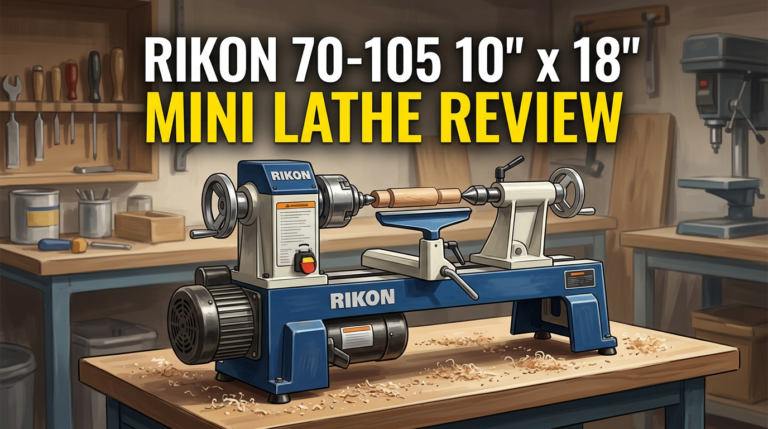
Step up to the 300 to 400 dollar range and the picture changes. The WEN LA3424 gives you 12 by 18 inch capacity for modest extra money, and the RIKON 70-105 offers better bearings and stronger support.
Value depends entirely on your ambition. For pens and small work, the LA3421 delivers more capability per dollar than almost anything else. For bowls, it runs out of room fast.
Final Verdict
The WEN LA3421 earns a recommendation with clear boundaries. It is a capable, smooth running pen lathe with a genuinely useful variable speed dial and a cast iron bed that punches above its price. Thousands of turners have learned the craft on this exact machine and produced work they are proud of.
It is not a machine for heavy cuts or long service life. The motor is modest, the bearings and electronics are the reported weak points, and the tool rests need handwork out of the box.
Buy it as an affordable entry into turning, bolt it down, keep your chisels sharp, and expect to upgrade in a few years if the hobby sticks. Judged against that expectation, it is a solid purchase in 2026.
Frequently Asked Questions
Is the WEN LA3421 a metal lathe?
No. The LA3421 is a benchtop wood lathe. It has no cross slide, no compound rest, and no lead screw for threading. It turns wood, acrylic pen blanks, and similar soft materials only. If you need to machine steel or aluminum, look at a 7 inch by 12 inch mini metal lathe instead.
What size bowls can it turn?
The 8 inch swing over the bed sets the theoretical maximum diameter. In practice, stay around four to six inches for comfortable results. Larger blanks strain the 3.2 amp motor and make the light frame vibrate. Mount the blank on the included 2.3 inch faceplate or on an aftermarket four jaw chuck.
Does it come with chisels?
The standard LA3421 package includes the lathe, a 2.3 inch faceplate, an MT1 spur center, a live center, a knockout rod, two tool rests, and a flat wrench. Chisels are sold separately on most listings, though some bundles add a starter chisel set or a pen mandrel.
Why does my lathe keep stalling?
Stalling usually comes from three causes. Your chisel is dull, your cut is too aggressive, or your speed setting does not match the workpiece. Sharpen your tools, take lighter passes, and lower the RPM for large or unbalanced blanks. A loose or glazed drive belt also causes slipping that feels like stalling.
How do I stop the lathe from vibrating?
Bolt the lathe to a heavy bench through the mounting holes in the base. Weight is the main fix since the machine weighs only 45.9 pounds. Many owners add a sandbag or a sand filled box underneath. Also check that your blank is centered correctly and reduce speed until the piece runs round.
What chuck fits the WEN LA3421?
The spindle accepts chucks matched to its thread size, and WEN sells the LA136K chuck set for this lathe. Aftermarket four jaw scroll chucks work as long as the thread matches or you use the correct adapter. The MT1 taper in the headstock also accepts pen mandrels and small drill chucks.
Is the warranty any good?
WEN backs the LA3421 with a two year warranty supported by a nationwide service network and a customer help line. Owners generally report responsive support. Keep your proof of purchase, because warranty claims require it. Given the reported bearing and control board issues, that coverage window carries real value.

Hi, I’m Leah Ray — the voice behind CraftBench Vault. I’m a passionate woodworking enthusiast dedicated to reviewing the best wood cutting tools and woodworking products. Through honest research and hands-on experience, I help fellow crafters make smarter buying decisions. Welcome to my workshop!