RIKON 70-900B Mini Lathe Extension Bed Review 2026: Worth Buying?
Your mini lathe stops at 16 inches between centers. Your next project needs 30. That single limit pushes a lot of turners into a frustrating choice: sell the lathe, or stretch it.
The RIKON 70-900B Mini Lathe Extension Bed picks the second option. It bolts a 24 inch cast iron bed onto the right end of the RIKON 70-100 Mini Lathe and turns a small bench machine into a spindle turning machine.
This review covers the unboxing, the install, the alignment quirks, the honest weak points, and whether the 2026 price still makes sense. Read on before you spend the money.
Key Takeaways
- The 70-900B adds 24 inches of bed length to the RIKON 70-100 Mini Lathe. Your between centers capacity jumps from 16 inches to roughly 40 inches, which covers table legs, bed posts, lamp stems, and long tool handles.
- It is heavy cast iron, not stamped steel. The mass matters. That weight absorbs chatter instead of amplifying it, and it keeps the tailstock sliding smoothly across the joint.
- Fitment is narrow. RIKON lists this part for the 70-100 and other 1/2 HP mini lathes. It does not fit the 1 HP models. Check your model plate first.
- Install takes about 30 minutes. Two bolts, a clean mating surface, and patience with the leveling screws. The adjustment feet let you dial the extension flush with the main bed.
- The price sits near $229.99 through RIKON and major dealers in 2026. That is real money against a lathe that sells for about $399.99, so the value depends entirely on how often you turn long work.
- The honest downside: you need a stand or bench long enough to carry it, and you may need shims to get perfect alignment. This is an accessory that rewards careful setup, not a bolt on and forget part.
RIKON 70-900B Mini Lathe Extension Bed

Last update on 2026-10-18 / Affiliate links / Images from Amazon Product Advertising API
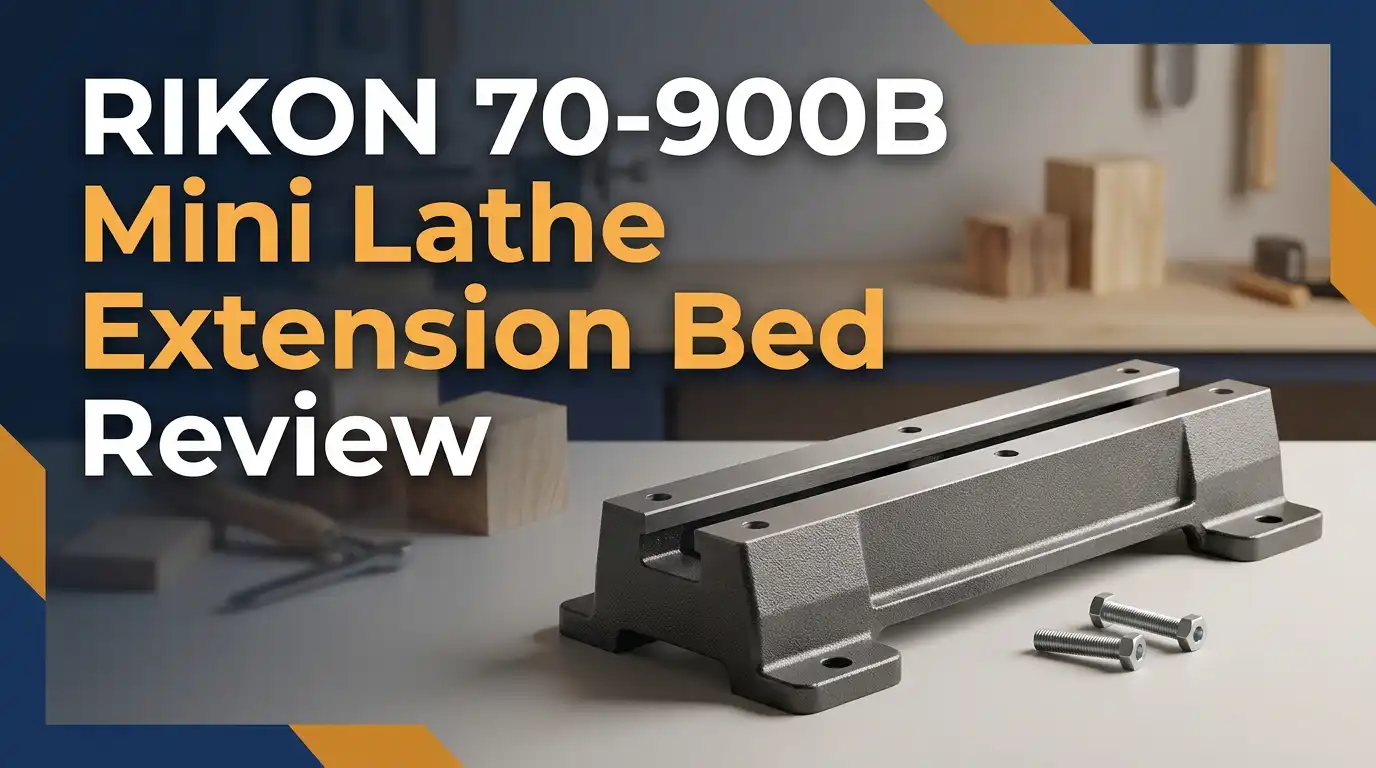
The 70-900B is the blue finished version of RIKON’s classic mini lathe bed extension. It measures 24 inches long and bolts to the right end of the 70-100 Mini Lathe bed, which is the tailstock end. The casting is machined on top so the ways line up with the ways on your lathe.
That machining is the whole point. A rough casting would snag the tailstock every time it crossed the seam. RIKON finishes it in the same signature blue as the lathe, so the pairing looks factory rather than homemade.
The extension ships as a single piece with mounting hardware and adjustable feet. It carries RIKON’s five year warranty, which is generous for a cast iron accessory with no moving parts. You are buying mass and machined surfaces, and that is exactly what a bed extension should be.
Key Specifications At A Glance
Numbers first, opinions later. The extension is 24 inches long and made of cast iron with a precision machined bed surface. Shipping weight lands in the low to mid twenty pound range depending on the dealer listing, so it is a two hand lift but not a back strain.
Compatibility is listed for the RIKON 70-100 Mini Lathe and other 1/2 HP RIKON mini lathes. The retail price through RIKON and major woodworking dealers sits at $229.99 in 2026. The base 70-100 lathe gives you a 12 inch swing and 16 inches between centers from a 1/2 HP motor.
Add the extension and the between centers figure climbs to roughly 40 inches. Swing does not change. You still get 12 inches of diameter, so this upgrade helps length only. RIKON also sells a shorter 13-1/2 inch extension under part number 70-903 for turners who want less reach and a lower price.
Unboxing Experience And First Impressions
The box arrives smaller than you expect and heavier than you expect. Mine came double boxed with foam corners and a plastic bag over the casting. The first thing you notice is the oil. RIKON ships cast iron parts with a rust preventive coating, and it is sticky.
Plan for mineral spirits, a rag, and ten minutes of wiping before you touch anything else in the shop. Under the film the machined ways look clean, with visible tool marks but no burrs on my unit.
The blue paint on the sides is thick and even, though the inside casting faces are rough as cast, which is normal. Hardware comes in a small bag taped to the casting. Documentation is thin. You get a basic sheet, not a step by step manual, so expect to study the mating surface yourself.
Top 3 Alternative for RIKON 70-900B Mini Lathe Extension Bed

Last update on 2026-10-18 / Affiliate links / Images from Amazon Product Advertising API
RIKON Power Tools 70-906 21-1/2 Inch Bed Extension for 70-105 Mini Lathe

Last update on 2026-10-18 / Affiliate links / Images from Amazon Product Advertising API
RIKON Power Tools 70-901 24-Inch Lathe Bed Extension for 70-220VSR


Last update on 2026-10-18 / Affiliate links / Images from Amazon Product Advertising API
JET 20-Inch Lathe Bed Extension 719401
Installation On The RIKON 70-100
Installation is simple in concept and fussy in practice. You remove the tailstock, clean both mating faces, and bolt the extension to the machined pad on the right end of the lathe bed. Surface prep decides your result.
Any paint ridge, dried shipping oil, or casting flash on the joint will tilt the extension down a fraction of a degree, and that fraction shows up as a step under the tailstock. I cleaned both faces with a flat file and solvent before bolting anything.
Snug the bolts, slide the tailstock across the seam, then tighten fully once it glides without catching. Budget 30 minutes if things go well and an hour if they do not. The adjustable feet come last. Set them so they carry weight without lifting the extension out of plane.
Build Quality And Cast Iron Feel
This is where the 70-900B earns its keep. The casting feels dense and dead when you tap it, which is what you want from iron. A lathe bed extension is a vibration path, not just a mounting rail. Thin or hollow extensions ring and transmit chatter straight into your cut.
This one does not. The machined ways match the factory bed closely enough that the tailstock clamp bites with the same feel on either side of the joint. Paint coverage is good on the outside faces and sparse inside, which only matters for rust prevention in damp shops.
Wipe the inner casting with oil once a year and you will never think about it again. After months of use my unit shows no sag, no loose bolts, and no wear at the seam.
Turning Capacity Gains You Actually Get
The marketing number is 24 inches. The practical number is slightly less. Your tailstock and live center eat part of that gain, so plan on turning stock a bit shorter than the raw math suggests. Even so, the jump is dramatic.
A 16 inch capacity lathe handles pens, handles, small spindles, and bowls. A 40 inch capacity lathe handles dining table legs, bed rails, stair balusters, standing lamp stems, and paddle handles. That is a different class of work.
For furniture makers the extension is not a luxury but a requirement. One caution worth repeating: the 1/2 HP motor does not grow with the bed. Long heavy stock demands slower speeds and lighter cuts, because the motor will bog if you get greedy with a roughing gouge.
Alignment And Tailstock Travel
Alignment is the single topic that separates happy owners from frustrated ones. Perfect alignment is not automatic. Cast iron parts carry small variations, and two separately cast pieces bolted together will rarely land dead flush on the first try.
The fix is ordinary machinist practice. Lay a straightedge across the joint, check for a step, and use thin shim stock behind the mounting face to correct it. Then verify by bringing a live center up to a drive center and checking point to point agreement.
Expect to spend time here, and expect to redo it if you ever remove the extension. Once set, the tailstock slides across the seam with no bump and locks solidly anywhere on the extended bed. The payoff justifies the fiddling.
Support, Stand, And Shop Space
Here is the practical problem nobody mentions in product photos. A 24 inch extension needs 24 inches of support. Your existing bench may not be long enough, and an unsupported cast iron tail hanging off the end is both unsafe and inaccurate.
The adjustable feet help, but they only work if something solid sits underneath them. Many owners build a plywood platform or buy RIKON’s universal lathe stand with its own extension support. Measure your bench before you order the part.
Also think about walking space. The extended machine occupies roughly five feet of linear bench, and you need clearance at the tailstock end to load long stock. Small basement shops feel that loss immediately.
Vibration And Real World Performance
Long spindles flex. That is physics, not a product defect. With the extension installed and a 30 inch blank between centers, you will feel whip in the middle of the workpiece unless you slow down and support the stock.
A steady rest or a hand placed behind the cut solves most of it. What matters is that the extension itself does not add vibration. The iron mass keeps the bed stable, and the joint stays tight under load. The weak link is the lathe, not the accessory.
The 1/2 HP motor and the 12 inch swing frame were designed for short work, so pushing long heavy blanks reveals those limits. Turners who expect the extension to upgrade the whole machine will be disappointed. It upgrades reach only.
What The 70-900B Does Not Do Well
Authentic reviews name the flaws, so here they are. Documentation is weak. RIKON ships almost no instruction with the part, which leaves first time buyers guessing about bolt orientation and leveling screws. Alignment often needs shims. Plan for it rather than being surprised by it.
The price feels steep at $229.99 against a lathe that costs around $399.99, since you are paying more than half the machine price for added length. Fitment is restrictive. It serves 1/2 HP mini lathes and will not fit the 1 HP models, and cross brand fitment claims should be verified before buying.
Shipping is slow. Many dealers drop ship this item directly from the manufacturer, with lead times stretching past two weeks. None of these are deal breakers, but all of them are real.
Compatibility Notes Before You Buy
Read your model plate, not the forum post. The 70-900B is sold specifically for the RIKON 70-100 Mini Lathe, and dealers describe it as fitting RIKON mini lathes in the 1/2 HP class. It does not fit the 1 HP RIKON lathes.
Owners of the 70-105 pen lathe need part 70-906 instead, which is 21-1/2 inches long and brings that machine to roughly 40 inches between centers. Owners of the 70-1218VS need 70-902, and 70-220VSR owners need 70-901.
The castings are not interchangeable across the range, despite similar appearances. Some turners report success fitting RIKON extensions to clone lathes built on the same frame, including certain Craftsman midi models, but that is unofficial territory. Verify bolt pattern and bed width yourself before gambling $229.
Price And Value In 2026
At $229.99 the math deserves a cold look. You are spending roughly 57 percent of the lathe’s price to add length. If you turn long spindles monthly, the value is obvious, because the alternative is a larger lathe at three times the cost plus floor space.
If you turn pens, bottle stoppers, and small bowls, the extension is dead weight on your bench. There is a middle path. The 70-903 extension adds 13-1/2 inches for about $99.99, which suits turners who need a little more room rather than a lot.
Buy the capacity you will actually use. Also factor in a stand or platform if your bench is short, since that hidden cost can add another hundred dollars to the project.
Who Should Buy It
Buy the 70-900B if you own a RIKON 70-100, you already like the machine, and your project list has outgrown 16 inches. Furniture makers, chair builders, and restoration turners are the natural buyers.
The extension lets a modest bench lathe handle legs and posts that would otherwise require a full size floor lathe. Skip it if you turn mostly bowls, since swing stays at 12 inches and no bed extension changes that.
Skip it also if your bench cannot carry the extra length, because an unsupported extension creates more problems than it solves. Pen turners should look at the 70-906 for the 70-105 instead. Finally, if you are already saving for a bigger variable speed lathe, put the $229.99 toward that machine rather than this part.
Pros And Cons
Pros
- Adds a full 24 inches of bed length, pushing the RIKON 70-100 from 16 inches to roughly 40 inches between centers for long spindle work.
- Heavy cast iron construction absorbs vibration instead of transmitting it, which keeps cuts cleaner on extended stock.
- Precision machined ways let the tailstock slide across the joint smoothly once alignment is set correctly.
- Matching blue finish looks factory on the 70-100, with thick even paint on exterior surfaces.
- Adjustable leveling feet allow fine height correction and transfer load to the bench rather than the bed joint.
- Backed by RIKON’s five year warranty and supported by a responsive factory service department.
Cons
- The price near $229.99 is high relative to the lathe itself, which sells for about $399.99.
- Instructions are minimal, leaving buyers to work out bolt orientation and leveling screw function on their own.
- Alignment frequently requires shims and straightedge checks before the tailstock crosses the seam cleanly.
- Fitment is limited to 1/2 HP RIKON mini lathes and will not work on the 1 HP models.
- Requires a longer bench or dedicated stand support, which is an extra hidden cost for many shops.
- Does nothing for swing or motor power, so the 1/2 HP limit still caps heavy long stock turning.
- Many dealers drop ship from the manufacturer, which means multi week delivery waits.
Final Verdict
The RIKON 70-900B is a good accessory with a narrow purpose. It does one job and does it with real iron. If long spindles are in your future and you own the right lathe, it transforms what your bench can produce for a fraction of a new machine’s cost.
The weak documentation and the shimming work are annoyances, not defects, and careful setup solves both permanently. The price remains the sticking point. Spending more than half the lathe’s value on added length only makes sense when that length earns its place in your project list.
Honest rating for 2026: strong hardware, fair value for furniture turners, and an easy pass for anyone turning small work.
Frequently Asked Questions
Does the 70-900B fit every RIKON mini lathe?
No. RIKON lists it for the 70-100 and other 1/2 HP mini lathes. It does not fit the 1 HP models. Owners of the 70-105 need part 70-906, and other models have their own matching extensions.
How much capacity does it actually add?
The casting is 24 inches long, taking the 70-100 from 16 inches between centers to roughly 40 inches. Your usable length will be slightly shorter once the tailstock and live center occupy space.
Does it change the swing of the lathe?
No. Swing stays at 12 inches over the bed. The extension adds length only, so bowl turners gain nothing from this accessory.
Is installation difficult for a beginner?
The bolting is easy. The alignment is the real work. Clean both mating faces, bolt the extension on, then check for a step with a straightedge and shim as needed. Allow 30 to 60 minutes.
Do I need a new stand or bench?
Probably yes if your current bench ends near the tailstock. The extension needs support underneath its adjustable feet. A plywood platform or RIKON’s universal stand with extension support both work.
What does it cost in 2026?
RIKON and major dealers list it around $229.99. The shorter 13-1/2 inch 70-903 extension sells for about $99.99 if you need less reach for less money.
Is there a cheaper way to turn long spindles?
Yes, two ways. Buy the shorter 70-903 extension, or save toward a larger lathe with a longer factory bed. Both options suit turners who only occasionally need extra length.

Hi, I’m Leah Ray — the voice behind CraftBench Vault. I’m a passionate woodworking enthusiast dedicated to reviewing the best wood cutting tools and woodworking products. Through honest research and hands-on experience, I help fellow crafters make smarter buying decisions. Welcome to my workshop!