
RIKON 70-105 10″ x 18″ Mini Lathe Review 2026: Still Worth It?
Pen turners keep asking one question in 2026. Does a simple belt driven mini lathe still earn a spot on the bench? The RIKON 70-105 answers that question in a plain, honest way.
It has no digital readout. It has no reverse switch. It has no variable speed dial. What it does have is a cast iron body, five usable speeds, and a price that sits well under the midi lathe crowd.
This review covers the unboxing, the real performance, the weak points, and the buyers who should walk away. Read on before you spend a dollar.
In a Nutshell:
- The 70-105 is a dedicated pen lathe first. RIKON built it at the request of pen turners who wanted a sturdy machine for small spindle work. Pens, bottle stoppers, handles, and chess pieces are its sweet spot.
- Cast iron construction keeps vibration low. The 75 pound body absorbs chatter far better than aluminum bodied budget lathes. Many owners say this is the single biggest reason to pick it over cheaper rivals.
- Five speeds, no variable speed dial. You get 500, 1,175, 1,850, 2,225, and 3,200 RPM. Changing speed means opening the cover and moving the belt by hand. That takes about 30 seconds once you learn it.
- Capacity is 10 inches of swing and 18 inches between centers. That is generous length for a mini lathe. A bed extension adds another 21.5 inches when you need it.
- The 1/2 HP motor is the main limit. Heavy bowl blanks and aggressive roughing cuts will stall it. This is a finesse machine, not a muscle machine.
- A five year warranty backs the purchase. RIKON also sells individual replacement parts online, which keeps the lathe serviceable for years.
What Is the RIKON 70-105 Mini Lathe?

Last update on 2026-10-18 / Affiliate links / Images from Amazon Product Advertising API
The RIKON 70-105 is a benchtop wood lathe with a 10 inch swing over the bed and 18 inches of working distance between centers. RIKON designed it specifically for pen turners who wanted a dedicated machine for that craft.
The frame, bed, headstock, and tailstock are all cast iron. That material choice matters more than the spec sheet suggests, because cast iron soaks up vibration instead of amplifying it.
The lathe runs on standard 120V household power and draws 3.7 amps. It weighs 75 pounds, measures 35-1/2 inches long, and stands 14-3/4 inches tall.
You can lift it onto a bench with a helper, but you will not want to move it every weekend. RIKON positions it below its own midi lathes in both price and power, and that honest positioning is refreshing.
Unboxing Experience: What Shows Up at Your Door
The box arrives heavy and compact. Mine landed with the bed sitting in a molded foam cradle and the headstock already bolted in place. That saves real time. You lift the lathe out, peel off the shipping plastic, and the machine is close to ready.
Inside the accessory pouch you find a live center, a spur center, a tool rest, a knock out bar, and the hex wrenches needed for setup. RIKON also includes the nylon face plate washer, which is a small part that saves a lot of frustration later when you remove a stuck chuck.
Expect a film of shipping grease on the bed ways. Wipe it off with mineral spirits before the first cut. Budget 20 to 30 minutes from box to first shaving. The printed manual is clear, with readable diagrams and a parts list that matches the website.
Build Quality and Cast Iron Construction
This is where the 70-105 earns its reputation. RIKON states the cast iron body means vibration is not a factor, unlike lathes made of aluminum. In practice that claim holds up well for small work. Place a pen blank between centers, spin it at 1,850 RPM, and the machine sits quietly.
The bed ways are machined flat and feel smooth under the tailstock. The locking handles grip firmly without needing a cheater bar. Paint quality is good, though a few owners report minor casting flash on the underside. Nobody sees the underside, so this is cosmetic only.
The 75 pound weight is a feature, not a flaw. Mass equals stability. Bolt the lathe to a solid bench or the optional RIKON universal stand, and the whole setup feels planted. Users on retailer sites consistently rate the machine around 4.3 stars, with build quality named as the top strength.
Motor Power and the Five Speed Ranges
The motor is a 1/2 HP totally enclosed fan cooled unit spinning at 1,700 RPM. Speed ranges land at 500, 1,175, 1,850, 2,225, and 3,200 RPM. That spread covers the four jobs a pen turner does: boring barrel holes at 500, roughing billets at 1,175, shaping at 1,850, and finishing at higher speeds.
The low end of 500 RPM is a genuine advantage. Older RIKON models bottomed out near 430 to 600 RPM, and cheaper lathes often start at 750. Starting low means safer first cuts on out of round blanks.
Power is the honest weak point. Half a horsepower handles spindles with ease and small bowls with patience. Push a 9 inch green blank into it and the belt will slip or the motor will bog. Turners who plan on bowls should look at a 1 HP machine instead.
Top 3 Alternatives for RIKON 70-105 Mini Lathe

Last update on 2026-10-15 / Affiliate links / Images from Amazon Product Advertising API
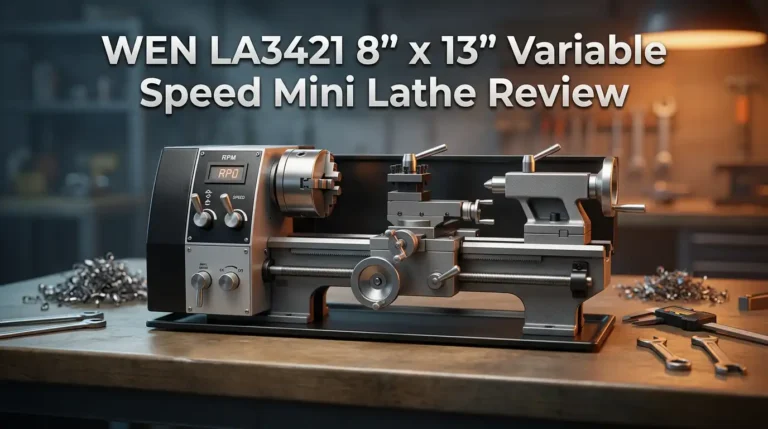
WEN 3421 Variable Speed Mini Benchtop Wood Lathe

Last update on 2026-10-18 / Affiliate links / Images from Amazon Product Advertising API
NOVA 46300 Comet II Variable Speed Mini Lathe

Last update on 2026-10-18 / Affiliate links / Images from Amazon Product Advertising API
RIKON Power Tools 70-220VSR Midi Lathe
Changing Speeds: The Belt System Explained
Speed changes happen under a hinged cover on the headstock. You release the belt tension lever, lift the belt onto a different pulley step, and re tension. RIKON calls this easy access speed change, and the design does live up to the name.
The first few changes feel awkward. After a week, the move becomes muscle memory and takes under a minute. The real cost is workflow, not difficulty. With variable speed you slow the lathe for sanding by turning a dial. Here you stop the machine, open the cover, and move a belt. Turners who sand often will feel this friction every session.
Reddit owners of the related RIKON 70-100 also note that belt changes can shift concentricity slightly on chucked work, which means re truing a piece after a speed change. Plan your cuts to minimize swaps.
Headstock, Tailstock and Spindle Details
The spindle nose is 1 inch by 8 TPI, which is the most common thread size in woodturning. That means almost every aftermarket chuck, faceplate, and accessory fits without an adapter. Both the headstock and tailstock use MT2 tapers, so standard pen mandrels, drill chucks, and live centers drop straight in.
Tailstock ram travel is 1-3/4 inches. That is short. Drilling a deep pen barrel requires advancing the quill, locking the tailstock, and repeating. The self ejecting tailstock does help, since backing the quill all the way pops the center loose instead of jamming it.
Swing over the tool rest is 7-1/2 inches. Keep that number in mind. Your real turning diameter sits well under the headline 10 inch figure once the rest is in place.
Pen Turning Performance
Pens are what this lathe was built for, and it shows. Mount a mandrel, dial in 1,850 RPB, and the 70-105 delivers clean, chatter free cuts on acrylic and hardwood alike. The low 500 RPM setting makes barrel drilling controlled and safe.
Runout is minimal on a properly seated mandrel, which is critical when blanks must match a kit within thousandths of an inch. This is where cheap aluminum lathes fail and this one succeeds.
The 18 inch capacity also means you are never cramped. Pen blanks are short, so you have room for a drill chuck, mandrel, and tailstock all at once without fighting for space.
One honest note: the lathe does not include a mandrel, pen jaws, or a drill chuck. Budget another 80 to 150 dollars for a complete pen turning setup before your first blank goes on.
Bowl Turning Limits You Should Know
The spec sheet promises a 10 inch swing. The reality is more modest. With a 1/2 HP motor and a minimum speed of 500 RPM, the 70-105 struggles with anything close to that diameter in solid stock.
Small bowls up to roughly 6 inches work fine if you take light cuts and keep your tools sharp. Beyond that, expect bogging, belt slip, and a longer session than you planned. Green wood of large diameter is simply out of range.
There is also no indexing head on this model, so decorative fluting and segmented layout work require a separate jig. RIKON reserves indexing for its midi lathes.
If bowls are your goal, this is the wrong lathe. Spend the extra money on a 1 HP variable speed midi and save yourself the upgrade later.
Bed Extension and Accessory Options
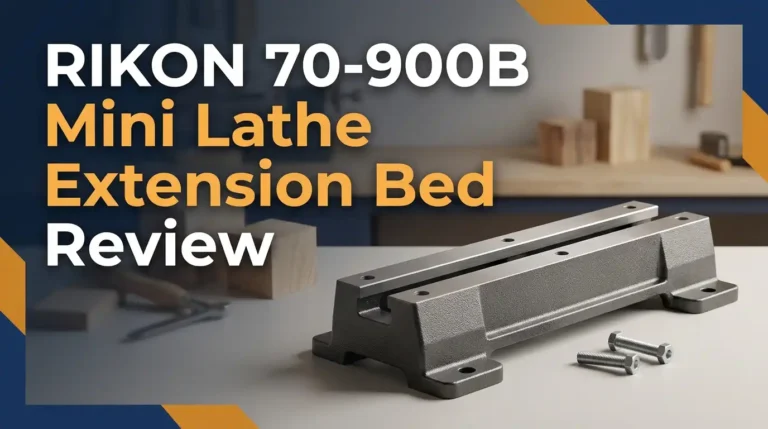
One quiet strength here is expandability. RIKON sells a 21.5 inch bed extension made for the 70-105, and the design allows multiple extensions to be stacked. That turns an 18 inch machine into a spindle lathe long enough for table legs and lamp stems.
The accessory catalog is deep. Tool rests come in 4, 6, 8, and 12 inch lengths. Faceplates come in 3 and 6 inch sizes. A 5/8 inch drill chuck with MT2 arbor costs about 40 dollars from RIKON directly.
Replacement parts are listed individually online. Belts, bearings, switches, motor pulleys, and even the bed are all orderable. That level of parts support is rare at this price and it genuinely extends the life of the machine.
Vibration, Noise and Bench Mounting
Noise sits low for a belt drive lathe. At 1,175 RPM you hear a soft hum and the sound of the cut, nothing more. Higher speeds raise the pitch, but nothing rattles.
Vibration behaves well when the lathe is mounted properly. Rubber feet come installed and work fine on a heavy bench. On a light folding table the whole setup will walk. Bolt it down through the base, which measures 29-1/2 by 7-3/8 inches.
Unbalanced blanks still shake, as they do on any mini lathe. The fix is the same as always: start at 500 RPM, rough the blank round, then raise the speed. Cast iron helps a lot, but physics still applies.
What the RIKON 70-105 Does Not Do Well
Honest reviews list the misses, so here they are plainly.
The lathe has no variable speed control. Every speed change means stopping the machine and moving a belt. The motor runs forward only, so there is no reverse for sanding or for left hand threading. There is no indexing head for decorative work.
Tailstock ram travel of 1-3/4 inches forces repeated resets during deep drilling. The 1/2 HP motor stalls under heavy bowl cuts. The included tool rest is short, and most owners buy a longer one within months.
Finally, nothing about the package is a complete kit. No turning tools, no chuck, no mandrel. Price the accessories before you decide this lathe fits your budget.
Pros and Cons of the RIKON 70-105
Pros
- Cast iron body keeps vibration low and delivers clean cuts on small work.
- 500 RPM minimum speed makes drilling and roughing safer than on lathes that start at 750.
- 1 inch by 8 TPI spindle and MT2 tapers accept nearly every aftermarket accessory on the market.
- 18 inches between centers beats most mini lathes, and bed extensions add more length.
- Five year warranty plus individually listed replacement parts for long term service.
- Simple mechanical design means fewer electronics to fail over a decade of use.
Cons
- No variable speed dial. Belt changes interrupt the workflow, especially during sanding.
- 1/2 HP motor bogs on bowls larger than about 6 inches.
- No reverse and no indexing head, which rules out several turning techniques.
- Short 1-3/4 inch tailstock travel slows deep barrel drilling.
- No chuck, tools, or mandrel included, so the real entry cost is higher than the sticker.
Price and Value in 2026
Street pricing in 2026 sits in the 400 to 540 dollar range depending on retailer and promotions, with woodturning specialty shops listing it near 540 dollars. Guides tracking beginner lathes list the usual range at 350 to 450 dollars.
That places it above the WEN 3421 at roughly 240 dollars and well below the JET JWL-1015VS near 715 dollars. The 70-105 sits in the value middle. You pay more than budget brands for cast iron mass and real parts support. You pay less than premium brands and give up variable speed to get there.
Value depends entirely on your work. For pens and small spindles the math works. For bowls it does not.
Who Should Buy It and Who Should Skip It
Buy the 70-105 if you turn pens, bottle stoppers, tool handles, or small spindles. Buy it if you want a machine that will still be repairable in 2036. Buy it if you prefer mechanical simplicity over electronics.
Skip it if bowls are your main interest. Skip it if you sand often and value a speed dial. Skip it if you want reverse or indexing. In those cases the RIKON 70-220VSR or the NOVA Comet II deliver more for the extra money.
Beginners get a real benefit here. Learning speed selection by hand teaches you why speed matters, and the low minimum RPM gives new turners a safe starting point.
Setup Tips for the Best Results
Start by bolting the lathe to a solid bench or stand at elbow height. Correct height reduces fatigue more than any accessory you can buy.
Install the nylon washer on the spindle before mounting a chuck. That single part prevents a seized faceplate later. Clean the bed ways and apply paste wax so the tailstock glides freely.
Check tailstock to headstock alignment on day one by bringing both centers together. Minor misalignment is correctable with shims and worth fixing early.
Keep a spare drive belt on hand, since RIKON lists it at under 15 dollars. Sharp tools matter more on a 1/2 HP lathe than on a powerful one, so set up a grinder jig before your first project rather than after.
Frequently Asked Questions
Does the RIKON 70-105 have variable speed?
No. The 70-105 uses a five step pulley system with speeds of 500, 1,175, 1,850, 2,225, and 3,200 RPM. You change speed by moving the belt by hand under the headstock cover.
Can the RIKON 70-105 turn bowls?
It can turn small bowls up to roughly 6 inches with light cuts and sharp tools. The 1/2 HP motor and 500 RPM minimum speed make larger bowls difficult and slow.
What size chuck fits the RIKON 70-105?
Any chuck with a 1 inch by 8 TPI thread fits directly. That covers most popular four jaw chucks sold in the United States.
Is a stand included with the lathe?
No. RIKON sells a universal stand for mini and midi lathes separately at about 250 dollars. A sturdy workbench works just as well.
How long is the warranty?
RIKON covers the 70-105 with a five year warranty, and the company lists individual replacement parts for order on its parts website.
Does it come with turning tools?
No. The box includes a live center, spur center, tool rest, knock out bar, and wrenches. Turning chisels, a chuck, and a pen mandrel are all separate purchases.

Hi, I’m Leah Ray — the voice behind CraftBench Vault. I’m a passionate woodworking enthusiast dedicated to reviewing the best wood cutting tools and woodworking products. Through honest research and hands-on experience, I help fellow crafters make smarter buying decisions. Welcome to my workshop!