M-T Mini Table Saw for Crafts 7-Speed Review 2026: Worth Buying?
Small parts and big saws do not mix. Anyone who has tried to trim a 2 inch basswood stick on a full size table saw knows that feeling. Your fingers get close, the blade screams, and the cut still wanders.
That is the gap the M-T Mini Table Saw for Crafts fills. It sits on a desk, runs on a low voltage supply, and cuts balsa, plywood sheet, acrylic, and PCB stock. It also has real limits, and this review covers both sides honestly.
I looked at the listing specs, owner feedback, and the common complaints that follow every mini saw in this class. Read on before you spend around $72.
Key Takeaways
- It is a hobby tool, not a woodworking machine. The 100W motor and 15mm (0.59 inch) maximum cut depth set a hard ceiling. Thin stock only.
- The 7 speed control is the headline feature. Up to 6000 RPM lets you slow down for acrylic and plastic, which reduces melting and chipping. That alone separates it from single speed clones.
- The cast iron worktable adds real stability. M-T claims 0.2mm scale accuracy, and the rubber feet cut vibration noticeably compared with plastic based rivals.
- Four blades ship in the box: PCB, HSS, alloy, and resin. You can cut circuit board, thin wood, soft metal sheet, and plastic without buying extras on day one.
- Accuracy depends on your setup. Like most mini saws, the fence and miter gauge need checking with a square before your first cut. Out of the box squareness is hit or miss.
- Rating reality check. The listing sits near 3.6 stars from a small review count, so expectations should stay modest. Buy it for miniatures, models, dollhouses, and electronics work.
What Is the M-T Mini Table Saw for Crafts 7-Speed?

Last update on 2026-10-22 / Affiliate links / Images from Amazon Product Advertising API
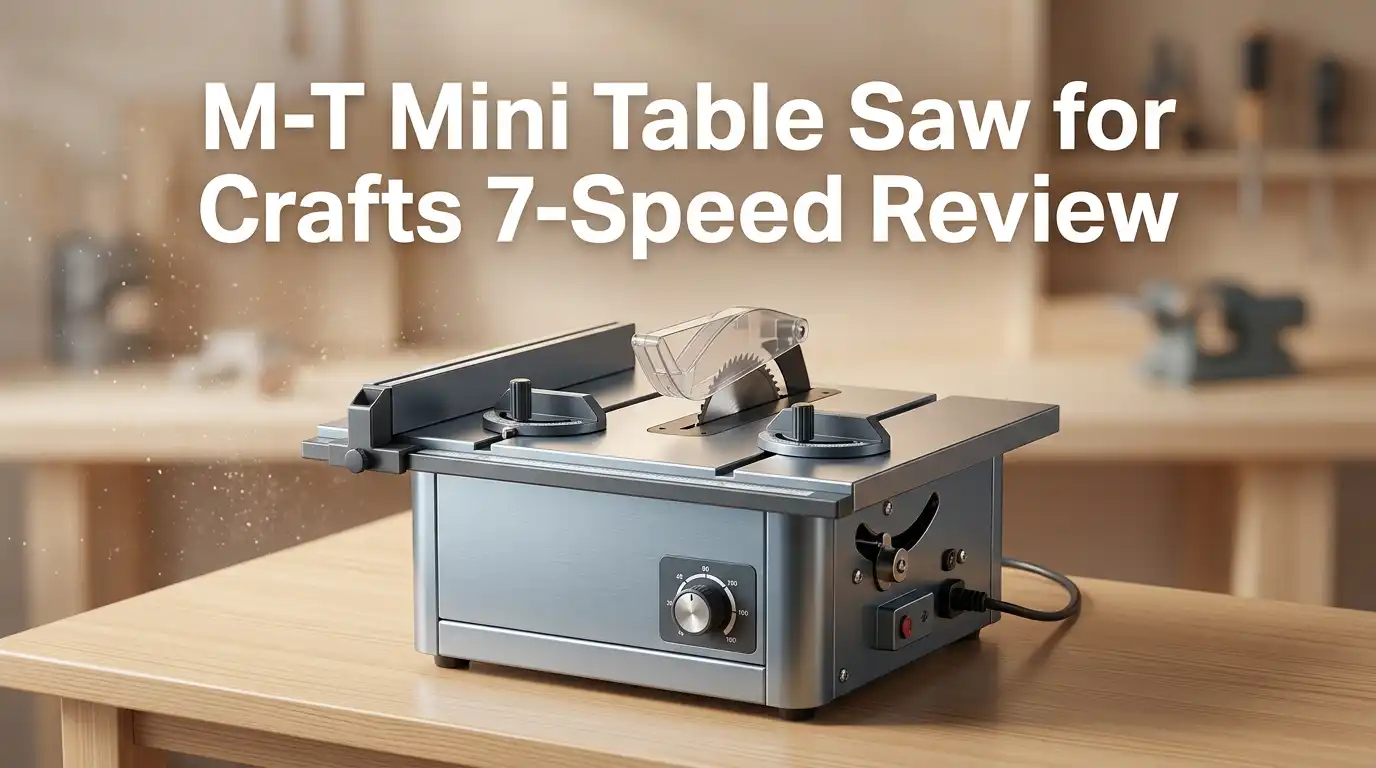
The M-T Mini Table Saw is a desktop electric saw built for craft scale cutting. It measures roughly 7 inches long, 6 inches wide, and 4 inches tall, so it fits beside a laptop.
The motor pushes up to 6000 RPM through a 7 step speed dial. A cast iron tabletop holds the blade, and a transparent guard sits over the cutting zone.
M-T markets it as a 4 in 1 machine. It cuts, grinds, sands, and drills depending on the accessory you fit. The brand sells it as one tool that replaces several bulky ones.
The maximum cutting thickness is 15mm, or about 0.59 inch. That number defines the whole product. If your projects live under that figure, this saw makes sense. If they do not, keep scrolling.
Unboxing Experience and First Impressions
The box arrives small and heavier than expected. That weight is a good sign, because it comes from the cast iron table rather than packaging filler.
Inside you find the saw body, the power adapter, the clear blade guard, a small wrench, the fence, a miter gauge, and the four blades in a slim sleeve. Everything sits in moulded foam.
First impressions are mixed in an honest way. The table feels solid and flat. The fence, by contrast, feels light and a little thin under finger pressure.
Assembly takes about ten minutes. You fit the guard, slide the fence, and tighten the blade with the supplied wrench. The printed manual is brief and the translation is rough, so some owners learn by watching the listing videos instead.
Build Quality and Table Design
The cast iron worktable is the best part of this machine. It resists flex, it holds heat poorly, and it keeps the blade from dancing during a cut.
Laser etched scales run along the table surface. M-T quotes 0.2mm precision on those markings, which is fine for miniature work where a fraction of a millimetre matters.
Rubber feet grip a desk and absorb a fair share of vibration. On a solid bench the saw stays put without clamps during light cuts.
The housing around the motor is plastic. It feels adequate, not premium. Treat the saw gently and it holds up; drop it once and something will crack. Owners who mount it to a plywood base report steadier cuts and less walking across the bench.
Top 3 Alternatives for M-T Mini Table Saw for Crafts 7-Speed

Last update on 2026-10-22 / Affiliate links / Images from Amazon Product Advertising API
Mini Table Saw, Mini Multi Functional Table Saw with Dual Motor Control

Last update on 2026-10-22 / Affiliate links / Images from Amazon Product Advertising API
Mini Multi Functional Table Saw, Portable Mini Desktop Electric Saw with Height and Angle Adjustment

Last update on 2026-10-22 / Affiliate links / Images from Amazon Product Advertising API
MIMYTH Mini Table Saw for Crafts, Multifunctional Portable Tablesaw
7 Speed Motor Performance Tested
The speed dial runs through seven settings, topping out near 6000 RPM. Each step changes the feel of the cut in a way you notice immediately.
Low speeds suit acrylic and PVC. Plastic melts when a blade spins too fast, and slowing the motor keeps the edge clean instead of gummy.
High speeds suit thin plywood, balsa, and basswood. Soft woods cut fastest with the blade near full speed and a slow, steady feed.
Torque is the honest weak point. A 100W motor bogs down if you push hardwood or rush the feed rate. The saw rewards patience and punishes impatience.
Expect to make two shallow passes on anything close to the depth limit. That habit protects the motor and produces a cleaner edge than one forced pass.
The Four Blades and What They Cut
Four blades arrive in the box, and each has a job. Using the wrong one causes most of the bad results people complain about.
The PCB blade handles circuit board and fibreglass stock. The HSS blade cuts thin wood sheet and soft plastic. The alloy blade tackles aluminium and brass sheet. The resin cutoff wheel grinds and slices harder material.
Blade diameter is small, which is why the depth ceiling exists. Smaller blades also mean a thin kerf, and a thin kerf wastes less of your expensive hobby stock.
Spare blades cost very little online. Buy a pack early, because a dull blade is the number one cause of burn marks and ragged edges on any mini saw.
Cutting Depth and Real Project Limits
The 15mm figure needs a reality check against real materials. Here is what that depth actually covers.
It cuts 3mm plywood, 6mm balsa, 2mm acrylic, standard PCB stock, thin brass sheet, and basswood strips with room to spare. Dollhouse siding and model framing fall well inside.
It will not cut 2×4 lumber, hardwood blanks, thick MDF, or construction material. This is not a saw for furniture, shelving, or trim work.
Angle cuts reduce the usable depth further. Tilt the blade or the table and you lose a few millimetres instantly.
Know your material thickness before ordering. Most one star reviews on saws in this category come from buyers who expected a shrunken contractor saw and received a hobby tool instead.
Accuracy, Fence and Miter Gauge
Accuracy is where mini saws earn their reputation, good or bad. The M-T sits in the middle of the pack.
The table and scales are accurate. The fence and miter gauge are the parts that need attention, which matches feedback across the whole mini saw category.
Check the fence against the blade with a small engineer square before your first cut. Many units need a shim or a slight adjustment to sit truly parallel.
Once squared, repeat cuts come out consistent. The fence locks well enough for strip cutting if you keep the workpiece pressed firmly against it.
The miter gauge is the weakest accessory. Serious model makers often build a simple sled from scrap plywood and use that instead, which fixes cross cut accuracy permanently.
Safety Features and Dust Control
A clear plastic shield covers the blade. You can see the cut line through it, which keeps your eyes where they belong without blocking debris.
The blade is small and the motor is modest, so the injury risk is lower than a full size saw. Lower risk is not zero risk. A 6000 RPM blade still removes skin instantly.
Use a push stick for anything narrow. Keep fingers behind the guard. Wear eye protection, because acrylic chips fly fast and land in odd places.
There is no dust port. Sawdust piles on the table and the floor around it. Place the saw on a tray or a sheet of paper to make cleanup quick, and keep a small brush nearby rather than blowing debris with your mouth.
Noise and Vibration Levels
Noise sits in the power drill range rather than the shop saw range. You can run this saw in an apartment at a reasonable hour without annoying neighbours.
Vibration stays low at middle speeds thanks to the iron table and rubber feet. At full speed the saw buzzes more, and light workpieces can chatter.
Blade quality affects both. A cheap or bent blade creates wobble that no table can absorb. Owners who swap in a better quality blade report smoother, quieter running.
Clamping the saw to a bench or screwing it to a board cuts the remaining vibration by a large margin. Many buyers do this after the first project and never go back to running it loose on a desk.
What the M-T Mini Table Saw Does Not Do Well
Honest reviews name faults, so here are the real ones. None of these are deal breakers for the right buyer, but all are worth knowing.
The motor lacks torque for dense material and will slow under load. The depth limit of 15mm rules out most general woodworking. The fence needs checking and sometimes shimming.
Dust collection does not exist. The manual is thin and poorly translated. The miter gauge feels like an afterthought.
The star rating is modest, near 3.6, which signals that quality control varies between units. Some buyers receive a saw that cuts beautifully; others report blade wobble out of the box.
Inspect yours immediately and use the free return window if the blade runs out of true. That single check protects you from the main risk.
Pros and Cons
Here is the balanced summary in list form.
Pros
- Seven speed settings let you match RPM to material, which prevents melted acrylic and burnt wood.
- Cast iron worktable with etched scales holds flat and keeps vibration low for a tool this size.
- Four specialised blades included, covering PCB, wood, soft metal, and resin from day one.
- Compact 7 by 6 by 4 inch footprint fits on a desk, a shelf, or inside a drawer.
- Transparent guard and low blade exposure make it friendlier for beginners than any full size saw.
- Priced around $72, so the cost of entry stays low for a first precision tool.
Cons
- Maximum cut depth of 15mm limits you to thin stock only.
- The 100W motor bogs down on hardwood and dense material.
- The fence and miter gauge often need adjustment before accurate cuts.
- No dust port, so sawdust spreads across your work area.
- Instruction manual is brief and badly translated.
- Average rating sits near 3.6 stars, which points to uneven quality control.
Price and Value in 2026
The saw sits around $72 at the time of writing, with used listings appearing at similar money. Price moves often in this category, so check before buying.
At that figure the value depends entirely on your projects. For model makers, dollhouse builders, and electronics hobbyists, it replaces hours of hand sawing and sanding.
Compare it against a rotary tool with a cutting attachment. The rotary tool costs similar money but cannot deliver straight repeatable rip cuts against a fence.
Dual motor rivals in the $75 to $105 range offer more power and extra accessories. Those are the models to weigh against this one if your budget stretches a little further and you want more headroom.
Setup Tips for Better Cuts
A few small habits turn average results into clean ones. These cost nothing.
Square the fence to the blade with an engineer square before the first cut. Do it again after any blade change.
Screw the saw to a scrap plywood base and clamp that base to your bench. This single step removes most vibration and walking.
Feed slowly and let the blade do the work. Two shallow passes beat one forced pass every time.
Match the blade to the material and keep spares on hand. A fresh blade fixes more problems than any adjustment.
Build a simple cross cut sled from offcuts. It replaces the weak miter gauge and gives repeatable 90 degree cuts for the life of the tool.
Final Verdict on the M-T Mini Table Saw for Crafts 7-Speed
Last update on 2026-10-22 / Affiliate links / Images from Amazon Product Advertising API
The M-T Mini Table Saw earns a cautious recommendation. It does one job well and fails at everything outside that job.
Buy it if you cut balsa, basswood, thin plywood, acrylic sheet, PCB stock, or soft metal under 15mm. For miniatures, models, and electronics work it saves real time and improves your cut quality.
Skip it if you want to cut lumber, hardwood, or anything structural. No amount of technique overcomes a 100W motor and a small blade.
Check the blade for wobble on arrival, square the fence, and mount the saw to a board. Do those three things and most owners end up satisfied.
Score: a fair 3.5 out of 5. Good value, modest power, and a tool that knows exactly what it is.
Frequently Asked Questions
How thick can the M-T Mini Table Saw cut?
The maximum cutting thickness is 15mm, which equals about 0.59 inch. Angle cuts reduce that figure slightly, so plan your material around 12mm for comfortable results.
Can it cut hardwood?
Not well. The 100W motor handles soft woods such as balsa, basswood, and thin plywood. Hardwood slows the blade and strains the motor, so avoid it.
Does it come with blades?
Yes. Four blades ship in the box, covering PCB, high speed steel for wood, alloy for soft metal, and resin for grinding. Spares cost very little online.
Is it safe for beginners?
It is safer than a full size table saw thanks to the small blade and clear guard. Standard rules still apply. Wear eye protection and use a push stick for narrow pieces.
What does the 7 speed control actually change?
It adjusts blade RPM up to 6000. Lower speeds suit plastic and acrylic to prevent melting. Higher speeds suit wood for faster, cleaner cutting.
Does it have dust collection?
No. There is no dust port, so sawdust collects on and around the table. Work over a tray and keep a brush handy for cleanup.
Can it cut metal?
It handles thin soft metal such as aluminium and brass sheet using the alloy blade. Steel and thick metal are outside its capability.
Is it worth the money in 2026?
For hobby scale cutting at around $72, yes. For general woodworking, no. Match the saw to your project thickness and the value question answers itself.

Hi, I’m Leah Ray — the voice behind CraftBench Vault. I’m a passionate woodworking enthusiast dedicated to reviewing the best wood cutting tools and woodworking products. Through honest research and hands-on experience, I help fellow crafters make smarter buying decisions. Welcome to my workshop!