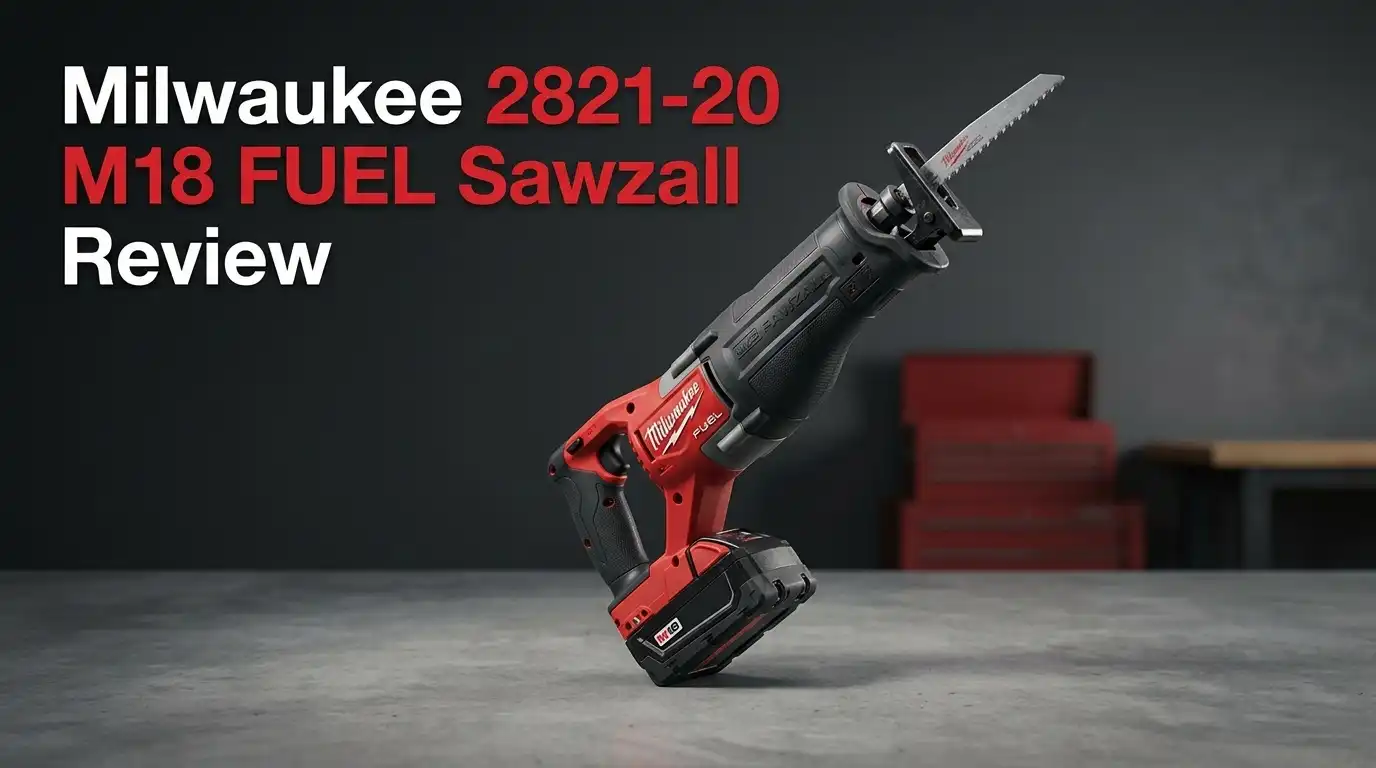
Milwaukee 2821-20 M18 FUEL Sawzall Review 2026: Still King?
The reciprocating saw sitting in your truck says a lot about how you work. Some guys want light. Some guys want brutal. Milwaukee built the 2821-20 to be both at the same time, and that promise has kept this saw near the top of every demolition conversation since it launched.
But 2026 is a different market. DeWalt sharpened its flagship. Makita refuses to go away. Battery platforms shifted. So the real question is simple. Does the second generation M18 FUEL Sawzall still deserve your money, or is it coasting on reputation?
I put this saw through nail embedded studs, black pipe, PVC, cast iron, and a long weekend of deck teardown. This review covers the good, the frustrating, and the things Milwaukee quietly hopes you ignore.
In a Nutshell:
- Raw cutting speed is still class leading. The POWERSTATE brushless motor pushes 3,000 strokes per minute with a 1-1/4 inch stroke length, and that combination chews through nail embedded lumber faster than most competitors in its weight class.
- It is lighter than the previous generation, landing around 6.8 pounds bare and roughly 8.4 pounds with a 5.0Ah pack attached. You feel that difference most during overhead work.
- Durability upgrades are real, not marketing. The sealed slide crank mechanism blocks water and dust, the blade clamp resists corrosion, and metal reinforced battery rails stop the wobble that killed older saws.
- Battery choice decides your experience. With a compact 2.0Ah pack this saw feels average. With a High Output 6.0Ah or 12.0Ah pack it feels unstoppable. Budget for the right battery.
- It is not perfect. There is no stroke length selector, no speed dial, no One Key connectivity, and vibration gets tiring after long demolition sessions. The bare tool price also climbed over the years.
- Best fit: plumbers, electricians, remodelers, and serious DIY owners already inside the M18 system who want one saw that handles everything without upgrading to the heavier Super Sawzall.
Milwaukee 2821-20 M18 FUEL Sawzall: What It Actually Is

Last update on 2026-10-29 / Affiliate links / Images from Amazon Product Advertising API
The 2821-20 is the second generation M18 FUEL Sawzall, sold as a bare tool. No battery. No charger. Just the saw.
Milwaukee positioned it as the replacement for the older 2720 series, and the changes go deeper than a fresh paint job. The brushless POWERSTATE motor drives a full 1-1/4 inch stroke at up to 3,000 SPM, which is the same stroke length as the bigger Super Sawzall.
REDLINK PLUS electronics sit between the motor and battery. They manage heat, prevent overload, and stop over discharge. In plain terms, the saw protects itself when you push it too hard instead of frying components.
You also get an adjustable pivot shoe, an LED work light, a lever action QUIK LOK blade clamp, and a hang hook. It covers the basics without asking you to pay for features you will never touch.
Unboxing Experience and First Impressions
There is no box ceremony here. The bare tool arrives in a plain cardboard sleeve with the saw, a single demolition blade, and a paperwork packet. That is it.
The first thing you notice is balance. Pick it up and the weight sits over your trigger hand rather than hanging off the nose. The older generation felt front heavy by comparison.
The second thing is the rubber overmold. It wraps the top of the housing and the rear grip, and it feels grippy without being sticky. Gloved hands do not slip.
The blade clamp lever moves with a satisfying mechanical snap. The shoe slides and locks without tools. The hang hook flips out with one thumb.
Build impression: this feels like a tool that was assembled by people who use tools. Nothing rattles. Nothing flexes. The plastic seams are tight and the battery rails are metal reinforced, which you can see when you look at the connection point.
Full Specifications Breakdown
Numbers matter, so here they are in plain language.
The motor is brushless POWERSTATE, Milwaukee’s own design. Maximum speed is 3,000 strokes per minute, controlled by a variable speed trigger with no speed dial override.
Stroke length is 1-1/4 inches, which is the big one. More material removed per stroke means fewer strokes to finish the cut, and that is where the speed advantage comes from.
Bare tool weight is roughly 6.8 pounds. Add a 5.0Ah battery and you are near 8.4 pounds. Overall length sits around 10 inches at the shoe, making it compact enough for joist bays.
Other features include an adjustable shoe, an anti corrosion blade clamp, a built in LED, a rafter hook, and full compatibility with every M18 battery and charger Milwaukee has ever made.
Warranty is 5 years, which remains one of the stronger coverage terms in cordless power tools.
Top 3 Alternatives for Milwaukee 2821-20 M18 FUEL Sawzall

Last update on 2026-10-29 / Affiliate links / Images from Amazon Product Advertising API
Milwaukee 2722-20 M18 FUEL Super Sawzall

Last update on 2026-10-29 / Affiliate links / Images from Amazon Product Advertising API
DEWALT DCS368B 20V MAX XR Reciprocating Saw with Power Detect


Last update on 2026-10-29 / Affiliate links / Images from Amazon Product Advertising API
Makita XRJ05Z 18V LXT Brushless Recipro Saw
Cutting Power and Real World Speed
This is where the 2821-20 earns its reputation. Nail embedded 2x material disappears. The saw does not bog, does not stall, and does not hunt for speed when the blade hits a buried 16d nail.
In side by side demolition work against older brushed saws, the difference is not subtle. What takes four or five seconds on a brushed saw takes two or three here.
Black pipe and conduit are equally easy. A quality bimetal blade and steady shoe pressure gets you through 3/4 inch black pipe quickly without chatter.
Cast iron is the honest test. The 2821-20 handles 3 inch cast iron soil pipe, but you will want a carbide blade and patience. It will finish the cut. It will also drain a 5.0Ah pack fast.
Bottom line: for a saw in this weight class, the cutting throughput is genuinely excellent and remains competitive in 2026.
Battery Runtime and Pack Pairing
Here is the part most reviews skip. The 2821-20 is only as good as the battery you hang on it.
With a compact 2.0Ah or 3.0Ah pack, the saw runs, but performance tapers under load and runtime is short. You will feel it drop off during continuous demolition.
Pair it with a High Output 6.0Ah or 8.0Ah pack and everything changes. Cut speed stays consistent, heat management improves, and you get through a meaningful chunk of work before swapping.
The 12.0Ah High Output pack is the ceiling. It adds noticeable weight and bulk, but for a day of teardown it is the right call.
Plan on owning at least two large capacity packs if this is your primary demolition saw. Buying the bare tool and running it on old 1.5Ah batteries is the most common mistake owners make.
Blade Changes and the QUIK LOK Clamp
The lever action QUIK LOK blade clamp is one of the best upgrades over the previous generation. Flip the lever, the old blade drops out, push the new one in, release.
No twisting a stiff collar with greasy gloves. No fighting a spring that lost its tension two years ago.
Milwaukee added anti corrosion treatment to the clamp, and that matters more than it sounds. Blade clamps fail because moisture and metal dust seize the mechanism. This one holds up.
The clamp accepts blades in both orientations, so you can run the teeth upward for flush and overhead cuts without any adapter.
One small complaint: the lever sits close enough to the shoe that a very hot blade is tough to swap bare handed. Keep a glove on. That is a universal recip saw issue, not a Milwaukee flaw, but it is worth noting.
Vibration, Comfort, and Control
Honest assessment time. This saw vibrates.
Milwaukee did not add a counterbalance mechanism like some competitors. For short cuts and normal plumbing or electrical work, the vibration is completely manageable.
For four straight hours of demolition, your forearms will know about it. This is the single most common long term complaint from owners, and it is fair.
Grip comfort partly offsets the issue. The overmold is thick in the right places and the handle angle lets you drive forward pressure naturally.
Trigger control is good. The variable speed trigger has real travel, so you can start a cut slowly to prevent blade walk and then bury it.
The LED is adequate rather than great. It lights the cut line in a dark crawlspace, but it sits low enough that the shoe casts a small shadow during plunge cuts.
Build Quality and Jobsite Durability
Milwaukee rebuilt the internals, and the changes target the parts that actually break.
The upgraded slide crank mechanism is sealed against water and dust ingress. Recip saws die from contamination more than from motor failure, so this is the right place to spend engineering effort.
The blade change lever is wear resistant, meaning the detents do not round off after a few hundred swaps.
Metal reinforced battery rails solve the loose battery problem that plagued older cordless saws. Drop a tool once and plastic rails crack. These do not.
The shoe is steel, the housing seams are tight, and the hang hook is riveted rather than glued.
After months of real use including a few drops off a ladder, the only cosmetic damage was scuffed paint. Nothing functional loosened or failed.
Where the Milwaukee 2821-20 Falls Short
No tool is perfect, and pretending otherwise helps nobody.
No stroke length selector. The Super Sawzall lets you shorten the stroke for controlled cuts in tight spaces. This one does not.
No speed dial. You control speed entirely with trigger finger discipline. For precision work in thin metal, a dial would help.
No One Key connectivity. If you want app based tool tracking and custom cut profiles, you need the 2822 model instead.
Vibration fatigue on long demolition days, as covered above.
No orbital action. Some competing saws offer an orbital mode for faster wood cutting. Milwaukee leaves it off this model.
Bare tool only. No battery, no charger, no case included at this price point, which surprises first time buyers.
None of these are dealbreakers for most users, but they are real limitations worth knowing before you buy.
Pros and Cons
Pros
- Class leading cut speed thanks to the 3,000 SPM motor and full 1-1/4 inch stroke length
- Lighter than the previous generation at roughly 6.8 pounds bare, which reduces fatigue during overhead cuts
- Excellent blade clamp with anti corrosion treatment and true one hand operation
- Sealed slide crank mechanism protects internals from water and dust on messy jobsites
- Metal reinforced battery connection eliminates loose pack wobble over time
- Works with every M18 battery ever made, protecting your existing platform investment
- 5 year warranty backed by a wide service network
Cons
- Noticeable vibration during extended demolition sessions with no counterbalance system
- No stroke length selector or speed dial for finer control in delicate cuts
- No orbital action mode, which some rivals include
- Performance drops meaningfully on small compact batteries
- Bare tool package includes no battery, charger, or case
- LED casts a shadow during plunge cuts because of its low mounting position
Milwaukee 2821-20 vs 2722-20 Super Sawzall
This is the comparison most buyers actually need.
The Super Sawzall (2722-20) weighs about 2 pounds more, landing near 8.8 pounds bare. It adds a stroke length selector, a variable speed dial, and slightly more raw torque.
The 2821-20 is lighter, uses the newer and easier blade change system, has the better shoe adjustment, and matches the Super on stroke length at 1-1/4 inches.
Choose the Super Sawzall if you cut cast iron and thick steel every single day and want maximum control settings.
Choose the 2821-20 if you want one saw that lives in your truck, handles 95 percent of jobs, and does not wear out your shoulders.
For most plumbers, electricians, and remodelers, the 2821-20 is the smarter pick. The weight savings compounds over a full workday.
Who Should Buy This Saw
Buy it if you already own M18 batteries. The bare tool price makes sense only when you have packs on hand, and platform loyalty is the main value driver here.
Buy it if you do varied work. Remodeling, plumbing rough in, electrical, HVAC, fence removal, storm cleanup. This saw covers all of it without complaint.
Buy it if weight matters. Overhead cutting, ladder work, and crawlspaces all favor the lighter housing.
Skip it if you need maximum control settings. Go Super Sawzall or consider the One Key 2822.
Skip it if you only cut occasionally. A brushed M18 Sawzall or a corded saw saves real money for light use.
Skip it if you are starting from zero with no battery platform, since the total system cost adds up quickly.
Price, Warranty, and Value in 2026
The bare tool launched at 199 dollars and has fluctuated since. Sales drop it meaningfully, and seasonal promotions are common.
Kit versions bundle a battery and charger at a higher price, and the two battery kit is usually the best value for a new M18 owner.
The 5 year warranty is strong. Milwaukee service centers are widely available, and parts support for this model is excellent.
Value depends entirely on your situation. If you own M18 packs, the bare tool is one of the best cordless purchases in the lineup. If you own no M18 batteries, the real cost is two to three times the sticker price.
Resale value also stays high. Used Milwaukee FUEL tools hold price better than most competing brands, which softens the long term cost.
Final Verdict
The Milwaukee 2821-20 M18 FUEL Sawzall is still one of the best cordless reciprocating saws you can buy in 2026.
It cuts fast, survives abuse, changes blades easily, and weighs less than the competition in its power class. The durability upgrades solve the exact problems that kill recip saws in the field.
The vibration is real. The missing stroke selector bothers some users. The bare tool packaging catches new buyers off guard.
But none of that overrides the core strength: this saw finishes cuts quickly and keeps working.
Rating: 4.5 out of 5. Buy it if you are in the M18 system and want a demolition workhorse that will not disappoint you on a Monday morning.
Frequently Asked Questions
Does the Milwaukee 2821-20 come with a battery?
No. The 2821-20 is sold as a bare tool. You get the saw and one blade. Battery and charger are separate purchases. The 2821-21 and 2821-22 kit versions include batteries and a charger.
What battery works best with the 2821-20?
A High Output 6.0Ah or 8.0Ah pack gives the best balance of runtime and weight. The 12.0Ah pack delivers maximum performance for heavy demolition. Compact 2.0Ah packs work but limit sustained output noticeably.
Can the 2821-20 cut cast iron pipe?
Yes. Use a carbide tipped blade and apply steady shoe pressure. It will complete the cut, though battery drain is heavy. For daily cast iron work, the Super Sawzall offers more control.
Is the 2821-20 better than the 2720?
Yes. It is lighter, faster, more durable, and has a much better blade clamp. The sealed slide crank and metal reinforced battery rails are significant real world improvements over the first generation.
Does it have One Key connectivity?
No. One Key is exclusive to the 2822 model. If you want Bluetooth tool tracking, custom cut profiles, and the cut brake feature, you need to step up to that version.
How long is the warranty?
Milwaukee covers the 2821-20 with a 5 year limited warranty. Register the tool after purchase and keep your receipt for faster service claims.

Hi, I’m Leah Ray — the voice behind CraftBench Vault. I’m a passionate woodworking enthusiast dedicated to reviewing the best wood cutting tools and woodworking products. Through honest research and hands-on experience, I help fellow crafters make smarter buying decisions. Welcome to my workshop!