BLACK+DECKER BDEJS300C 4.5 Amp Jig Saw Review 2026: Still Worth It?
A good jig saw turns a scary cut into a simple one. The BLACK+DECKER BDEJS300C has sat in the budget corner of the market for years, and it still sells fast in 2026. It promises 3,000 strokes per minute, bevel cuts, and a keyless blade clamp for around the price of a nice dinner.
But cheap tools make big promises all the time. Does this one cut straight? Does it bog down in thick pine? Does the blade clamp hold up after fifty cuts? I used it on plywood, pine boards, PVC trim, and thin aluminum to find out.
This review covers the unboxing, the real cutting performance, the weak points nobody mentions, and three strong alternatives. Read on before you spend a cent.
In a Nutshell:
- Power is modest but honest. The 4.5 amp motor hits up to 3,000 strokes per minute. It handles 3/4 inch wood, thin metal, and plastic without complaint. It is not a framing tool.
- Blade changes take seconds. The keyless clamp accepts both T shank and U shank blades, which is rare at this price. You do not need an Allen key.
- Bevel cuts reach 45 degrees. The shoe adjusts with a hex key, not a lever. That works, but it is slower than premium models.
- There is no orbital action. This is the biggest limitation. Cuts in thick stock feel slower than you expect, and aggressive curve cutting is not an option.
- Vibration is real. The tool buzzes more than a 5 or 6 amp saw. Long cuts tire your hand.
- Value is excellent for light DIY. For shelves, craft projects, plywood cutouts, and sink holes, this saw earns its keep. Daily professional users should spend more.
BLACK+DECKER BDEJS300C Jig Saw Overview


Last update on 2026-10-29 / Affiliate links / Images from Amazon Product Advertising API
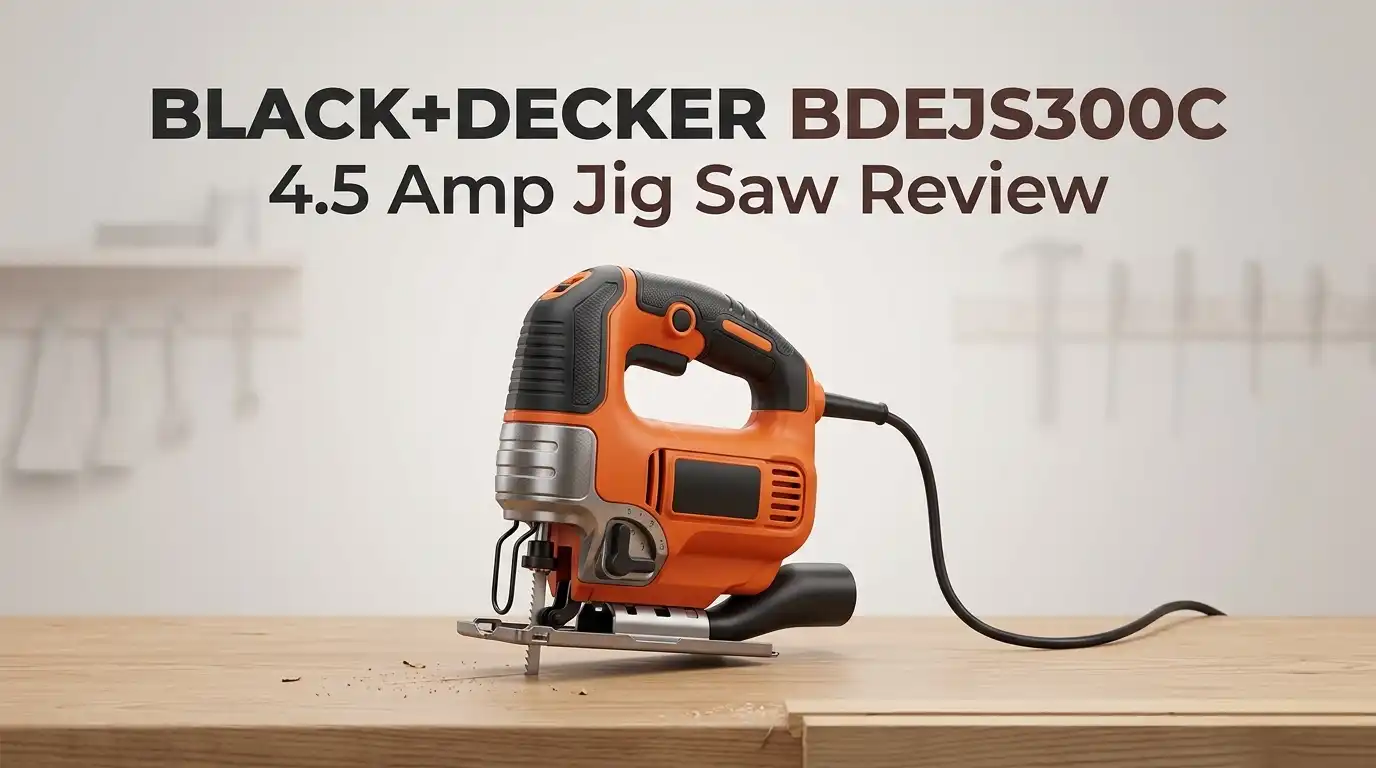
The BDEJS300C is a corded jig saw built for home users. It runs a 4.5 amp variable speed motor that reaches 3,000 strokes per minute. The stroke length measures 3/4 inch, which is standard for this class.
The saw cuts wood up to about 3/4 inch thick with ease, plus plastic and thin sheet metal with the right blade. A keyless clamp handles blade swaps. The adjustable shoe tilts to 45 degrees in either direction for angled work.
BLACK+DECKER backs it with a two year limited warranty. The body weighs just over four pounds, so most people can steer it one handed. It is a simple tool with no laser, no LED light, and no orbital setting. Simplicity is the whole point here.
Unboxing Experience and First Impressions
The box is small, light, and plain. Inside you get the saw, one general purpose wood blade, a small hex key, and a paper manual. There is no carrying case and no blade storage. That stings a little, though it matches the price.
The saw feels lighter in hand than the photos suggest. The orange and black plastic housing looks fine, but the shell has a hollow sound when you tap it. The metal shoe feels sturdier than expected.
My first cut happened within three minutes of opening the box. The trigger is smooth and the speed dial sits where your thumb lands. First impressions were honest and positive: nothing fancy, nothing broken, ready to work.
Design, Build Quality, and Ergonomics
The BDEJS300C uses a top handle design with a rubber overmold on the grip. Your hand sits high above the shoe, which gives decent control on straight cuts. The body is narrow, so smaller hands manage it well.
Build quality is mixed in a predictable way. The motor housing and gearbox feel solid. The plastic lock on button and the thin six foot cord feel like budget parts. A longer cord would have been welcome.
The stamped steel base plate is the standout piece. It stays flat and resists flexing during pressure cuts. Sight lines to the blade are clear because nothing blocks the front of the shoe. The tool balances well and does not tip forward when you rest it on a board.
Motor Power and Cutting Speed Tested
The 4.5 amp motor sits at the entry level. The variable speed trigger lets you start slow, which prevents blade wander at the beginning of a cut. A dial near the trigger sets the top speed.
In 3/4 inch pine, the saw cut steadily with light feed pressure. Push too hard and the motor pitch drops noticeably. Patience keeps the cut clean. In 1/2 inch plywood, it moved quickly with almost no slowdown.
Two inch stock is where the limits appear. The saw completes the cut, but it takes time and the blade heats up. Thin aluminum at low speed worked fine with a metal blade and a drop of oil. This motor rewards the right blade and a slow hand.
Top 3 Alternatives for BLACK+DECKER BDEJS300C

Last update on 2026-10-29 / Affiliate links / Images from Amazon Product Advertising API
BLACK+DECKER Jig Saw, Smart Select, 5.0 Amp (BDEJS600C)

Last update on 2026-10-29 / Affiliate links / Images from Amazon Product Advertising API
SKIL 6 Amp Corded Jig Saw with Tool Free Blade Change (JS314901)

Last update on 2026-10-29 / Affiliate links / Images from Amazon Product Advertising API
DEWALT 20V MAX Cordless Jig Saw, Tool Only (DCS331B)
Keyless Blade Change System
Blade changes are the best feature on this saw. You lift the clamp collar, drop the blade in, and release. The whole swap takes about five seconds with no tools.
The clamp accepts T shank and U shank blades. Most budget saws lock you into one style. This flexibility means you can grab any blade pack at any hardware store and it will fit.
The clamp does have a quirk. If you seat the blade off center, it can sit at a slight angle and cause drift. Push the blade fully back against the roller guide before releasing the collar. Some owners report the clamp loosening during heavy cuts. Checking the blade every few cuts solves that completely.
Bevel Cuts and Shoe Adjustment
The shoe tilts up to 45 degrees left or right. You loosen two screws with the included hex key, slide the shoe to the marked detent, then tighten again. The markings are molded into the metal and easy to read.
This is a manual system, not a tool free lever. Expect about thirty seconds per adjustment, and expect to keep track of that small hex key. Losing it means no bevel cuts until you find a replacement.
Accuracy at 45 degrees was close but not perfect. My test cut measured about one degree off, which matters for visible joints. A quick check with a speed square before cutting fixes the issue. For rough bevels and sink cutouts, it is fine as is.
Cutting Performance on Wood
Wood is this saw’s home turf. Straight cuts in 1/2 inch and 3/4 inch plywood came out clean on the top face with a fresh blade. Tear out appeared on the bottom face, which is normal for every jig saw.
Curves are where the lack of orbital action shows. You must slow your feed rate on tight curves or the blade flexes and leaves a beveled edge. Wide curves tracked nicely.
A sharp blade changes everything with this tool. The included blade works for a few cuts, then dulls. Switching to a quality 20 TPI blade for clean work or a 6 TPI blade for fast rough cuts made a visible difference. Painter tape along the cut line reduced splintering on plywood edges.
Cutting Performance on Metal and Plastic
Thin metal is possible with care. I cut 1/16 inch aluminum sheet using a fine metal blade at the lowest speed setting. The cut was slow and noisy, but it worked and left a usable edge.
Thicker steel is out of reach. The motor lacks the torque and the blade overheats before you finish. Stick to aluminum, thin brass, and light gauge sheet.
PVC and acrylic behaved well at low speed. High speed melts plastic and welds the kerf back together behind the blade. Running at speed setting two or three kept the chips clean. For laminate countertop trim, a reverse tooth blade gave the best top surface finish. Light materials suit this motor far better than dense ones.
Dust Blower and Line of Sight
A small dust blower pushes air across the cut line from the motor fan. It is always on and not adjustable. It clears enough sawdust to keep your pencil line visible, which is the main job.
Do not expect dust collection. There is no vacuum port on this model. Sawdust lands on your bench and on your shoes. Safety glasses matter here because the blower throws fine dust upward.
Line of sight is genuinely good. The front of the shoe is open and narrow, so you can watch the blade meet the line. There is no laser guide, and honestly most lasers on cheap saws are more distraction than help. Your eyes do a better job.
Comfort, Grip, and Vibration
The handle shape suits long sessions better than the vibration does. The rubber overmold gives grip even with dusty hands, and the trigger pull is light.
Vibration is the main comfort complaint. At full speed with no load, the saw buzzes through your palm. Under load in wood it smooths out, but your hand still feels it after ten minutes of continuous cutting.
Noise sits at a typical level for a corded saw. Hearing protection is a smart idea for longer projects. The lock on button helps during repeat cuts, though it can stick slightly after heavy use. Weight distribution is good, so you are not fighting the tool, only the buzz.
What the BDEJS300C Does Not Do Well
Honest reviews name the flaws, so here they are. No orbital action means slower cuts and less aggressive curve work than competing saws in the same price range.
Blade drift happens in thick stock. Cutting 2×4 material often leaves a cut face that is not square. The blade guide offers limited support, and cheap blades flex.
The shoe adjustment needs a hex key, which is easy to lose and slow to use. There is no case, no dust port, and no LED light. Quality control also varies. Some units arrive with a blade clamp that sits slightly off, causing an angled cut. If yours does this, return it immediately rather than trying to fix it.
Pros and Cons
Pros
- Very affordable for a brand name corded jig saw with a real warranty
- Keyless clamp accepts both T shank and U shank blades
- Variable speed trigger plus a speed dial gives useful control on plastic and metal
- Lightweight at just over four pounds, easy to steer one handed
- Clear sight line to the blade and a helpful dust blower
- Solid stamped steel shoe that tilts to 45 degrees both ways
- Two year limited warranty from BLACK+DECKER
Cons
- No orbital or curve control setting, so cuts in thick wood feel slow
- Noticeable vibration during longer sessions
- Bevel adjustment requires a hex key instead of a lever
- No carrying case, no dust port, no LED work light
- Blade drift in stock thicker than one inch
- Short power cord limits your reach
- Reports of inconsistent blade clamp alignment on some units
Who Should Buy This Jig Saw
This saw fits a clear type of buyer. Weekend DIY users cutting plywood, shelving, craft plywood, and trim will be happy. It is also a smart first jig saw for someone learning the tool.
Renters, apartment makers, and parents helping with school projects get real value here. The light weight suits anyone who finds bigger saws tiring.
Skip it if you cut hardwood daily or need square edges in thick stock. Contractors, cabinet makers, and serious hobbyists should move up to a 5 or 6 amp orbital saw. Spending another thirty dollars buys orbital action and a tool free bevel, which pay for themselves fast. Match the tool to your real workload, not to your ambitions.
Price and Value in 2026
The BDEJS300C still sits in the low forty dollar range in 2026, with regular dips below that during sales. At that price it competes with no name imports rather than with major brands.
You get brand support and a two year warranty, which import brands rarely match. Replacement parts are easy to find, and blades cost very little.
Value depends entirely on expectations. Judged as a forty dollar saw, it performs well above its price. Judged as a general purpose workshop saw, it falls short. Think of it as a dependable light duty tool that saves you from borrowing one. For occasional projects, few tools return more usefulness per dollar than this one.
Tips to Get Better Cuts With This Saw
Small habits improve results dramatically. Buy quality blades immediately and match the tooth count to the material. The included blade is a starter, not a keeper.
Clamp your workpiece. A vibrating board ruins a straight line faster than any tool flaw. Use a straight edge or a clamped board as a guide fence for long rip cuts.
Let the saw reach full speed before the blade touches wood. Start cuts slowly, then settle into a steady feed. Apply painter tape over the cut line to reduce splintering on plywood and laminate. Finally, cut just outside your line and sand to the line. That one habit makes budget saw results look professional.
Final Verdict on the BLACK+DECKER BDEJS300C
Last update on 2026-10-29 / Affiliate links / Images from Amazon Product Advertising API
The BDEJS300C does exactly what a budget jig saw should do. It cuts wood, plastic, and thin metal well enough for home projects, it changes blades in seconds, and it costs almost nothing.
It is not a precision tool. The missing orbital action, the hex key bevel, and the vibration keep it out of the serious workshop. Those limits are honest at this price.
My rating is 4 out of 5 for DIY users and 2.5 out of 5 for professionals. Buy it if your project list is short, light, and occasional. Choose the BDEJS600C or the SKIL 6 amp model if you plan to cut often. For everyone else, this little saw delivers real value.
FAQs
Does the BDEJS300C have orbital action?
No. This model cuts with a straight up and down stroke only. Orbital action appears on the BDEJS600C, which adds four curve control settings for faster cutting.
What blades fit the BLACK+DECKER BDEJS300C?
The keyless clamp accepts T shank and U shank blades. That covers almost every blade sold in hardware stores, including wood, metal, laminate, and scrolling blades.
How thick can this jig saw cut?
It handles wood up to about 3/4 inch comfortably. It can cut thicker stock, but the cut slows and the blade may drift out of square.
Can it cut metal?
Yes, with limits. Use a fine tooth metal blade at low speed on thin aluminum or sheet metal. Thick steel is beyond this motor.
Does it come with a case?
No. The box includes the saw, one blade, a hex key, and a manual. Third party hard cases are sold separately.
Is it good for beginners?
Yes. The light weight, simple controls, and low price make it one of the friendliest first jig saws available.

Hi, I’m Leah Ray — the voice behind CraftBench Vault. I’m a passionate woodworking enthusiast dedicated to reviewing the best wood cutting tools and woodworking products. Through honest research and hands-on experience, I help fellow crafters make smarter buying decisions. Welcome to my workshop!