
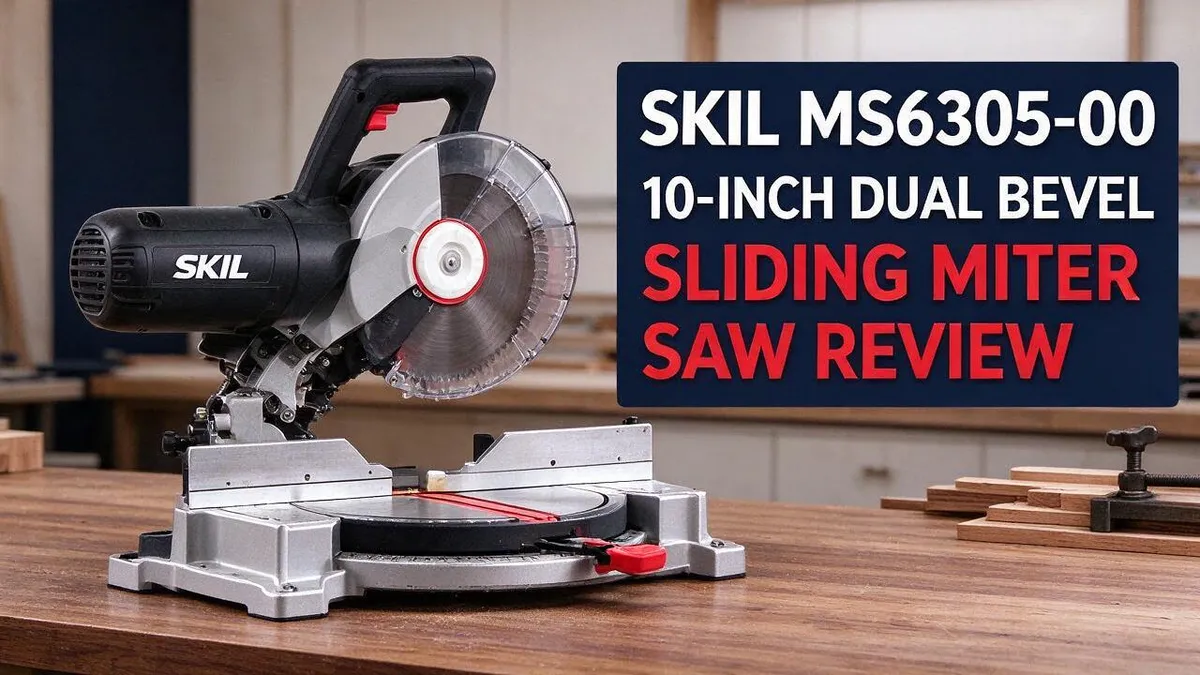
SKIL MS6305-00 10-Inch Dual Bevel Sliding Miter Saw Review
Are you tired of rough angle cuts that never quite line up? You are not alone. Many home builders and weekend woodworkers search for a saw that delivers clean results.
The SKIL MS6305 10 inch dual bevel sliding miter saw is a strong choice for this job. It gives you smooth miter, bevel, and swing arm movement. You also get precise angle cuts from 0 to 45 degrees.
A 3800 RPM motor drives the blade. A laser guide and shadow line feature help you line up each cut. The large work table supports wide boards with ease.
Many users say it cuts well right out of the box. Others want sturdier parts and less plastic. In this review, you will see how it performs in real projects, where it shines, and where it falls short.
In a Nutshell
-
Nine positive stops: The saw locks onto common angles with nine positive stops. You can switch between cuts without guessing. This helps beginners and pros work faster.
-
Built in laser guide: A laser line shows exactly where the blade will fall. Marking your cut becomes much simpler. This helps you check alignment before the blade spins.
-
Shadow line feature: This feature helps you align your workpiece with the blade. Your cuts stay accurate from start to finish. Many woodworkers use this visual aid for repeat cuts.
-
Wide cutting capacity: The saw handles boards up to 4.2 by 13 inches. Wide trim and crown molding fit with ease. Big projects like shelving and framing also fit well.
-
Large work table: The big table supports long boards and heavy stock. You get steady support during every pass. A sturdy surface keeps your workpiece level and steady.
-
Build quality note: Some owners wish the saw used less plastic. Build quality may feel like a weak spot for some buyers. Still, many shoppers find the saw performs well despite this.
Cutting Capacity and Blade Performance


Last update on 2026-10-28 / Affiliate links / Images from Amazon Product Advertising API
Cutting capacity decides which projects you can finish with one saw. This model uses a 10 inch blade, which suits most trim, framing, and flooring jobs.
The head tilts from 0 to 45 degrees, so you can make compound cuts on crown molding without flipping the piece. This adds real flexibility to your workflow.
Blade quality matters just as much as blade size. A sharp blade slices clean fibers, while a dull blade tears the wood and leaves rough edges.
The stock blade handles general work well. For fine trim or hardwood, consider a finer tooth blade for smoother results.
Power also affects cut quality. The 15 amp motor helps the blade hold its speed when you cut dense oak or thick pine.
Wide stock needs solid support. Place a support board or roller on both sides of the saw so long pieces do not dip or pinch the blade.
Tear out often appears on the bottom face of the cut. Place a scrap piece under your board as a backer to protect the finished side.
Let the blade reach full speed before the teeth touch the wood. Then feed the cut slowly and steadily. Forcing the saw can burn the wood and wear down the motor.
Other saws offer different strengths. The DeWalt DWS779 earns strong praise from Reddit users, and the Makita LS1040 offers a soft start that reduces the jolt at startup.
A 12 inch single bevel saw from DeWalt cuts wider boards in one pass. However, it needs more shop space and can feel heavier to move.
Think about your typical projects first. If you cut mostly standard lumber and trim, this 10 inch model covers the work well.
Test your cuts on scrap wood before you start the final piece. A quick test shows how the blade and the wood react together.
Bevel, Miter, and Angle Accuracy
Angle accuracy starts before the first cut. Check the blade against the fence with a reliable square. Small errors grow fast on picture frames and trim.
Test cuts reveal the truth about your setup. Cut two pieces from scrap wood, then fit them together. If a gap appears, adjust the pointer or stop screws and repeat.
Bevel settings need careful checks too. Set the blade at 0 and 45 degrees using a speed square or digital angle finder. Tighten the lock knob firmly so the setting does not drift during heavy work.
Miter angles can shift over time. Inspect the detent plate after moving the saw or transporting it to a job site. Gentle adjustments keep the stops crisp and reliable.
Solid clamping makes a big difference. Hold the workpiece flat and press it firmly against the fence. A loose board can slide during the cut and ruin an otherwise perfect angle.
Blade wobble can also ruin angle precision. Inspect the arbor nut and blade bolt before each session. A secure blade keeps the cut line steady from start to finish.
Dust buildup affects settings as well. Wipe the table, fence, and slide rails often. Clean surfaces let the arm glide smoothly and return to each stop.
Compound joints deserve extra attention. Cut a sample piece first, then dry fit the corners. Tiny tweaks at this stage save wasted lumber later.
Pencil lines can help you refine a cut. Aim just outside the line, then sneak up on it with a light pass. Patience often beats speed when accuracy matters most.
Odd angles need a different approach. Many woodworkers add a stop block and measure a test cut before committing. This method gives repeatable results across multiple pieces.
Final checks protect your projects. Recheck the angles after every few cuts. Consistent accuracy turns good work into great results.
Good habits make a real difference. Write down your settings for common projects so you can repeat them later.
Build Quality and Materials
Build quality shapes how a miter saw feels every day. Solid parts and tight joints keep cuts consistent over many years.
The SKIL MS6305-00 gets mixed feedback on this front. Many owners say the saw is not the best built machine on the market.
The main complaint is plastic. Some users wish more of the housing and parts used metal instead.
Plastic is not always a weakness. Lighter housings can make the saw easier to move around the shop. Still, parts under stress need extra attention.
Focus on the parts that take the most force. The arm, the pivot points, and the fence handle most of the work. Check these areas first.
Look at the sliding rails before you start a project. They should glide smoothly without side play. A rail that rocks causes uneven cuts.
Inspect the base and table next. A flat table keeps boards level during cuts. A warped surface can throw off every angle you set.
Test the locking knobs too. Tighten each knob and see if the head moves. Loose locks often lead to slight drift during a cut.
Sturdy materials also help control vibration. Less shake means cleaner edges and less wear on the motor. Keep bolts snug and check them often.
Pay attention to the fence as well. A fence that flexes under pressure can shift the workpiece. Clamp boards firmly to keep them steady.
Simple care extends the life of any saw. Wipe sawdust from the rails and pivot points. Apply a light dry lubricant to keep movement smooth.
Finally, read recent owner reviews with care. Look for comments about loose parts or cracked housings. Patterns across many reviews tell you more than a single rating.
Ask the seller about warranty details before you buy. Clear support often signals confidence in the materials.
Build quality is a mixed picture, but it is manageable. Careful checks and steady maintenance help this saw perform well. Solid materials matter, yet how you treat the tool matters just as much.
Top 3 Alternatives
Looking for a strong miter saw that makes accurate cuts? These three options are worth a close look.
DEWALT DWS779

Last update on 2026-10-28 / Affiliate links / Images from Amazon Product Advertising API
The DEWALT DWS779 uses a 12-inch blade. It handles wide boards with ease. Its dual bevel design lets you cut angles on both sides of the blade.
An LED light casts a shadow line onto your workpiece. This helps you line up each cut before you start. It suits framing, trim, and other everyday projects.
Bosch GCM12SD

Last update on 2026-10-28 / Affiliate links / Images from Amazon Product Advertising API
The Bosch GCM12SD features a glide system. The arms move smoothly, so the saw stays steady during each pass. It also offers a 12-inch blade and dual bevel cuts.
Many users value its smooth action and clean finish. It works well for crown molding and other detailed trim jobs.
Makita LS1019L

Last update on 2026-10-28 / Affiliate links / Images from Amazon Product Advertising API
The Makita LS1019L has a 10-inch blade. It fits smaller spaces and lighter workloads. A built-in laser guide shows exactly where the blade will cut.
This model suits beginners and weekend hobbyists. It gives you accurate results without a large footprint in your workshop.
Setup, Controls, and Ease of Use
Setting up the SKIL MS6305-00 takes less time than many people expect. Start by choosing a flat, stable spot for the saw. A sturdy bench or stand keeps the base level from the first cut.
Unpack the saw and check every part against the manual before you plug it in. Look for the fence, the dust bag, and the table extensions. Missing pieces slow down the whole setup.
Many users like how the large work table gives them room for long boards. Wide boards rest on it without much wobble, so the table itself offers a solid starting surface.
The laser guide sits above the blade and shows where the cut will land. Turn it on and align it with your pencil line before each cut. Quick checks like this save scrap wood.
The shadow line gives you a second way to line up your mark. It shows the blade path on the board, so you can see the kerf before the saw starts.
Controls sit in easy reach once you learn the layout. The trigger, the bevel lever, and the miter lock all work with one hand. Practice each motion slowly before you power up.
The miter handle moves the head with a smooth motion. Nine positive stops snap the saw into common angles, so you do not need to guess. The stops feel firm and clear.
The slide arm needs a gentle pull and push. Keep the rails clean and free of sawdust for the smoothest glide. A quick wipe after each session keeps movement easy.
Ease of use improves with practice. Most beginners feel comfortable after a few small test cuts on scrap. Learning how the head locks and releases builds confidence fast.
Keep the trigger lock and the blade guard in mind during setup. Always unplug the saw before changing the blade or adjusting the base. Clear the work area of cords and offcuts before you begin. Safe habits make every session easier.
Pros and Cons
Pros
– The 9 positive stops help you hit common angles fast.
– The 3800 RPM motor keeps cuts clean and steady.
– Precision angle cuts make many projects easier to finish.
– Many owners say it cuts well right out of the box.
– A 4.6 average rating shows most buyers feel happy with it.
Cons
– Some owners say the build quality falls short of expectations.
– Some review checks rate the feedback as B after adjustment.
– The 4.2 by 13 inch max cut may limit wide or thick stock.
– Reddit users often rank the DeWalt DWS779 above this saw.
Who Should Buy It
This saw suits a home workshop owner who wants clean, repeatable results. Weekend builders often reach for a miter saw for trim, frames, and shelving. This model handles those jobs well.
Hobbyists who make picture frames will appreciate the angle options. Crisp miter cuts help corners meet tightly. Tight corners make frames look polished.
Trim carpenters working on baseboards and crown molding also benefit. The dual bevel lets you tilt the blade left or right. Many room projects can finish without swapping tools.
Beginners who feel unsure about power tools can still succeed. The laser guide and shadow line make marking simpler. A few small practice cuts build real confidence.
Students in woodworking classes may find this saw a useful training tool. Its controls are easy to learn. Clear setup steps also make early lessons smoother.
Furniture makers working with smaller stock will feel at home here. Most cuts on small parts stay within the capacity range. Careful measuring still matters for every piece.
Deck builders and framers should look elsewhere. Heavy lumber and wide boards push past the cut capacity. A larger saw serves those jobs better.
Anyone planning a large fence or deck project should add other tools. A circular saw works well for long rips. Pairing the two tools covers more of the work.
Shoppers who need to work away from outlets may prefer a cordless option. The Craftsman V20 fits that need, though it offers a single bevel only.
Buyers who want a gentler start may compare the Makita LS1040. Its soft start design suits people who want less jolt when the saw powers on.
Choose this saw for regular angle work at home. It rewards people who plan careful cuts and prefer steady accuracy.
Final Verdict
After weighing the strengths and trade-offs, we think the SKIL MS6305-00 makes a practical choice for many home shops.
It shines when your projects need the same angle cut again and again. Consider your typical project first. Measure the widest board you plan to cut.
Match the tool to the job. Think about the lumber you buy most often and check that it fits under the blade.
Keep the saw clean and check the fence for squareness now and then. Regular checks help your cuts stay accurate for years.
If you want a second opinion, compare cut quality across a few saws side by side.
Try before you commit. Watch a short demo video or visit a store to feel the controls in your hands.
Our overall take is clear. The SKIL MS6305-00 delivers clean results for common home projects.
It rewards patience and practice. Spend a few test cuts on scrap wood before you start your real project.
Bottom line: if your work involves regular angle cuts on modest stock, this saw deserves a close look.
Your next step is easy. Measure your workspace, list your common cuts, and decide if this saw fits.
Think about your skill level too. Newer users may need a few weeks to feel comfortable, and that is normal.
Your workspace matters as well. A stable bench and good lighting make every cut safer and more accurate.
Plan for dust. Connect a shop vacuum or dust bag to keep the cutting area clear.
Look ahead to future projects too. A tool that fits today may feel small once your skills grow.
Keep your expectations realistic. Every saw needs a little tuning, and that effort rewards you with cleaner cuts.
Final thought: the SKIL MS6305-00 suits people who want steady, accurate angle work at home.
Read a few recent owner reviews too. Look for comments about the fit and finish, since those details shape daily use.
Enjoy the process of building something useful.
Frequently Asked Questions
Can this saw cut large deck boards or framing lumber?
Not really. The cutting capacity fits smaller stock best. Wide deck boards or thick beams may not fit under the blade. Measure your lumber before you buy.
Does the dual bevel feature help with compound cuts?
Yes. The blade tilts to the left and right. You can cut crown molding or angled trim without flipping the workpiece over. Many home builders find this saves time on trim work.
Is this saw a good first miter saw for beginners?
It can be. Beginners often learn quickly with clear markings and simple controls. Practice on scrap wood first so you can get comfortable with the saw before you cut your final pieces.
What accessories should I add for longer boards?
Long boards need support on both sides of the saw. Add outfeed supports or a sturdy stand so the board stays level. A clamp also keeps the piece steady during each cut.
Is the Makita LS1040 worth comparing?
Yes. It offers a 15 amp direct drive motor and soft start. Some buyers like how smoothly it starts up. Cut the same board with both saws to see which one matches your shop and your projects.

Hi, I’m Leah Ray — the voice behind CraftBench Vault. I’m a passionate woodworking enthusiast dedicated to reviewing the best wood cutting tools and woodworking products. Through honest research and hands-on experience, I help fellow crafters make smarter buying decisions. Welcome to my workshop!