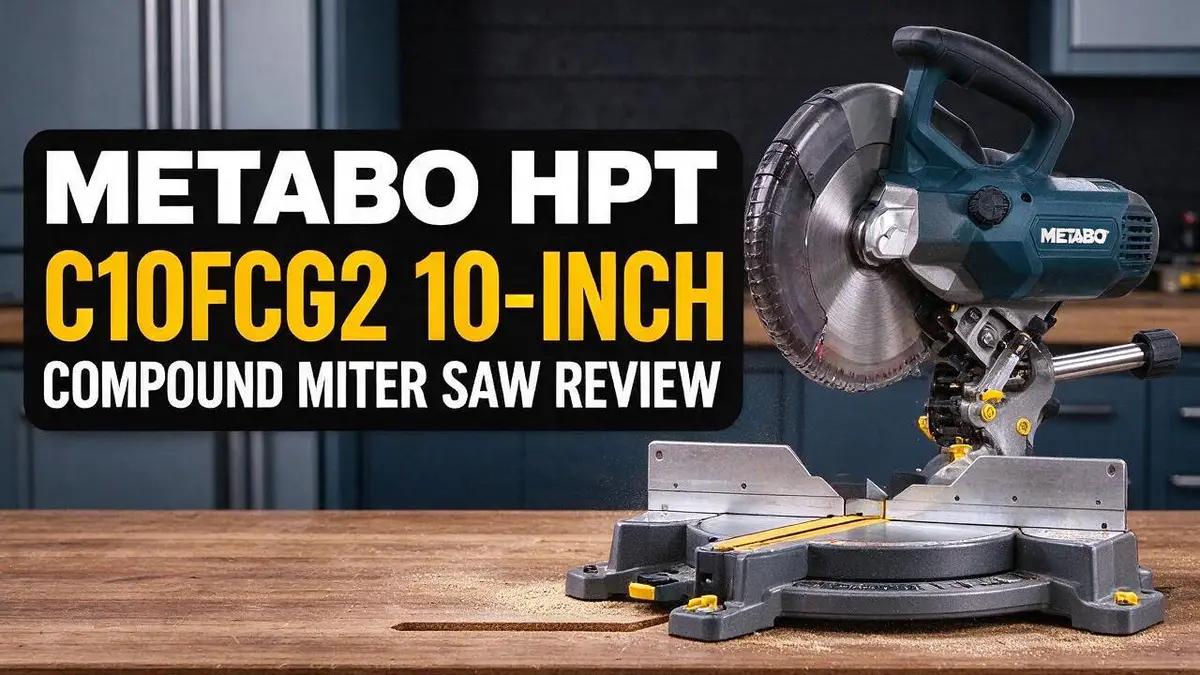
Metabo HPT C10FCG2 10-Inch Compound Miter Saw Review
Are you looking for a saw that fits a small shop or a tight job site? The Metabo HPT C10FCG2 might be the tool you need. It is a 10 inch compound miter saw built for clean trim work.
Built for trim work and quick cuts. This saw packs a 15 amp motor. It spins at 5,000 RPM with no load.
An electric brake stops the blade fast. A shadow cut light helps you line up every mark.
Its frame weighs about 24 pounds with the handle. That makes it easy to carry from room to room.
Still, no tool fits every job. This guide covers the specs, the pros and cons, and top rivals. Keep reading to see if this saw belongs in your workshop.
In a Nutshell
-
Warranty coverage: The saw includes a 5 year warranty. Buyers get extra protection for regular jobs. Long coverage often signals that the maker stands behind the tool.
-
Reader feedback: Owners rate it 4.8 out of 5 stars across 92 reviews. That score points to steady satisfaction among users.
-
Cut capacity limits: The max cut depth of about 4 and 1/2 inches limits larger stock. Flipping the board for 6×6 posts gives a rough cut, so plan those jobs with a bigger saw.
-
Single bevel design: The saw tilts only one way. Angled cuts on both sides need a flip or a different tool. This limit matters for framing and furniture projects.
-
Motor efficiency: The brushed style motor runs less efficiently than a brushless motor. Shoppers who run the saw for long shifts should weigh this trade off.
-
Top rivals: Ryobi earned top marks overall in a cheap saw test. Skil leads the slide saw category. DeWalt suits woodworking projects. Metabo HPT also offers a 15A dual bevel model from the same brand.
Cutting Capacity and Depth


Last update on 2026-10-28 / Affiliate links / Images from Amazon Product Advertising API
Cutting capacity decides which jobs this saw can finish. Every saw has limits, so knowing them helps you pick the right cut. Measure the widest and thickest boards you plan to cut before you buy.
Think about how the board sits on the saw. A flat board can take a full cut across its width.
A board standing on its edge is limited by height. The blade must pass through the full thickness.
Trim work is where this saw shines. Baseboards, crown molding, and door casing are common examples. The 10 inch blade stays steady on these shorter cuts. Crisp edges matter most for visible trim.
Larger stock needs more planning. Heavy timber such as 6 by 6 posts may require extra steps. Many users flip the board to cut from both sides. Expect a rougher finish where the two cuts meet.
A clean approach helps here. Mark your line on both faces. Then cut slowly from each side. Take your time on the final pass.
Support matters as much as the blade. Use roller stands or a sturdy table for long boards.
Keep the board flat and firmly pressed against the fence. This reduces tear out and keeps your measurements true.
Think about cut repeatability. A stop block on the fence helps when you cut many pieces of the same length. Set it once, then cut every piece quickly.
Your results stay consistent from board to board. That saves time on bigger batches.
Dust and debris matter too. Clear chips from the table between cuts. The shadow cut light helps you see the line clearly.
Finally, match the saw to your work. If you build large beams or thick slabs, consider another tool. For trim, framing parts, and small shop projects, this saw covers plenty of ground. Measure first, then cut with care.
Motor and Cutting Performance
Blade speed shapes the final finish. This saw spins at about 5,000 RPM with no load. Higher speed helps the teeth slice wood fibers cleanly instead of tearing them. That matters most on soft pine and thin trim.
Load changes the story. The 15 amp motor keeps the blade moving when the teeth meet the wood. Dense hardwood like oak or maple asks more from the motor. Slow your feed rate on tough stock to protect the edge and avoid burn marks.
Pushing too hard can bog the motor. A steady, even pull through the cut gives the best result. Let the blade do the work.
Angle settings stay easy to repeat. The stainless detent plate locks common miter and bevel angles in place. Each setting clicks into position, so you can reproduce a cut without guessing. Still, check the angle with a square before you start a big project.
The shadow cut light helps with accuracy. It projects a line onto the board that shows where the blade will land. You can line up your mark before the teeth touch the wood. This feature helps most on small trim pieces where a few millimeters count.
The blade guard moves out of the way. It pulls back into the housing as you lower the arm. Then it covers the blade again when you lift. This motion keeps your hands clear during the cut.
Blade condition affects every cut. A sharp blade with the right tooth count gives a smoother edge on trim. A dull blade burns wood and leaves rough fibers behind. Clean the blade with a resin remover every few weeks to keep the teeth working well.
Wide boards need a different approach. This saw handles trim and narrow stock with ease. Wider panels or long boards may fit better on a slide saw. Many woodworkers keep a second tool for these jobs so each cut stays clean and safe.
Safety and Blade Guard Design
Safety starts long before you pull the trigger. Good habits protect your hands and eyes every time. Take a minute to set up your space first.
Keep both hands well away from the blade path. Hold the board firmly against the fence and table. Never reach across the blade or under the guard to grab a small offcut.
The blade guard does more than cover the teeth. It also helps keep sawdust and small chips from flying toward your face. Check that it returns smoothly after each cut.
Clean the guard regularly. Sawdust packed around the housing can slow the guard as it moves back. A quick brush with a dry cloth keeps it moving freely.
Let the blade stop before you lift the arm. The electric brake slows the blade quickly, but patience prevents rushed mistakes. Wait for the blade to stop completely before you move your hands near it.
Wear eye and ear protection every time you cut. Miter saws are loud, and flying debris can cause real injury. Safety glasses and hearing protection take only seconds to put on.
Support long boards with stands or roller supports. Unsupported ends can tip or pinch the blade, which may cause kickback. Keep offcuts from falling off the table during a cut.
Unplug the saw before changing the blade. Always check that the power cord stays out of the cutting path. Loose sleeves and jewelry should stay out of reach too.
Keep the work area tidy. Scraps on the floor can cause trips and slips near a running saw. A clean floor gives you steady footing and better control.
Dust matters for safety, too. Fine particles can irritate your lungs and eyes. A dust mask keeps those particles out of your airways during longer sessions.
Test each cut slowly at first. Lower the arm with steady pressure instead of forcing it down. A smooth motion keeps the blade under control and reduces the chance of binding.
Finally, take breaks when you feel tired. Fatigue leads to careless hand placement. A rested operator makes safer and more accurate cuts.
Top 3 Alternatives
DEWALT DWS713

Last update on 2026-10-28 / Affiliate links / Images from Amazon Product Advertising API
The DEWALT DWS713 suits buyers who need extra cutting width. Its 10-inch blade and sliding rail let you cut wide boards in one pass. Many users like the clear cut guides and simple bevel controls. It works well for trim, flooring, and general home projects.
Makita LS1019L

Last update on 2026-10-28 / Affiliate links / Images from Amazon Product Advertising API
The Makita LS1019L includes a built-in laser guide. The laser marks your cut line, so you can line up boards faster. It also uses a 10-inch blade and a sliding design for wider stock. This saw fits crown molding, picture frames, and other detailed work.
Bosch GCM10MX

Last update on 2026-10-28 / Affiliate links / Images from Amazon Product Advertising API
The Bosch GCM10MX uses a glide arm instead of a traditional slide. Its 10-inch blade stays close to the fence, which keeps the footprint compact. The single bevel design also makes setup simple. This saw fits small workshops and job sites where space is limited.
Portability and Build Quality
Moving this saw from site to site is simple. It weighs about 24.2 pounds with the handle. That weight is manageable for most adults, even when you carry it across a yard or up a set of stairs.
The compact body also helps in tight spaces. A small footprint fits on a folding table or a narrow workbench. You can set up a cutting spot in a garage corner and clear it fast when the job is done.
Handle comfort matters on long carries. Grip the handle near its balance point so the saw sits level in your hand. Keep your elbow close to your side to reduce strain on your shoulder.
The build feels solid for its size. The housing uses metal, which gives the saw a firm feel on the bench. Parts sit snugly together, and the arm moves with a steady motion.
The five year warranty adds peace of mind. It signals that the maker expects the saw to handle regular use. People who move their saw often can rely on that coverage.
Owner feedback supports the build story. The saw holds a 4.8 out of 5 rating across 92 reviews. Many buyers mention how easy it is to carry from job to job.
Stability needs attention on a portable saw. Set the saw on a flat surface before you cut. Add clamps or bolt the base to a stand if the bench wobbles.
Portability involves tradeoffs. A lighter saw can shift more under heavy pressure than a heavier model. Plan your setup so the saw stays put during each pass.
Cord management deserves a moment too. Wrap the cord loosely around the handle before you carry the saw. Store it in a dry spot so the metal parts stay in good shape.
Compact size also limits cut capacity. Wider or thicker stock may need extra passes or a different tool. Choose the saw that matches the boards you cut most often.
Pros and Cons
Pros
- The electric brake stops the blade quickly after each cut.
- The 10 inch blade flexes less than a 12 inch blade on trim cuts.
- The saw handles small trim and molding jobs with ease.
- The shadow cut light shows where the blade will land before you cut.
- The lightweight body makes it easy to move between job sites.
Cons
- The maximum cut depth limits the size of boards it can handle.
- Flipping the board for 6×6 stock leaves an unclean cut.
- It offers single bevel only, so angled cuts go in one direction.
- The brushed style motor runs less efficiently than a brushless motor.
Who Should Buy It
This saw fits a few types of buyers best. New users who want to learn miter cuts will find it approachable. Picture frame makers and craft builders also benefit. Their small, precise cuts suit this saw well. Hobbyists often need only a short session at a time.
Homeowners with occasional projects make a strong match. They can cut lumber for shelves and fence repairs. They do not need a full workshop setup. Garage shops with a fixed bench can keep it ready all the time. Setup stays simple, so the saw goes straight to work.
Students and classroom users can benefit from it too. A shared saw needs clear rules, and this model keeps the setup easy to explain. Instructors can show the basics in a short lesson.
Crafters who build small signs or gifts often work with narrow stock. This saw handles those short pieces with steady, clean angles. Repeated cuts stay consistent when you set the angle carefully.
Buyers who need angled cuts in both directions should look elsewhere. The Metabo HPT 15A 10 inch dual bevel model offers that option. Woodworkers who want more range may prefer the DeWalt DWS779 sliding double bevel.
Anyone who cuts wide boards every day may prefer a slide saw. The Skil 10 inch slide saw earned top marks as the best slide saw in one test. Shoppers who want a simple starter saw can also consider the Ryobi 10 inch compound miter saw. It ranked as the best overall pick in a recent saw test.
Professionals who cut all day may want a heavier or more powerful model. The motor and capacity suit light to moderate use better than constant production.
Overall, this saw suits learners, hobbyists, and light home users. Heavy production shops should compare options first. Choose based on the cuts you make most often. Before buying, check your typical board sizes and cut types. A quick plan prevents frustration later. That simple check makes the choice clear for most shoppers.
Final Verdict
Here is our final take on the Metabo HPT C10FCG2. It works best as a focused tool for trim, molding, and small projects. It does not try to replace a large sliding saw.
Think about your daily routine first. Your work pattern matters more than any single feature. Match the saw to the jobs you repeat most often, and the choice becomes clear.
Practice builds the best results. Test cuts on scrap wood first. Small wins help you trust the saw and your setup before real projects begin.
Check the listing details before you commit. Confirm the model number and included parts. Read recent owner feedback too, since photos and descriptions can differ from the box.
Our recommendation is simple. Pick this saw if you want a light, clean cutter for trim and small builds. Skip it if your shop needs heavy capacity for thick stock every day.
Setup habits make a real difference. Clamp the workpiece firmly before each cut. Keep the work area clear of cords and offcuts. Good habits protect your hands and improve accuracy on every trim job.
Measure twice before every cut. Mark your cut line clearly with a sharp pencil. Check the angle setting again before you start the motor, since small errors add up fast.
Think about the long term. A saw you enjoy using gets more time in the shop. Comfort and confidence often matter more than extra features. Pick a tool that keeps you excited about your next project.
Your next step is easy. Review your project list for the next three months. If most jobs involve trim or small stock, this saw will serve you well. Write down the board widths you cut most often.
Stay confident with your choice. Every tool has tradeoffs. Knowing them ahead of time makes you a happier owner.
Final thought for buyers. This saw earns its place for hobbyists and careful homeowners. It rewards patience, good setup habits, and realistic project choices. Keep those in mind, and you will likely be happy.
Frequently Asked Questions
Does this saw stop the blade quickly?
Yes, it has an electric brake. The blade slows down fast after you release the trigger. You can move on to the next cut sooner and keep your work moving.
What does the five year warranty mean for you?
The five year warranty gives you long term peace of mind. You can use the saw on many projects before wear becomes a concern. Keep your purchase details handy in case you need service.
Is this saw good for woodworking?
Not really. It works best for trim and light builds. Woodworkers who want detailed joinery often choose a different model. The DeWalt DWS779 sliding double bevel saw is a common pick for that kind of work.
Why does the 10 inch blade matter for trim?
A 10 inch blade flexes less than a 12 inch blade on trimming cuts. Less flex helps keep thin trim pieces straight. This makes a real difference when you cut crown molding or baseboards.
What do other owners say?
Owners give this saw a 4.8 out of 5 star rating across 92 reviews. Many buyers praise its compact size. Read the full reviews on the listing to see how the saw fits your needs.

Hi, I’m Leah Ray — the voice behind CraftBench Vault. I’m a passionate woodworking enthusiast dedicated to reviewing the best wood cutting tools and woodworking products. Through honest research and hands-on experience, I help fellow crafters make smarter buying decisions. Welcome to my workshop!