
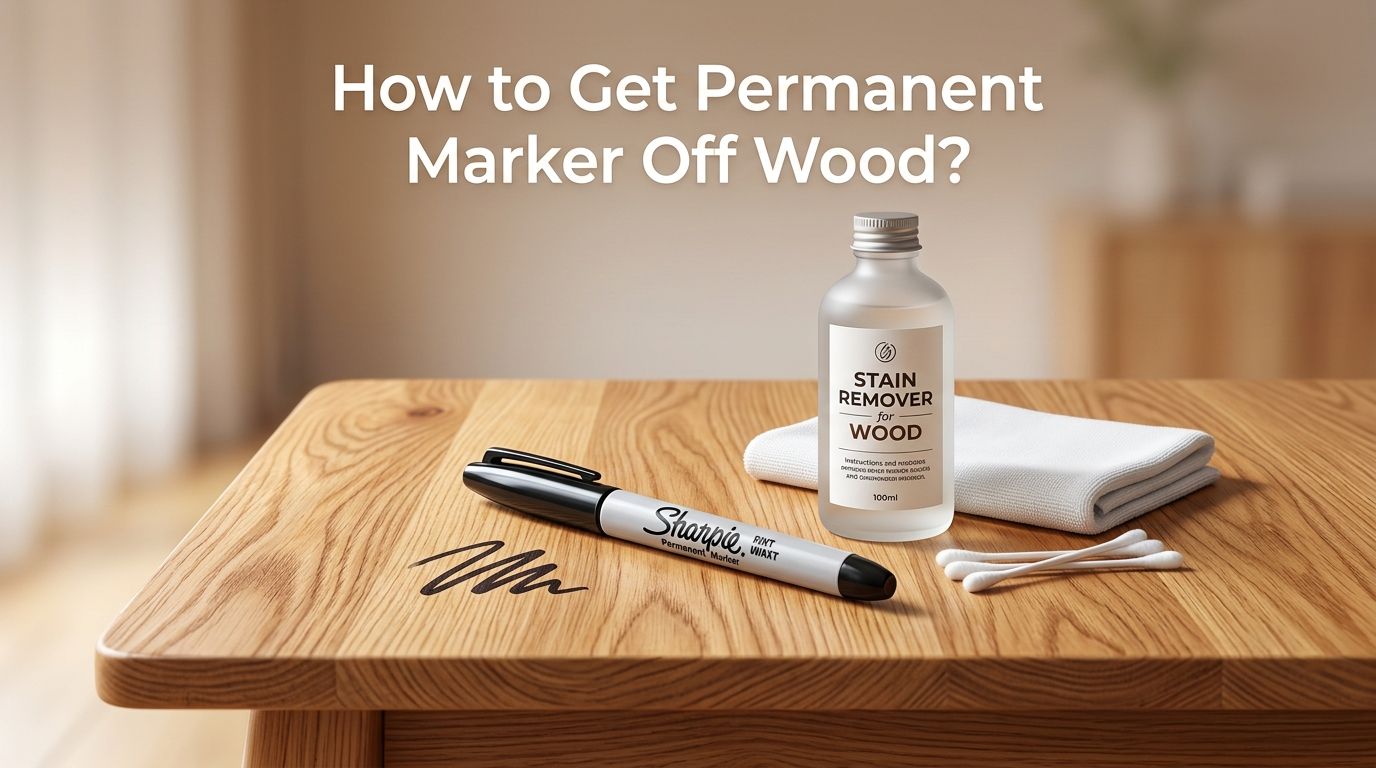
How to Get Permanent Marker Off Wood? 12 Easy Methods
You just found a bold, ugly permanent marker stain on your favorite wooden table. Maybe your child got creative with a Sharpie. Maybe you accidentally dragged a marker across a shelf.
Either way, that stubborn ink is staring right back at you, and you need it gone. The good news? You do not need to panic, and you definitely do not need to replace your furniture.
This guide walks you through 12 proven methods with clear, step by step instructions so you can pick the right approach for your situation. Each method uses items you likely already own. Let’s get that ink off your wood and restore the surface to its original look.
In a Nutshell
- Rubbing alcohol (isopropyl alcohol) is the most reliable first option for removing permanent marker from finished wood. It dissolves the ink’s solvent base without heavy scrubbing. Apply it with a cotton ball, dab gently, and wipe clean. Most stains lift within minutes using this approach.
- Always test your chosen cleaning solution on a hidden area first. Wood finishes vary widely. A product that works on polyurethane may strip lacquer or damage an oil finish. A quick spot test on the underside of a table or the back of a cabinet saves you from visible damage.
- Toothpaste and baking soda create a gentle abrasive paste that works well on both finished and unfinished wood. The mild grit lifts ink without scratching the surface. This method is one of the safest for delicate or antique furniture.
- Act fast for the best results. Fresh permanent marker stains are much easier to remove than old, set in stains. The longer the ink sits, the deeper it penetrates the wood grain, especially on unsealed or unfinished surfaces.
- For unfinished or raw wood, sanding may be your best last resort. Chemical solutions can spread the ink deeper into porous, unsealed wood. Fine grit sandpaper removes the top layer and takes the stain with it.
- Avoid soaking wood with any liquid cleaner. Excess moisture can warp, swell, or discolor wood. Always use a damp cloth or cotton ball rather than pouring liquid directly onto the surface. Blot and dab instead of rubbing aggressively.
How to Remove Permanent Marker From Wood Using Rubbing Alcohol
Rubbing alcohol is the most popular and effective solution for permanent marker removal on wood. Permanent marker ink uses an alcohol based solvent, so isopropyl alcohol dissolves that bond quickly. Grab a bottle of 91% isopropyl alcohol for the best results, though 70% also works.
Soak a cotton ball or soft cloth with the rubbing alcohol. Dab the stain gently rather than rubbing it in circles, as rubbing can spread the ink. Let the alcohol sit on the mark for about 30 seconds, then blot with a clean cloth. Repeat until the stain lifts completely.
Pros: Works fast, inexpensive, widely available, and effective on most finished wood surfaces. Cons: Can strip or dull certain wood finishes like lacquer or shellac if used too aggressively. Always spot test first on a hidden area. Wipe the area with a damp cloth afterward and apply furniture polish to restore shine.
How to Use Toothpaste and Baking Soda to Get Marker Off Wood
This method uses a gentle abrasive action to lift permanent marker ink from wood without harsh chemicals. You need white, non gel toothpaste and regular baking soda from your kitchen. Gel toothpaste will not work for this purpose.
Squeeze a small amount of white toothpaste onto the stain. Sprinkle a pinch of baking soda on top. Use a soft cloth or old toothbrush to gently scrub the mixture into the stain using small circular motions. The fine grit in the paste works to physically lift the ink particles from the surface.
Wipe the area clean with a damp cloth and dry it immediately. Repeat the process if a faint shadow remains. This method usually needs two or three applications for deep stains.
Pros: Very safe for finished wood, uses common pantry items, and low risk of surface damage. Cons: Requires more effort and time than alcohol based methods. May not fully remove old or deeply set stains on its own.
How to Get Permanent Marker Off Finished Wood With Nail Polish Remover
Nail polish remover contains acetone, a powerful solvent that dissolves permanent marker ink quickly. This method works best on sealed, finished wood surfaces with a polyurethane or varnish coating. The finish acts as a barrier between the acetone and the raw wood beneath.
Dampen a cotton ball with a small amount of acetone based nail polish remover. Lightly dab the stain. Do not rub, as acetone can strip wood finishes if applied with too much friction. Blot the loosened ink with a clean, dry cloth.
Work in small sections and limit the contact time to just a few seconds per application. Wipe the area with a damp cloth immediately after to remove any acetone residue.
Pros: Extremely effective at dissolving ink, fast acting, and readily available. Cons: Can damage, cloud, or strip wood finishes if overused. Not safe for unfinished wood, lacquer, or shellac finishes. Use this method with caution and only after a spot test.
How to Remove Sharpie From Wood Using a Magic Eraser
A magic eraser uses melamine foam, which acts like ultra fine sandpaper at a microscopic level. This makes it surprisingly effective at lifting permanent marker from wood surfaces. Many homeowners report complete stain removal with this single tool.
Wet the magic eraser with a small amount of water. Squeeze out the excess so the sponge is damp but not dripping. Gently rub the stain using light, even strokes. The melamine foam will break down the ink and absorb it.
Check your progress frequently. Stop as soon as the stain disappears to avoid over scrubbing the finish.
Pros: Simple, no chemicals needed, works on both finished and painted wood. Cons: The abrasive action can dull glossy finishes or remove paint if you scrub too hard. Use the lightest pressure possible and test on a hidden spot first. This method is best for small stains rather than large areas.
How to Use the Dry Erase Marker Trick to Lift Permanent Ink Off Wood
This clever hack sounds odd, but it works. Dry erase markers contain a solvent that can reactivate and dissolve permanent marker ink. The combined inks then wipe away together because dry erase ink is designed to be easily removed.
Take a dry erase marker and color directly over the permanent marker stain. Make sure you fully cover the stain with a thick layer of dry erase ink. Let it sit for about 10 to 15 seconds.
Wipe the area clean with a soft, dry cloth. The permanent marker ink should lift away along with the dry erase ink. You may need to repeat this process two or three times for stubborn stains.
Pros: No harsh chemicals, safe for most finished surfaces, and surprisingly effective on smooth wood. Cons: Works best on non porous, sealed surfaces. Less effective on unfinished or textured wood where ink has soaked into the grain. Results vary depending on how old the stain is.
How to Get Permanent Marker Off Wood Furniture With WD 40
WD 40 is a petroleum based lubricant that breaks down the oils and resins in permanent marker ink. It is a popular choice for removing stubborn marks from hard surfaces, and it works well on many types of finished wood.
Spray a small amount of WD 40 onto a clean cloth. Do not spray it directly onto the wood, as this can leave excess residue and oily spots. Gently rub the cloth over the marker stain in one direction.
The ink should start to transfer onto the cloth within seconds. Wipe the area with a clean, soapy cloth to remove the oily WD 40 residue. Follow up with a dry cloth.
Pros: Very effective, works quickly, and dissolves stubborn old stains. Cons: Leaves an oily residue that requires additional cleaning. Can darken or discolor certain wood finishes. Has a strong odor. Not ideal for use around food preparation surfaces or in poorly ventilated rooms.
How to Remove Permanent Marker From Unfinished or Raw Wood
Unfinished wood is much more challenging to clean because the ink soaks directly into the wood fibers. There is no protective finish to act as a barrier. Chemical solvents can sometimes push the ink deeper rather than lifting it.
Start by trying isopropyl alcohol on a cotton swab. Dab gently and blot immediately with a dry cloth to pull the ink upward. Avoid saturating the wood with liquid.
If alcohol does not work, try fine grit sandpaper (220 grit or higher). Sand lightly along the wood grain to remove the top layer where the ink has settled. Sand only the stained area and blend outward to avoid creating a visible patch.
Pros: Sanding guarantees removal since you physically remove the stained wood layer. Cons: Sanding changes the wood surface texture and may require refinishing. Chemical methods have limited success on raw wood. This type of stain requires patience and a careful hand.
How to Clean Permanent Marker Off Painted Wood Surfaces
Painted wood needs a delicate approach because many solvents will strip paint along with the marker ink. The goal is to dissolve the ink without disturbing the paint layer underneath.
Hand sanitizer with a high alcohol content is a good starting point. Apply a small amount to the stain and let it sit for 20 seconds. Wipe gently with a soft cloth. The alcohol dissolves the marker while the gel formula limits how much liquid contacts the paint.
White toothpaste is another safe option for painted wood. Apply a thin layer, scrub gently with a soft cloth, and wipe clean. A magic eraser also works, but use extreme caution on painted surfaces since it can remove paint with heavy pressure.
Pros: Gentle methods preserve the painted finish. Cons: May require multiple applications. Deep stains on porous or matte paint may not come out completely without touch up painting.
How to Prevent Permanent Marker Stains on Wood in the Future
Prevention saves you time and stress. Applying a quality sealant or finish to your wood surfaces creates a protective barrier that prevents ink from soaking into the grain. Polyurethane, lacquer, and wax coatings all help.
If you have young children, store permanent markers out of reach and provide washable markers instead. Keep a small bottle of rubbing alcohol and cotton balls nearby for quick cleanup if accidents happen. The faster you address a stain, the easier it comes off.
For work surfaces where markers are frequently used, consider a protective desk pad or tablecloth. Clear acrylic desk mats protect wood without hiding its natural beauty. These small steps can save your furniture from future damage.
How to Decide Which Method Works Best for Your Type of Wood
Not every method suits every wood surface. The finish on your wood determines which solution is safest. Here is a quick breakdown to help you choose the right approach.
For polyurethane finished wood, rubbing alcohol, toothpaste, or a magic eraser all work safely. These surfaces are durable and resistant to mild solvents.
For lacquer or shellac finishes, avoid acetone and strong solvents entirely. Stick to the dry erase marker trick or a gentle toothpaste paste.
For oil finished or waxed wood, use rubbing alcohol sparingly and reapply wax or oil after cleaning. Acetone and WD 40 will strip the oil finish.
For unfinished or raw wood, sanding is the most reliable option. Chemical solvents tend to spread the stain deeper into bare wood fibers. Always identify your wood finish before choosing a removal method.
How to Remove Old and Set In Permanent Marker Stains From Wood
Old stains that have been sitting for weeks, months, or years are harder to remove. The ink has had time to fully bond with the wood grain and finish. You will likely need a combination of methods rather than a single approach.
Start with rubbing alcohol applied with a cotton ball. Dab and blot repeatedly. If the stain fades but does not disappear, follow up with the toothpaste and baking soda paste for gentle abrasive action.
For extremely stubborn old stains, try applying a cloth soaked in denatured alcohol over the stain for two to three minutes. This extended contact time gives the solvent more opportunity to dissolve the deep set ink.
If all else fails, light sanding followed by refinishing the area may be your only option. Old permanent marker stains on unfinished wood almost always require sanding for complete removal.
How to Restore Your Wood Surface After Removing Permanent Marker
After you successfully remove the stain, your wood may look slightly different in the cleaned area. The cleaning process can dull the finish, remove wax, or lighten the wood slightly. A few simple restoration steps bring everything back to normal.
For finished wood, apply a thin coat of furniture polish or wood conditioner. Buff with a soft cloth to restore shine and blend the cleaned area with the surrounding surface.
For waxed wood, reapply a matching paste wax to the cleaned spot. Let it dry and buff to a smooth finish.
For unfinished wood that was sanded, apply a wood stain that matches the surrounding color. Let it dry completely, then seal with polyurethane or your preferred finish. This final step protects the wood from future stains and gives your furniture a refreshed appearance.
Frequently Asked Questions
How do you get permanent marker off wood without rubbing alcohol?
You can use white non gel toothpaste mixed with baking soda. Apply the paste to the stain, scrub gently with a soft cloth, and wipe clean. A magic eraser dampened with water also works well. The dry erase marker trick is another chemical free option that dissolves permanent ink on sealed wood surfaces. Each of these alternatives is safe for most finished wood.
Does permanent marker come off wood permanently or does it leave a shadow?
On finished or sealed wood, most methods remove the stain completely without leaving a trace. On unfinished wood, a faint shadow or ghost mark may remain even after cleaning because the ink soaks into the grain. Sanding the area and refinishing it is the best way to eliminate any remaining shadow on raw wood surfaces.
Can vinegar remove permanent marker from wood?
White vinegar alone is not very effective at removing permanent marker from wood. Vinegar is a mild acid, but permanent marker ink requires a solvent to dissolve its resin base. You can mix vinegar with baking soda for a mild cleaning paste, but rubbing alcohol or acetone will produce faster and more complete results on most wood surfaces.
Is it safe to use acetone on all types of wood furniture?
No. Acetone is safe on polyurethane sealed surfaces when used sparingly. It can damage, cloud, or completely strip lacquer, shellac, oil, and wax finishes. Always test acetone on a hidden area before applying it to a visible spot. If the finish feels sticky or looks dull after testing, choose a gentler method like toothpaste or rubbing alcohol instead.
How do you remove permanent marker from a wood floor without sanding?
Apply 91% isopropyl alcohol to a cotton ball and dab the stain. Blot with a clean cloth and repeat. For stubborn spots, cover the stain with a dry erase marker and wipe clean. A magic eraser with light pressure also works on sealed hardwood floors. Avoid using acetone on floors because the large surface area makes it easy to damage the finish.
Will hand sanitizer remove permanent marker from wood?
Yes. Hand sanitizer contains alcohol, which dissolves permanent marker ink. Choose a gel sanitizer with at least 60% alcohol content for the best results. Apply a small amount to the stain, let it sit for 20 seconds, and wipe clean. This method is especially useful when you do not have rubbing alcohol available and need a quick fix.

Hi, I’m Leah Ray — the voice behind CraftBench Vault. I’m a passionate woodworking enthusiast dedicated to reviewing the best wood cutting tools and woodworking products. Through honest research and hands-on experience, I help fellow crafters make smarter buying decisions. Welcome to my workshop!