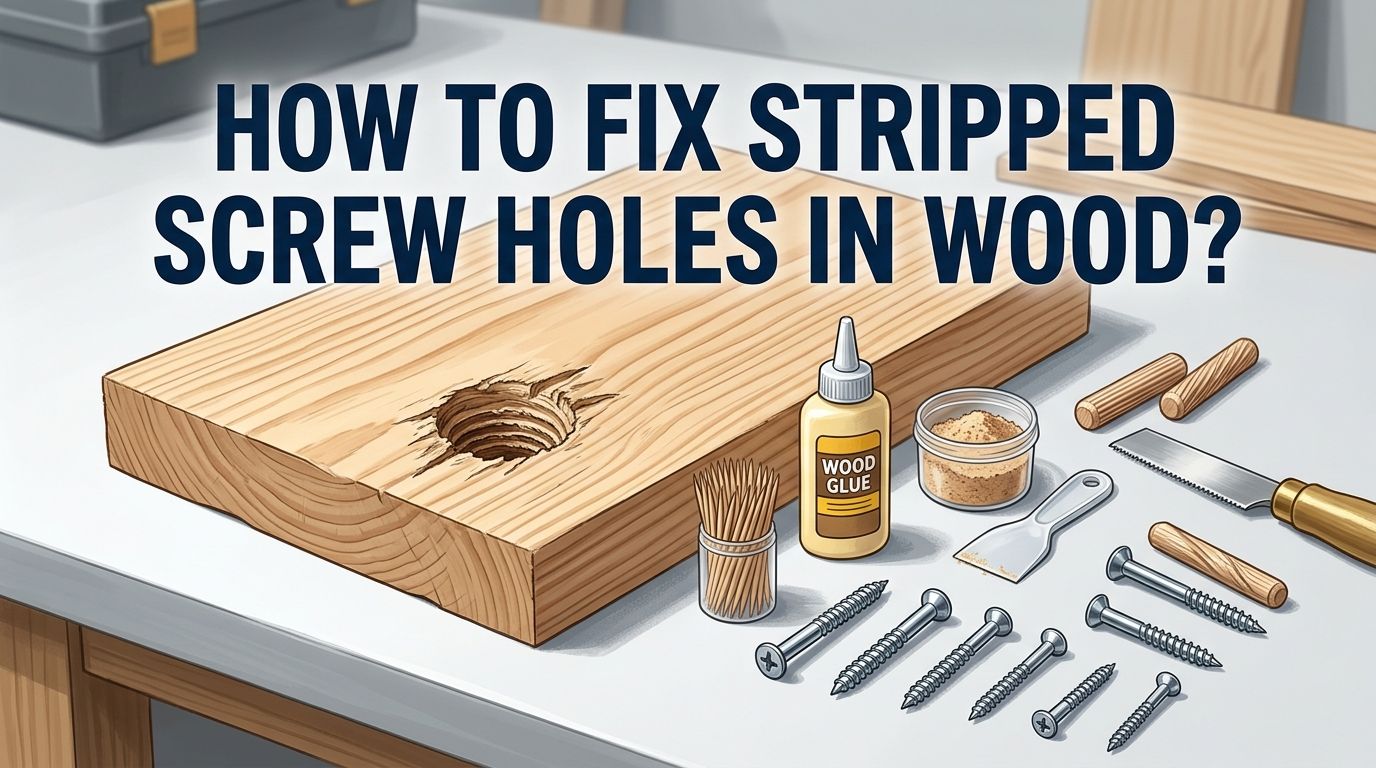
How to Fix Stripped Screw Holes in Wood? 8 Easy Methods
You grab your drill, line up the screw, and give it a turn. It just spins. The screw won’t grip, the hole is loose, and your project grinds to a halt.
A stripped screw hole in wood is one of the most common and frustrating problems in DIY work. It happens to everyone, from beginners to seasoned woodworkers.
The good news? You do not need to replace the entire piece of wood. Several simple and affordable fixes can restore the hole to full strength in minutes. Some use items you already have at home, like toothpicks and wood glue. Others involve dowels or epoxy for a more permanent solution.
In a Nutshell
- The toothpick and wood glue method is the fastest fix for small to medium stripped holes. You fill the hole with glue coated toothpicks, let it dry, and drive the screw back in. It takes about 24 hours of drying time and costs almost nothing.
- Wooden dowels provide the strongest long term repair. You drill out the old hole, glue in a hardwood dowel, and redrill a pilot hole once it dries. This method is ideal for load bearing areas like door hinges.
- Golf tees work as a quick alternative to dowels for mid sized holes. Their tapered shape fills the hole efficiently, and they bond well with wood glue.
- Epoxy is best for softwood or badly damaged areas where the wood fibers are too far gone for standard wood glue. Two part epoxy hardens into a solid mass that grips screws firmly.
- Prevention is just as important as repair. Drilling pilot holes, using the correct screw size, and avoiding over tightening will save you from stripped holes in the future.
- Always let the repair dry completely before reinserting the screw. Rushing this step is the number one reason repairs fail. Give wood glue at least 24 hours and epoxy the recommended cure time on the packaging.
Why Screw Holes Strip in the First Place
A screw holds itself in wood by cutting threads into the surrounding fibers. Over time, those fibers can break down, loosen, or wear away. The screw then loses its grip and spins freely inside the hole.
Over tightening is the most common cause. Power drills make it easy to apply too much torque, which crushes the wood fibers around the screw. Softwoods like pine and cedar are especially vulnerable because their fibers are weaker than hardwoods like oak or maple.
Repeated removal and reinsertion also damages holes. Every time you take a screw out and put it back, you weaken the threads a little more. Humidity and moisture can soften wood over time, which contributes to stripping as well.
Using the wrong screw size is another frequent cause. A screw that is too short or too thin will not have enough thread contact to hold securely. Understanding these causes helps you pick the right repair method.
The Toothpick and Wood Glue Method
This is the most popular DIY fix for stripped screw holes, and for good reason. It is cheap, fast, and effective for small to medium holes. Most people already have the supplies at home.
Start by removing the old screw completely. Squeeze a small amount of wood glue into the stripped hole. Dip two to four toothpicks in the glue and push them into the hole until it feels snug. Tap them in gently with a hammer if needed.
Use a utility knife or flush cut saw to trim the toothpicks level with the wood surface. Let the glue dry for a full 24 hours. Then drill a small pilot hole through the center and drive your screw back in. It should grip tightly.
Pros: Extremely affordable, requires no power tools, and works well for light duty applications like cabinet knobs or electrical outlet covers. Cons: Not strong enough for heavy loads or high stress areas like door hinges that support a lot of weight.
The Golf Tee Repair Trick
Golf tees are slightly larger than toothpicks and have a convenient tapered shape. This makes them a great option for holes that are too big for toothpicks but too small for a full dowel repair.
Apply wood glue to the inside of the stripped hole and to the golf tee itself. Tap the tee into the hole with a hammer until it seats firmly. Let the glue cure for at least 24 hours.
Cut the excess tee flush with the surface using a saw or sharp chisel. Drill a pilot hole and reinsert your screw. The tapered shape of the golf tee helps it wedge tightly into place, which creates a solid grip.
Pros: Quick, inexpensive, and provides more material than toothpicks for a stronger hold. Cons: Golf tees are usually made of softwood, so they may not hold up in hardwood projects or areas under significant stress. The fix works best for moderate loads.
The Wooden Dowel Method for Heavy Duty Repairs
For stripped screw holes that bear serious weight, like door hinges or shelf brackets, the dowel method is the gold standard. This fix replaces the damaged wood entirely and creates fresh, solid material for the screw to grip.
Drill out the stripped hole with a bit that matches the diameter of your dowel. A 1/4 inch or 3/8 inch dowel is standard for most repairs. Cut the dowel to the depth of the hole, apply wood glue to it, and tap it in with a hammer.
Wipe away any excess glue with a damp cloth. Let it dry for a full 24 hours. Sand the surface flush. Then drill a new pilot hole in the center of the dowel and drive your screw in.
Pros: Extremely strong and long lasting. The hardwood dowel gives the screw fresh fibers to grip, and the bond with wood glue is very secure. Cons: Requires a drill and matching drill bits. Takes more time and effort than the toothpick or golf tee method. You also need to wait for the full cure time.
Using Epoxy for Damaged or Soft Wood
Sometimes the wood around the hole is too damaged or too soft for glue and toothpicks to work. In these cases, two part epoxy is a reliable solution. It fills the void, hardens into a solid mass, and accepts screws well.
Mix the two part epoxy according to the package directions. Fill the stripped hole completely. If the hole is very large, you can insert a dowel coated in epoxy for added strength. Let the epoxy cure for the recommended time, which is usually 24 hours.
Drill a pilot hole into the cured epoxy and drive your screw in. The screw will grip the hardened epoxy much like it would grip dense wood.
Pros: Works on badly damaged wood where other methods fail. Creates a very hard and durable fill. Cons: More expensive than wood glue based methods. Epoxy is not sandable or stainable in the same way as natural wood, so it may not blend in visually. Cleanup is also messier.
The Sawdust and Wood Glue Mixture
This old school method combines fine sawdust with wood glue to create a thick paste that fills stripped holes. It is a good middle ground between the toothpick method and epoxy.
Collect fine sawdust from sanding or drilling. Mix it with wood glue until you get a thick, putty like consistency. Pack the mixture tightly into the stripped hole using a small stick or the tip of a screwdriver.
Scrape off any excess and let the mixture dry for at least 24 to 48 hours. It will shrink slightly as it dries, so pack it well. Once cured, drill a pilot hole and insert your screw.
Pros: Free if you already have sawdust and glue on hand. The sawdust matches the original wood color better than epoxy. Cons: Drying time can be long, especially in humid conditions. The resulting fill is not as strong as a dowel repair, so avoid using it on load bearing connections.
Using a Larger or Longer Screw
Sometimes the simplest fix is to skip the hole repair entirely and use a bigger screw. A screw that is one size larger in diameter or half an inch longer can bite into fresh wood beyond the damaged area.
Check that the larger screw head still fits your hardware. For hinges, the screw head must sit flush in the countersink. A longer screw works well for door hinges because it can reach past the door frame and into the wall stud behind it.
Drill a new pilot hole if the larger screw requires one. Be careful not to split the wood by going too large. This method is fast and effective, but it is limited by the size of the hardware opening.
Pros: No drying time required. Instant results. Very effective for door hinge repairs where a 3 inch screw can reach the stud. Cons: Not always possible if the hardware does not accept a larger screw head. Going too big can split the surrounding wood.
Steel Wool as a Quick Temporary Fix
If you need a fast fix and do not have time to wait for glue to dry, steel wool can serve as a temporary solution. It adds friction and bulk inside the hole so the screw can grip again.
Tear off a small piece of fine steel wool. Pack it into the stripped hole. Drive the screw directly into the steel wool filled hole. The steel fibers compress around the screw threads and create a tight fit.
This is not a permanent repair. Over time, the steel wool can rust if moisture reaches it, and the grip will weaken under repeated stress. Use this method only when you need a quick hold until you can do a proper repair.
Pros: Extremely fast. No waiting for anything to dry. Good for emergency situations. Cons: Temporary only. Risk of rust over time. Not suitable for any structural or load bearing connection. The screw may loosen again with use.
How to Fix Stripped Screw Holes in Door Hinges
Door hinge screws strip more often than almost any other screw in the house. The constant weight and motion of the door puts ongoing stress on these screws, and gravity works against them every day.
The best repair for a door hinge is the dowel method combined with a longer screw. Remove the door from the hinges. Take out the stripped screws. Drill out the damaged holes and glue in hardwood dowels. After 24 hours, reinstall the hinges with 3 inch screws that reach into the wall stud.
If only one or two screws are stripped, the golf tee method can work well as a faster alternative. Apply wood glue, tap in the tee, trim it flush, and reinstall the hinge. The key is to let the glue dry fully before hanging the door back up.
Avoid the temptation to rehang the door too soon. A partially cured repair will fail within days under the weight of the door.
How to Fix Stripped Screw Holes in Furniture
Furniture screws strip often in areas like chair legs, table supports, and drawer tracks. The wood in furniture is sometimes thinner or softer than structural lumber, which means you need a careful approach.
For small holes in furniture, the toothpick method works perfectly. Apply glue, insert the toothpicks, trim them flush, and let everything cure. This is gentle enough for delicate furniture pieces and strong enough for light duty fastening.
For larger holes or joints under stress, use the dowel method. Drill out the hole cleanly, glue in a dowel, and let it dry. Always match your wood species if appearance matters. An oak dowel in an oak table will blend in far better than a generic softwood dowel.
Avoid using epoxy on visible furniture surfaces unless you plan to paint over the repair. Epoxy does not take stain well and will stand out on a natural wood finish.
How to Prevent Stripped Screw Holes
Prevention is always better than repair. A few simple habits will protect your wood from stripped holes in the future.
Always drill a pilot hole before driving a screw. The pilot hole should be slightly smaller than the screw’s core diameter. This gives the threads something to grip while reducing stress on the surrounding wood fibers.
Use a manual screwdriver or a low torque setting on your drill for the final turns. Most stripping happens in the last few rotations when the screw is almost fully seated. Slow down at the end.
Choose the right screw for the right wood. Softwoods need coarse threaded screws. Hardwoods do better with fine threaded screws. And never reuse a screw hole more times than necessary. Each removal cycle weakens the threads in the wood.
Apply wax or soap to screw threads before driving them in. This reduces friction and lowers the chance of over tightening.
Tools and Supplies You Will Need
You do not need a workshop full of expensive tools to fix stripped screw holes. Most repairs require only basic items that you may already own.
For the toothpick or golf tee method, you need wood glue, toothpicks or golf tees, a hammer, and a utility knife. A small drill bit for pilot holes is helpful but not always required.
For the dowel method, you need a drill, a drill bit matching your dowel size, hardwood dowels, wood glue, a saw or flush cut tool, and sandpaper. A clamp is useful but not essential for most screw hole repairs.
For epoxy repairs, you need two part epoxy, a mixing surface, a stir stick, and a drill for the pilot hole after curing. Keep a damp cloth nearby for cleanup because epoxy is difficult to remove once it hardens.
When to Call a Professional
Most stripped screw holes are easy to fix at home. But some situations call for professional help to avoid making the problem worse.
If the wood around the hole is rotted, cracked, or structurally compromised, a simple plug and reglue will not solve the issue. Rotted wood needs to be cut out and replaced, which may require carpentry skills and tools beyond basic DIY.
Structural elements like load bearing beams, stair railings, and exterior door frames deserve extra caution. A failed screw in these areas can create safety hazards. If you are unsure about the structural integrity of the wood, contact a carpenter or handyman.
Multiple stripped holes in the same area can also signal a bigger problem, such as water damage or insect damage. A professional can assess the underlying cause and recommend the right repair.
Frequently Asked Questions
Can I use wood filler to repair a stripped screw hole?
Wood filler is designed for cosmetic repairs and does not have the structural strength to hold a screw. It will crumble under pressure. Use wood glue with toothpicks, dowels, or epoxy instead. These materials bond with the surrounding wood and give the screw threads something solid to grip. Wood filler is fine for filling holes that will not receive a screw again.
How long should I wait before putting the screw back in?
Wait at least 24 hours for wood glue to fully cure. Epoxy cure times vary by product, so check the packaging. Rushing this step is the most common reason repairs fail. The glue or epoxy needs time to reach full strength. If you reinsert the screw too soon, you will strip the hole all over again.
Will the toothpick method work for outdoor wood?
It can, but you should use waterproof wood glue for any outdoor application. Standard yellow wood glue is not water resistant enough for exterior use. The toothpicks themselves will absorb moisture and swell, which can actually help the fit at first, but over time, wet conditions will weaken the bond without waterproof adhesive.
What is the strongest method to fix a stripped screw hole?
The wooden dowel method is the strongest repair. Drilling out the damaged area and replacing it with a hardwood dowel creates a fresh, solid base for the screw. Combined with wood glue and a proper pilot hole, this repair can last as long as the original wood. Epoxy is a close second, especially in softwood.
Can I fix a stripped screw hole without removing the screw?
In most cases, you need to remove the screw first to repair the hole properly. You cannot effectively fill a hole or insert toothpicks while the screw is still in place. The only exception is using the larger screw method, where you replace the stripped screw with a bigger one that bites into fresh wood around the old hole.
How do I know if a screw hole is stripped?
The main sign is a screw that spins freely without tightening. You may also notice the screw sits deeper than normal or pulls out with very little force. If you feel no resistance when turning the screw, the hole is stripped. Visual inspection may show enlarged or ragged edges around the hole opening.

Hi, I’m Leah Ray — the voice behind CraftBench Vault. I’m a passionate woodworking enthusiast dedicated to reviewing the best wood cutting tools and woodworking products. Through honest research and hands-on experience, I help fellow crafters make smarter buying decisions. Welcome to my workshop!