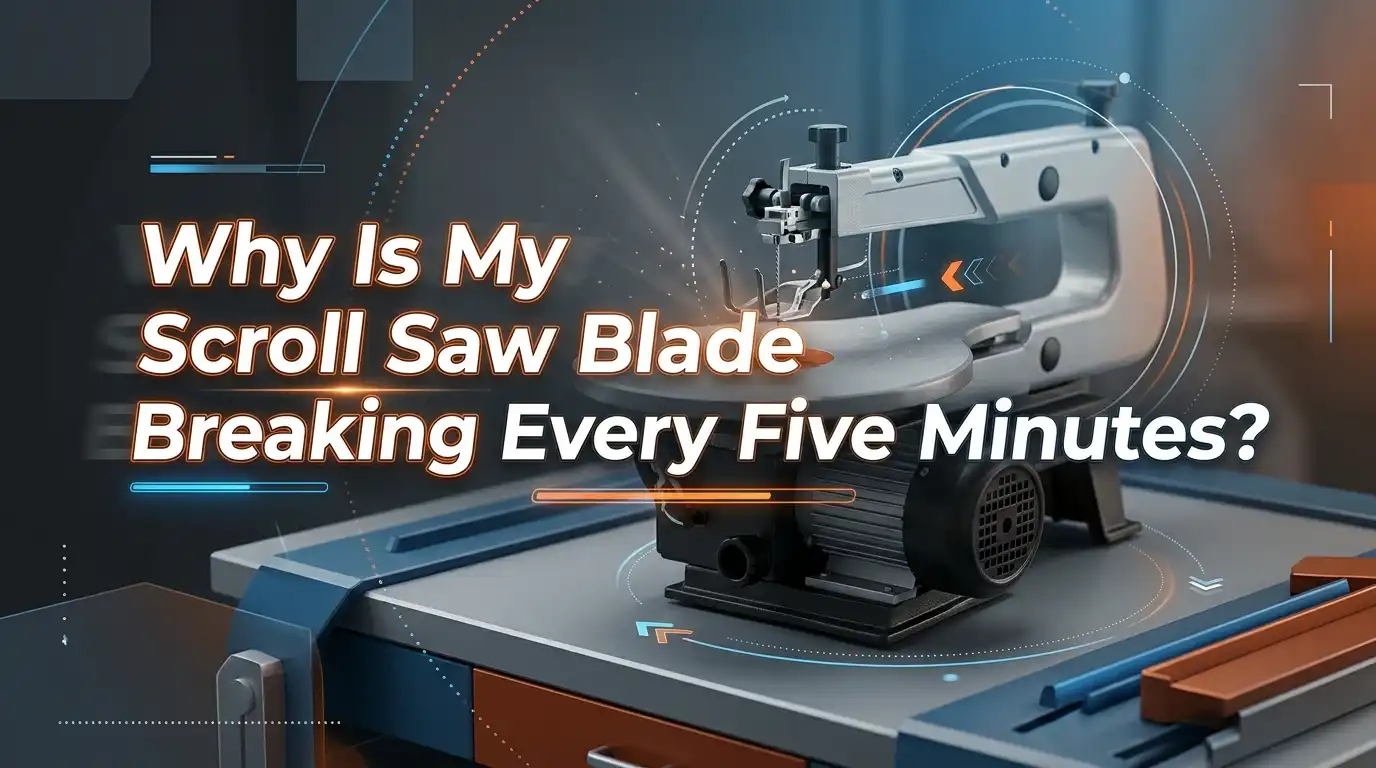
Why Is My Scroll Saw Blade Breaking Every Five Minutes?
If your scroll saw blade keeps snapping, you are not alone. This is one of the most common problems for new users and even for people who have used a scroll saw for years.
A blade can break from the wrong tension, the wrong blade size, too much pressure, heat, bad clamps, or simple setup mistakes. The hard part is that the blade often breaks so fast that you do not know which cause is the real one.
This guide will help you fix that. You will learn the most common reasons a scroll saw blade breaks, how to test each one, and what to change step by step.
Key Takeaways
- Most broken blades come from a small group of problems. The big ones are bad tension, the wrong blade for the wood, too much feed pressure, side pressure in turns, and dirty or worn clamps. If your blade snaps every few minutes, start with these first. Do not blame the blade alone. The setup often causes the break.
- Blade size must match stock thickness. Thin blades cut tight curves well, but they break faster in thick wood. Larger blades last longer and handle thicker stock better. A simple shop rule helps here. Keep at least a few teeth in the wood at all times. If the wood is too thick for the blade, the blade heats up, binds, twists, and snaps.
- Too much hand pressure causes fast blade failure. Many users push the work too hard or twist it to stay on the line. That bends the blade sideways. A scroll saw blade is strong in a straight cut, but weak from side stress. Guide the wood. Do not force it.
- Heat is a silent blade killer. Heat builds from dull teeth, packed dust, thick hardwood, high speed, and long cuts without pause. Hot blades get weak. They also wander more. If you see burn marks or smell hot wood, your blade is under stress.
- Clamps and alignment matter more than many people think. A blade that slips in the clamp loses tension fast. A blade that sits crooked gets pulled from two directions at once. Clean clamps, proper seating, and straight alignment can solve breakage that looks random.
- A short setup routine saves a lot of blades. Check tension, blade direction, clamp grip, speed, and blade choice before the cut. That takes about five minutes. Those five minutes can save you hours of frustration.
Look at the exact break point first
Before you change anything, look at where the blade breaks. That clue can save you a lot of time. If the blade breaks at the top or bottom clamp, the problem often comes from bad seating, clamp slip, or extra stress from crooked setup. If it breaks in the middle, the cause is often heat, side pressure, or the wrong blade for the wood.
Start by saving the next broken blade. Hold it next to a new one and compare the shape. Check if it looks twisted, blue from heat, worn smooth, or pinched near the clamp area. That tiny piece of steel tells a story.
Pros: This method is free, fast, and very accurate.
Cons: It does not fix the issue by itself. You still need to test the cause.
If you skip this step, you may keep changing random things. If you study the break point first, you can move straight to the real fix.
Set blade tension before you touch the wood
Poor tension is one of the biggest reasons a scroll saw blade breaks. A loose blade flexes too much. A blade that is far too tight can snap from stress before the cut even settles.
You want firm tension, not extreme tension. The blade should feel secure and give a clear, sharp sound if you lightly pluck it.
Start with the saw off. Install the blade. Tighten the tension until the blade feels straight and does not deflect much from light side touch. Then make a test cut in scrap wood. If the blade bends back hard, it is likely too loose. If it snaps early with little cutting, it may be too tight.
Good tension gives control. Bad tension gives fear.
Pros: A tension fix is quick and often solves the issue right away.
Cons: Very small blades need a lighter touch, so beginners may overtighten them.
Make small changes. Test after each one. Do not turn the knob too far at once.
Match blade size to the wood thickness
A very common mistake is using a small blade in thick stock because the pattern has tight curves. That looks smart at first, but it often leads to fast breakage.
Small blades do fine work. They do not like heavy work. Thick hardwood puts more load on the blade, holds more heat, and clears dust more slowly.
Use a smaller blade for thin stock and tight inside detail. Use a larger blade for thicker wood and wider curves. A larger blade usually lasts longer because it has more strength. If the wood gets thicker, move up in blade size before you start blaming your saw.
A blade must suit the job, not just the pattern.
Pros: Correct sizing improves blade life, cut speed, and control.
Cons: A larger blade cannot turn as tightly, so fine detail may suffer.
If your blade breaks every few minutes in thick wood, this is one of the first things to change. Many users fix the problem here.
Pick the right tooth pattern for the cut
Blade size matters, but tooth pattern matters too. Some blades clear dust better. Some leave a cleaner cut. Some run cooler in thick stock. If dust stays trapped in the cut, the blade rubs more, heats up more, and breaks sooner.
For thicker wood, many users do better with a blade pattern that clears sawdust well. For thin stock or fine detail, a finer tooth blade can work well, but it cuts slower and may need a lighter feed. If the blade seems to struggle, burns the wood, or stalls in the cut, the tooth pattern may be wrong even if the blade size looks close.
A clean kerf is a cool kerf. That matters more than many people think.
Pros: The right tooth pattern reduces heat and improves cut quality.
Cons: One blade style rarely works best for every job.
Keep a few types on hand. Test them on scrap from the same wood before cutting your project piece.
Stop pushing and let the blade cut
Many broken blades come from hand pressure, not machine failure. It is easy to push too hard, especially when the cut feels slow. But a scroll saw blade is not built for force. If you shove the wood into the blade, the blade bows back, heats up, and twists. Then it snaps.
Try this simple check. During a cut, pause your hand pressure for a moment without losing control. If the wood springs back, you were pushing too hard. That is a strong sign. Slow your feed rate. Let the teeth remove material at their own pace. Guide the work. Do not drive it.
Fast hands break blades. Calm hands save them.
Pros: This fix costs nothing and improves accuracy at the same time.
Cons: It can feel slow at first, especially if you are used to forcing the cut.
The good news is that this habit changes fast. Once you ease up, the saw starts to feel smoother right away.
Reduce side pressure in curves and corners
A scroll saw blade wants to cut forward. It does not want to be pushed sideways. Yet side pressure happens all the time, especially during tight turns. You try to stay on the line, the blade drifts, and your hands push harder to bring it back. That is a fast path to breakage.
For tight curves, slow down before the turn. Make tiny forward moves while gently rotating the wood. If the curve is too tight, back out and make a relief cut.
Do not crank the wood sideways while the blade is buried in the cut. That loads the blade from the side, which is where it is weakest.
Straight pressure cuts wood. Side pressure breaks steel.
Pros: Better turning technique improves both blade life and pattern accuracy.
Cons: Relief cuts take extra time and may feel tedious on detailed work.
If your blade breaks most often during turns, this section is probably your main fix.
Lower or raise speed for the material
Saw speed can help or hurt. If the speed is too high for thick or dense wood, heat builds fast. If the speed is too low for a certain cut, the blade may grab, chatter, or force you to push harder. The right setting depends on blade size, wood thickness, wood type, and cut style.
Use moderate speed as your starting point. Then adjust after a short scrap test. If the blade burns the wood, smells hot, or feels harsh, back the speed down.
If the cut feels rough and you have to push too much, try a slight speed increase. Dense hardwood often needs a more careful balance than soft wood.
The best speed is the one that cuts cleanly with light hand pressure.
Pros: Speed tuning can reduce heat and improve control fast.
Cons: There is no single perfect number for every saw and every blade.
Change one variable at a time. If you change speed and blade size together, you may not know which fix helped.
Install the blade in the right direction
This sounds basic, but it causes real trouble. The teeth should usually point forward and down so the blade cuts on the down stroke.
If the blade goes in backward, upside down, or slightly twisted, the cut feels wrong at once. Many users then respond by pushing harder, which makes the problem worse.
Before every cut, check the teeth with your fingertip very carefully while the saw is off. You should feel the cutting edge in the proper direction. Then check that the blade sits straight from top clamp to bottom clamp. A twisted blade may still run, but it will track badly and break sooner.
A wrong blade direction creates a fake power problem. The saw feels weak, but the setup is the real issue.
Pros: This is one of the quickest fixes and often solves sudden breakage.
Cons: Small blades are hard to see, so beginners miss the tooth direction easily.
Use good light. Take ten extra seconds here.
Clean and tighten the blade clamps
Dirty clamps and worn clamp screws cause blade slip. When the blade slips, tension drops. Once tension drops, the blade starts flexing and snapping. Sawdust, oil residue, and small grooves in the clamp area can all reduce grip.
Turn the saw off and remove the blade. Clean the clamp faces. Wipe away dust and residue. Then inspect the screws and clamp edges. If you see wear, burrs, or grooves, the clamp may not be holding the blade squarely anymore. Reinstall the blade so it sits flat and centered before tightening.
A strong clamp grip gives stable tension. A weak grip gives surprise breaks.
Pros: Cleaning is cheap and can cure repeat breakage near the clamp ends.
Cons: If the parts are worn, cleaning alone will not solve the issue.
If your blade seems to break near the top or bottom often, put clamp maintenance high on your list.
Control heat, dust, and burn marks
Heat weakens blades. Dust buildup makes heat worse. This problem shows up most often in thick hardwood, long cuts, dull blades, and wrong tooth patterns. If you see dark burn marks, smell hot wood, or notice the blade feels rough in the cut, heat is building faster than it can leave.
Use a blade that clears dust well for thicker stock. Slow the feed pressure. Adjust the speed if needed. Take short pauses during long cuts to let the blade cool. Some users also apply clear tape over the cut line on certain woods to help reduce drag and burning. Test that on scrap first.
Cooler cutting means longer blade life.
Pros: Heat control improves blade life and often improves edge quality too.
Cons: Cooling steps may slow the work and require a few test cuts.
If the blade breaks after the cut starts smelling hot, do not ignore that warning sign.
Replace dull or rusty blades sooner
Many users try to get one more project out of a tired blade. That is false savings. A dull blade needs more pressure. More pressure creates more heat and more side load.
Then the blade breaks, and the project gets rough cuts too. Rust makes the problem worse because corrosion weakens the steel and damages the cutting edge.
Replace the blade as soon as it feels slower, rougher, or harder to guide. Store blades in a dry place. If your shop is damp, protect them from moisture. Do not keep using blades that look stained, pitted, or worn smooth. Fresh blades cut easier because they are supposed to.
Pros: New blades reduce stress fast and give cleaner cuts.
Cons: Replacing blades more often raises your blade cost.
Still, broken blades waste wood, time, and patience. In most cases, a fresh blade is cheaper than frustration.
Check saw alignment and vibration
Sometimes the blade is fine, but the saw is shaking or pulling from a bad angle. If the upper and lower blade holders are not in line, the blade gets stress from two directions.
If the saw vibrates too much, the blade sees repeated shock during the cut. Both problems can shorten blade life fast.
Check that the saw is mounted securely. A loose stand or bench can add extra vibration. Then inspect blade travel. The blade should sit straight with the arm motion and the table.
If the saw has developed alignment issues, correct them before changing more blades. Also tighten any loose table locks or mounting screws.
A steady saw is easier on every blade you use.
Pros: Fixing vibration improves comfort, accuracy, and blade life.
Cons: Alignment checks can take more time than simple user fixes.
If every blade type breaks the same way, the saw itself may need attention.
Use a five minute pre cut routine
The best long term fix is a short routine that catches mistakes before they cost you another blade. This routine works because it removes the most common causes before the cut begins. It also helps you stay calm, which reduces hand pressure and rushed moves.
Use this order. First, choose the blade size for the wood thickness. Second, confirm tooth direction. Third, seat the blade flat in both clamps.
Fourth, set tension. Fifth, pick a moderate speed. Sixth, make one short test cut in scrap wood. If the blade drifts, burns, chatters, or bows, correct that before you touch the real piece.
Good habits beat lucky guesses. That is the real secret.
Pros: This routine prevents most repeat problems and builds confidence.
Cons: It adds a few minutes before each session.
Those few minutes pay for themselves very fast in saved blades and better cuts.
Build skill with scrap before fine work
If your blade breaks often during a real project, move to scrap wood for ten minutes. Practice straight cuts, slow curves, tight turns, and stop starts.
This removes project pressure and lets you feel what the blade wants. You will notice the exact moment when feed pressure gets too high or when a turn starts to load the blade sideways.
Use the same wood species and thickness as the project if possible. Try two blade sizes and compare them. Test one speed change at a time. This simple practice session teaches more than reading a dozen setup tips. Your hands learn the saw through repetition.
Pros: Scrap practice builds control without risking a project piece.
Cons: It can feel repetitive if you want to jump right into the real work.
Still, this is one of the fastest ways to stop breaking blades every few minutes.
FAQs
Why does my scroll saw blade break at the clamp?
This usually points to a setup issue near the clamp area. The blade may be seated crooked, the clamp may be dirty, or the screw may not be gripping evenly. A worn clamp can also let the blade slip. Clean the clamp, inspect the contact points, and reinstall the blade so it sits flat and straight. Then reset the tension and test on scrap wood.
How tight should a scroll saw blade be?
The blade should feel firm and straight, but not extreme. Many users use a light pluck test and listen for a clear sharp sound. If the blade bows back a lot in the cut, it is likely too loose. If it snaps very quickly with little cutting, it may be too tight. Make small changes and test each one. Tiny adjustments matter.
What blade should I use for thick wood?
Use a larger blade for thicker stock, especially if the wood is hard or dense. A very fine blade can cut detail, but it will struggle in thick material and may break often. Choose a blade that can clear dust well and handle the thickness without heavy feed pressure. You may need to accept a wider turning radius if you want better blade life.
Why does my blade break on curves?
This usually happens from side pressure. The blade wants to cut forward. During a curve, many users twist the wood too hard to stay on the line. That bends the blade sideways and makes it snap. Slow down before the turn. Rotate the wood in tiny steps. Use relief cuts for very tight curves. If needed, use a smaller blade that suits the pattern better.
Can a dull blade really break that fast?
Yes. A dull blade needs more force to cut. That extra force creates heat and side load. Both raise the chance of breakage. A dull blade also makes rougher cuts and can cause burning. If your blade suddenly feels slow, rough, or hard to guide, replace it early. A fresh blade often fixes the problem faster than any other single change.

Hi, I’m Leah Ray — the voice behind CraftBench Vault. I’m a passionate woodworking enthusiast dedicated to reviewing the best wood cutting tools and woodworking products. Through honest research and hands-on experience, I help fellow crafters make smarter buying decisions. Welcome to my workshop!