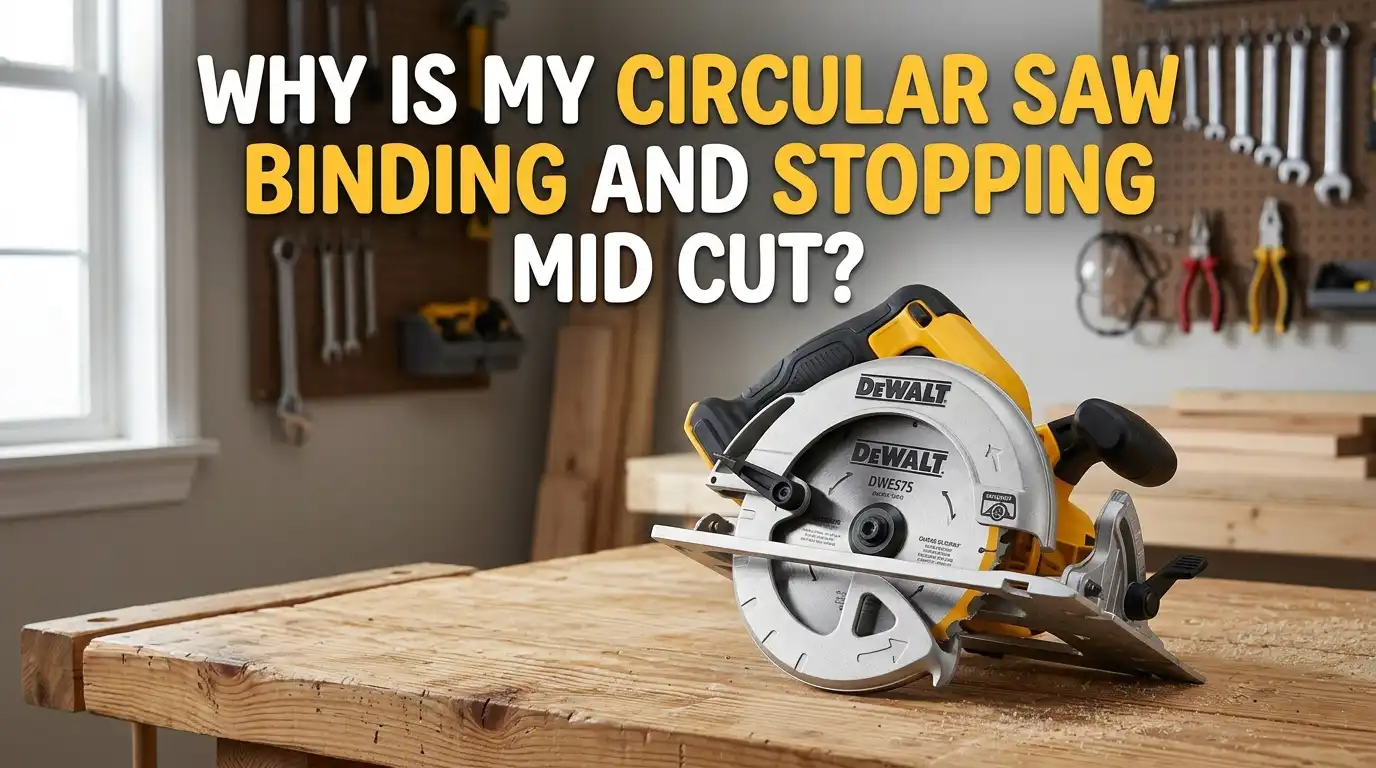
Why Is My Circular Saw Binding And Stopping Mid Cut?
A circular saw should glide through wood with ease. So when it suddenly bogs down, jerks, or stops dead in the middle of a cut, it feels frustrating and a little scary. You push harder, the blade fights back, and sometimes the whole saw kicks toward you.
The good news is simple. Binding almost always comes from a handful of fixable causes. Most of them have nothing to do with a broken motor. They come from the blade, the wood, your technique, or your power supply.
In this guide, you will learn exactly why your circular saw binds and stops mid cut. You will also get clear, step by step fixes for each cause. Let’s get your saw cutting smoothly again.
Key Takeaways
- A pinched blade is the top cause. When wood closes around the blade, it grabs and stalls the saw. Proper support fixes this fast.
- A dull or dirty blade makes the saw work twice as hard. Burning smells, slow cuts, and extra pushing all point to a blade that needs sharpening or cleaning.
- Wrong cut depth creates extra friction. Setting the blade too deep buries more teeth in the wood than needed, which strains the motor.
- Bad power supply starves the motor. A long or thin extension cord drops voltage, so the saw bogs down and overheats during cuts.
- Technique matters a lot. Pushing too fast, forcing curves, or letting the offcut sag all cause binding and kickback.
- A blade installed backward will never cut right. Always check that the teeth point in the correct direction before you blame the motor.
What Does Blade Binding Actually Mean?
Binding happens when the wood squeezes the blade from both sides. The cut, called the kerf, closes up instead of staying open. This traps the spinning blade and stops it from turning freely.
When the blade can no longer spin, two things happen. The motor either stalls completely, or the saw lurches backward in a sudden kickback. Both are signs of the same root problem.
Think of it like a knife stuck in a closing door. The more the door shuts, the harder the knife is to move. Your blade feels the same pressure every time the wood pinches it.
Understanding this helps you spot the cause. Most fixes focus on keeping that kerf open and reducing friction on the blade.
Cause 1: A Dull Blade Is Working Too Hard
A dull blade is the most common reason a saw bogs down. Worn teeth cannot slice cleanly, so they crush and rub through the wood instead. This creates heat, slows the cut, and strains the motor.
You will notice clear signs. The cut smells burnt, the wood edges look scorched, and you have to push much harder than normal. Sometimes the saw stalls completely on thicker boards.
To test a blade, run a fingernail lightly across a tooth tip. A sharp tooth catches your nail. A dull one slides right off.
Fix it: Replace the blade or have it professionally sharpened. Carbide tipped blades can be sharpened several times before they wear out.
Pros: A fresh blade cuts faster, cleaner, and safer with far less effort.
Cons: New blades cost money, and sharpening takes time if you mail them out.
Cause 2: A Dirty Blade Coated In Pitch And Resin
Sometimes the blade is not dull at all. It is just covered in sticky pitch, sap, and resin. This buildup acts like glue and creates massive friction against the wood.
A gummed up blade behaves exactly like a dull one. The cut burns, the saw drags, and the motor strains. Many people throw away good blades that simply needed a cleaning.
Fix it: Remove the blade and soak it in a citrus based cleaner or a mix of Simple Green and water. Let it sit a few minutes, then scrub the teeth with a brass brush. Dry it fully before reinstalling.
Pros: Cleaning is cheap, fast, and restores a good blade to like new condition.
Cons: Harsh oven cleaners can damage the carbide bond, so you must choose a gentle product.
Cause 3: The Wood Is Pinching The Blade
This is the classic binding situation. When you support a board only at the two ends, gravity pulls the middle down as you cut. Both sides sag inward and clamp the blade tight.
Plywood sheets and long boards do this constantly. The kerf closes the moment your blade passes the center. The saw grabs, stalls, or kicks back hard.
Fix it: Support the wood correctly. Place foam insulation board or several sawhorses under the entire board, including the offcut side. The goal is to let both pieces fall away from the blade, not press into it.
Pros: Proper support eliminates pinching almost entirely and gives cleaner cuts.
Cons: It takes a little setup time and some extra gear like foam or sawhorses.
Cause 4: Cutting Depth Set Too Deep
Many users bury the blade far deeper than needed. A blade set too deep puts more teeth into the wood at once. This increases friction, drag, and the chance of binding.
The correct depth is small. The blade should poke out only about one quarter inch below the bottom of the board. This shows just enough tooth to cut cleanly.
Fix it: Unplug the saw. Loosen the depth lever and rest the saw against the edge of your board. Adjust until the blade extends just past the underside, then lock it.
Pros: Shallow depth cuts smoother, reduces splintering, and keeps you safer if kickback happens.
Cons: You must readjust the depth for every different board thickness, which adds a small step.
Cause 5: A Blade Installed Backward
It sounds obvious, but it happens more than you think. A blade mounted with the teeth pointing the wrong way will not cut properly. The saw will smoke, struggle, and stall almost immediately.
Every blade has an arrow printed on its side. This arrow must point in the same direction the blade spins. On a circular saw, the teeth at the front should point downward and toward the front edge.
Fix it: Unplug the saw or remove the battery first. Take off the blade, flip it so the teeth and arrow face the correct rotation, and tighten the arbor nut firmly.
Pros: This costs nothing and fixes the problem in two minutes.
Cons: Running a blade backward even briefly can dull teeth or loosen carbide tips, so check before you cut.
Cause 6: Internal Stress In The Wood
Wood is not always stable. Boards hold internal tension from drying and growth. When you cut into them, that tension releases and the wood moves on its own.
Sometimes the two halves spring apart, which is fine. Other times they twist inward and pinch the blade hard. This often surprises people on otherwise straight, dry lumber.
Fix it: If you feel the wood closing, stop and back the saw out slowly. Insert a thin wedge or a screwdriver into the kerf behind the blade to hold it open. Then finish the cut.
Pros: A simple wedge keeps the kerf open and prevents a dangerous stall.
Cons: You cannot always predict which boards will move, so you stay alert during every cut.
Cause 7: Pushing The Saw Too Fast Or Too Hard
Your saw needs time to do its job. Forcing it forward faster than it can cut overloads the motor. The blade cannot clear the wood chips fast enough, so it bogs down and stops.
Forcing also pushes the blade off its straight path. This twists the blade inside the kerf and creates instant binding. Many beginners do this without realizing it.
Fix it: Let the saw set the pace. Push gently and steadily, listening to the motor. If the pitch drops and the motor slows, ease off until it speeds back up. Let the blade pull itself through.
Pros: A steady feed rate gives straighter cuts and protects your motor long term.
Cons: It feels slow at first, and rushing jobs becomes tempting under time pressure.
Cause 8: Trying To Cut Curves Or Tight Turns
A circular saw blade is round and rigid. It is built only for straight cuts. The moment you try to steer it around a curve, the body of the blade rubs the sides of the kerf.
This sideways rubbing creates heavy friction. The saw heats up, drags, and stalls fast. You may also feel the saw twist violently in your hands.
Fix it: Use a circular saw only for straight lines. For curves, switch to a jigsaw or band saw that uses a thin, flexible blade made for turning.
Pros: Matching the tool to the cut gives clean results and stops binding instantly.
Cons: You need a second tool for curved work, which adds to your kit.
Cause 9: A Weak Power Supply Or Wrong Extension Cord
Your saw motor needs full voltage to run strong. A long or thin extension cord drops that voltage before it reaches the saw. The motor then pulls extra current, runs weak, and stalls under load.
Low voltage also overheats the motor. You might smell hot electronics or notice the saw losing power as the cut goes on. People often blame the saw when the cord is the real culprit.
Fix it: Use a thick, short cord. For most corded saws, choose a 12 gauge cord and keep it under 50 feet. Plug directly into a wall outlet whenever possible.
Pros: Proper power restores full cutting strength and protects the motor.
Cons: Heavy gauge cords cost more and feel bulky to coil and carry.
Cause 10: Missing Or Misaligned Blade Guard
The lower blade guard swings up as you cut. Sometimes it sticks, jams, or drags against the wood. This creates resistance that slows the saw and can feel like binding.
Sawdust and old resin build up in the guard pivot. Over time it stops moving freely. The guard then presses on the wood or the blade, fighting your cut the whole way.
Fix it: Unplug the saw. Manually swing the guard open and shut to test it. If it sticks, blow out the dust with compressed air and add a drop of dry lubricant to the pivot point.
Pros: A clean guard moves freely and keeps you protected without slowing the cut.
Cons: You should never disable the guard, even when it annoys you, since it prevents injury.
Cause 11: Misaligned Baseplate Or Blade
Your saw blade should sit perfectly square to the baseplate. If the baseplate is bent or the blade is not parallel to the edge, the cut wanders. A wandering blade twists in the kerf and binds.
You may notice the saw drifting away from your line. The cut comes out wavy instead of straight. This forces the blade sideways against the wood the entire time.
Fix it: Check the baseplate with a speed square against the blade. It should read a true 90 degrees. Adjust the bevel setting and tighten loose screws on the base. Replace a badly bent plate.
Pros: A square saw tracks straight and cuts without sideways friction.
Cons: Severely bent baseplates often mean replacing part of the saw.
Cause 12: Worn Motor Brushes Or Electrical Faults
If you have ruled out every other cause, look at the motor. Corded saws use carbon brushes that wear down over time. Worn brushes cause the saw to cut out, spark, or lose power randomly.
Failing trigger switches also cause sudden stops. Dust packed inside the switch can interrupt the power flow. These faults feel like binding but come from inside the tool.
Fix it: Open the motor housing and inspect the brushes. Replace them if they look short or chipped. Blow dust out of the trigger switch with compressed air. For deeper faults, see a repair shop.
Pros: New brushes are cheap and bring an old saw back to full power.
Cons: Internal repairs require some skill, and major motor failures may not be worth fixing.
How To Prevent Binding For Good
Stopping binding before it starts saves time and keeps you safe. Most prevention comes down to good habits. Build these into every project and your saw will rarely stall again.
Start with a sharp, clean blade and set the depth correctly. Support your wood fully on both sides of the cut. Use a guide rail or straightedge to keep the cut perfectly straight.
Feed the saw at a steady pace and never force it. Use the right cord and let the blade reach full speed before it touches the wood. Keep a thin wedge nearby for boards that close up.
Following these steps turns binding from a constant headache into a rare event. Your cuts get cleaner, and your saw lasts much longer.
Frequently Asked Questions
Why does my circular saw stop right at the end of a cut?
This usually happens because the offcut sags as it separates. The drooping piece twists and pinches the blade at the final inch. Support the offcut side fully so both pieces fall away from the blade instead of clamping it.
Can a dull blade really stall the whole motor?
Yes, it can. A dull blade forces the motor to work far harder than designed. On thick or dense wood, the strain becomes too great and the motor stalls completely. A sharp blade solves this in seconds.
How do I know if binding is the blade or the saw motor?
Check the simple causes first. Test the blade for sharpness, cleanliness, and correct direction. Then check your power cord and wood support. If everything checks out and the saw still cuts out randomly, suspect worn motor brushes or the trigger switch.
Is kickback the same thing as binding?
They are closely linked. Binding is the blade getting trapped in the wood. Kickback is the violent result. When the trapped blade cannot spin, it throws the saw backward toward you. Fixing binding prevents most kickback events.
What blade depth stops binding best?
Set the blade so it extends about one quarter inch below the wood. This shallow setting puts fewer teeth in the wood, lowers friction, and reduces kickback force. Adjust it for each new board thickness.
Will a thin kerf blade reduce binding?
Often yes. A thin kerf blade removes less material and strains the motor less. It cuts faster with lower powered saws. The trade off is that thin blades flex more, so they need a steady hand and good support to stay straight.

Hi, I’m Leah Ray — the voice behind CraftBench Vault. I’m a passionate woodworking enthusiast dedicated to reviewing the best wood cutting tools and woodworking products. Through honest research and hands-on experience, I help fellow crafters make smarter buying decisions. Welcome to my workshop!