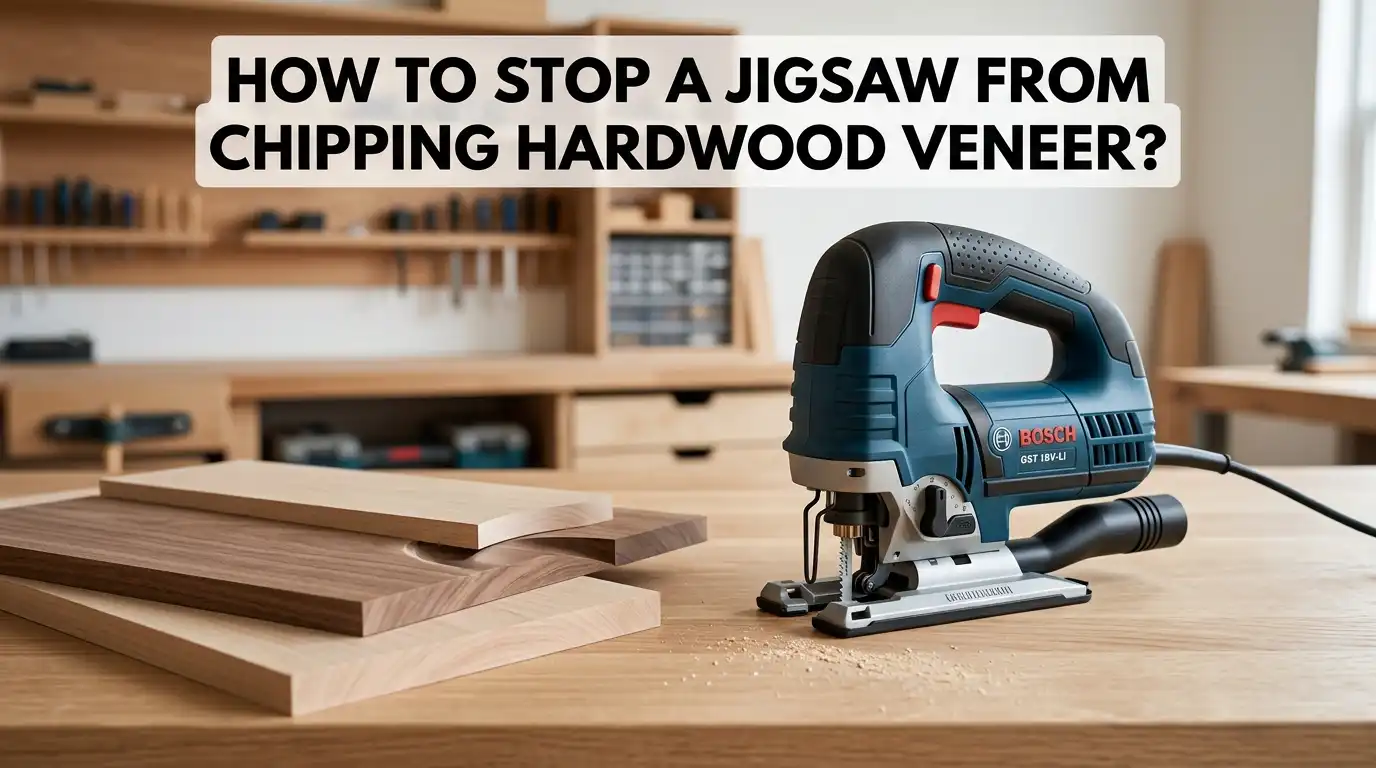
How To Stop A Jigsaw From Chipping Hardwood Veneer?
Hardwood veneer looks beautiful until your jigsaw rips a row of ugly splinters along the cut line. That moment is frustrating. You measured twice. You cut once.
And now the surface looks torn and rough. The good news is that chipping is not random bad luck. It happens for clear reasons, and you can stop it with a few simple changes.
A jigsaw cuts on the upstroke. The teeth lift the wood fibers as they move up. On a veneered panel, that lifting action peels the thin top layer right off the surface. This is the main cause of tearout. Once you understand the mechanics, the solutions make complete sense.
In a Nutshell:
- Cut with the good face down. A jigsaw cuts on the upstroke, so tearout shows on the top side. Flip the panel and the splinters land on the back face instead of your finished surface.
- Use a fine tooth or reverse tooth blade. More teeth per inch means cleaner cuts. A downcut blade pushes fibers down and protects the top veneer beautifully.
- Score the cut line first. A sharp utility knife slices the veneer fibers before the blade reaches them. This single step stops most surface chipping.
- Turn off the orbital action and slow your speed. Aggressive settings tear veneer. A smooth, straight stroke gives the cleanest edge.
- Support the cut with tape or a backer board. Painters tape and a sacrificial board both hold the fibers in place so they cannot lift and break away.
- Go slow and let the blade work. Forcing the saw causes chipping and blade wander. Patience equals clean cuts.
Why Does A Jigsaw Chip Hardwood Veneer In The First Place?
Understanding the problem helps you fix it fast. A jigsaw blade moves up and down many times per second. Standard blades have teeth that point upward. These teeth bite into the wood as the blade rises. That upward force lifts and tears the top fibers.
Hardwood veneer is a very thin sheet of real wood glued to a core. This top layer has almost no thickness to resist tearing. When the blade lifts it, the fibers snap and splinter instead of slicing cleanly.
Other factors make it worse. A dull blade, a coarse tooth count, fast feed speed, and orbital action all increase tearout. Old plywood with failing glue also chips easily because the veneer no longer bonds tightly to the core. Once you know these causes, every solution below will feel logical and easy to apply.
How Does Cutting With The Good Face Down Help?
This is the simplest fix, and it costs nothing. Since a jigsaw cuts on the upstroke, the worst chipping appears on the top surface. So you flip your strategy. Place the finished veneer face down on your work surface. Now the splinters form on the back face, which nobody will see.
You mark your cut line on the back side and cut as normal. The blade exits through the good face, but the downward pressure of the blade keeps those fibers pressed and clean. The visible side stays sharp and crisp.
Pros: It is free, fast, and works with any blade you already own.
Cons: You must transfer your cut line to the back side, which adds a small step. You also cannot see the good face while cutting, so layout marks need to be accurate. For symmetrical panels this method works perfectly.
Which Jigsaw Blade Stops Veneer Chipping Best?
Blade choice changes everything. The rule is simple. More teeth per inch gives cleaner cuts. For veneer, look for a fine tooth blade with a high TPI count, usually 20 teeth per inch or more. These blades remove tiny amounts of material and leave smooth edges.
For the best results, use a downcut blade, also called a reverse tooth blade. The teeth point downward instead of upward. This pushes the top fibers down rather than lifting them. The veneer face stays protected because the cutting force works in your favor.
Some blades use a bidirectional design with both up and down teeth. These give clean edges on both faces.
Pros: Downcut and fine tooth blades dramatically reduce chipping. They work on the good face up.
Cons: Downcut blades fight against the saw and can feel less stable. They cut slower and the saw may try to lift off the wood, so you must hold it firmly.
Should You Score The Cut Line Before Cutting?
Scoring is one of the most reliable tricks woodworkers use. A sharp utility knife slices through the veneer fibers before the blade arrives. This breaks the surface bond cleanly, so the blade cannot tear a ragged edge.
Here is the step by step method. First, place your straightedge along the cut line. Then run a sharp knife along the line two or three times. Press firmly so the blade cuts fully through the thin veneer layer. Score on both sides if you cut through the panel completely. Now cut just outside your scored line with the jigsaw.
The scored groove acts as a clean boundary. Any tearout stops at the cut, not on the surface.
Pros: Scoring gives near perfect edges and works with any blade.
Cons: It takes extra time and care. A dull knife or a slip can ruin the surface, so use a fresh sharp blade and steady pressure.
Does Painters Tape Really Prevent Tearout?
Painters tape is a popular and cheap solution. The idea is simple. You stick tape over the cut line before you cut. The tape holds the surface fibers together. When the blade passes through, the fibers cannot lift and splinter because the tape pins them down.
Apply a strip of blue painters tape directly over your marked line. Press it down firmly so it bonds well. Draw your cut line on top of the tape, then cut through both the tape and the wood. Afterward, peel the tape away slowly at a low angle.
There is one warning. On some delicate veneers like birch, tape can pull fibers out when you remove it. Always peel gently and test on scrap first.
Pros: Tape is cheap, fast, and easy for beginners.
Cons: It does not stop deep tearout fully, and aggressive tape can damage soft veneers during removal.
How Does A Sacrificial Backer Board Work?
A backer board is a smart support trick. You place a scrap piece of wood or MDF directly under your veneer panel. The two surfaces sit tightly together with no gap. As the jigsaw blade exits the veneer, it enters the backer board instead of open air.
This support stops the fibers from breaking away. The backer board absorbs the tearout so your veneer stays clean. For even better results, sandwich the panel between two boards, one on top and one below. This protects both faces at once.
Clamp everything together firmly so nothing shifts during the cut. A loose stack will vibrate and cause chipping.
Pros: Backer boards give excellent clean edges and protect both sides. They cost almost nothing if you use scrap.
Cons: Setup takes time, and clamping a sandwich can be awkward. You cut through extra material, so your blade works harder and dulls a little faster.
Why Should You Turn Off The Orbital Action?
Most modern jigsaws have an orbital setting. This makes the blade swing forward and back as it moves up and down. Orbital action removes material fast, but it is aggressive. That aggression tears veneer and leaves rough edges.
For clean cuts on veneer, set the orbital action to zero or off. The blade then moves in a straight up and down motion. This gentle stroke slices instead of ripping. The cut takes longer, but the edge quality improves greatly.
There is a second benefit. Many jigsaws come with a clear plastic splinter guard. This guard only works when the orbital action is off. With orbital motion on, the guard rubs against the blade and cannot sit close enough to help.
Pros: Turning off orbital action gives smooth edges and lets the splinter guard work.
Cons: The cut is slower, and you must apply steady pressure since the saw cuts less aggressively.
How Does Blade Speed Affect Veneer Chipping?
Speed control matters more than many people think. A jigsaw with variable speed lets you slow the blade down. For veneer, slower is usually better. A fast blade lifts and tears fibers before they can be cut cleanly.
Set your saw to a medium or low speed for veneered panels. Let the blade do the work at its own pace. This gives the teeth time to slice each fiber instead of ripping through. The result is a noticeably cleaner edge.
Pair slow speed with a gentle feed rate. Do not push the saw hard. Forcing the blade causes both chipping and wander. Move the saw forward only as fast as it cuts without resistance.
Pros: Slower speed reduces tearout and gives you more control around curves.
Cons: Cutting takes longer, and too slow a speed on thick material can cause the blade to bind or overheat.
What Is The Right Cutting Technique To Avoid Chipping?
Good technique ties all the methods together. Start by securing your panel with clamps. A wobbling board ruins clean cuts. Keep the work surface flat and stable.
Position the jigsaw base plate flat against the wood before the blade touches it. Start the saw, then ease it into the cut. Never start cutting at full pressure. Let the blade reach full speed first.
Move slowly and follow your line with light, steady pressure. Do not force the saw sideways through curves because this twists the blade and tears the veneer. Let the blade lead and guide it gently.
Keep the base plate pressed firmly down at all times. This stops the saw from bouncing, which causes splintering.
Pros: Good technique improves every cut and reduces blade wander.
Cons: It takes practice and patience. Beginners may need a few test cuts on scrap to build a smooth, steady motion.
Can A Splinter Guard Insert Make A Difference?
Many jigsaws include a small plastic splinter guard, sometimes called an anti splinter insert. It clips into the base plate near the blade slot. The guard closes the gap around the blade. This is the same idea as a zero clearance insert on a table saw.
With less space around the blade, the veneer fibers have nothing to lift into. The guard supports the wood right at the cutting point. This holds the surface down and reduces chipping on the top face.
Remember the key rule. The splinter guard only works with the orbital action turned off. If you leave orbital motion on, the blade will rub the guard.
Pros: It is built into your saw and adds clean support at no extra cost.
Cons: It only works with orbital action off, and it wears out over time. Not every jigsaw model includes one.
How Do You Cut Clean Curves In Veneer Without Chipping?
Curves are harder than straight cuts. The blade changes direction often, and each turn adds stress to the veneer. Use a narrow blade designed for curves. Thin scroll blades turn tight corners without twisting.
Slow down even more on curves. Take wide, gentle turns rather than sharp jerks. If a curve is very tight, make small relief cuts from the edge to the line first. These let waste fall away so the blade does not bind.
Combine curve cutting with scoring. Score the curved line with a knife following a flexible template. This protects the surface along the whole curve, not just the straight sections.
Pros: The right blade and slow pace give smooth, clean curves.
Cons: Curves still chip more easily than straight cuts. Tight radius work requires patience and may need sanding afterward.
What Should You Do If The Veneer Still Chips A Little?
Sometimes a few small chips appear even with your best effort. Do not panic. Minor tearout is fixable. Most projects hide the cut edge under trim, edge banding, or another panel.
If the edge will show, sand it lightly with fine grit sandpaper. Sand in the direction of the grain to smooth small frayed fibers. For tiny chips, a dab of matching wood filler or wax stick blends the spot away.
You can also plan your cuts so the edge faces inward or downward in the final piece. Position chipping where it will not be seen. This simple planning saves a lot of repair work.
Pros: These fixes rescue projects and reduce waste.
Cons: Filler and sanding take time and may not perfectly match the grain. Prevention always beats repair, so use the earlier methods first.
How Do You Combine Methods For The Best Results?
The cleanest cuts come from stacking several methods together. No single trick is perfect, but combined they give professional edges. Start by choosing a fine tooth or downcut blade. This is your foundation.
Next, score your cut line with a sharp knife. Then turn off the orbital action and set a slow to medium speed. Place a backer board under the panel and clamp everything tightly. Finally, cut with steady, gentle pressure.
This full system attacks chipping from every angle. The blade slices cleanly, the score breaks the fibers, the backer supports the exit, and the slow speed prevents tearing. Most woodworkers find this combination eliminates chipping almost completely.
Pros: Combining methods gives the most reliable, repeatable clean cuts.
Cons: It takes the most setup time and effort. For rough or hidden cuts, a simpler approach may be enough.
Frequently Asked Questions
Does a jigsaw cut on the up or down stroke?
A standard jigsaw cuts on the upstroke. The teeth point upward and lift the wood as the blade rises. This upward force is what causes chipping on the top surface. That is why cutting with the good face down, or using a downcut blade, protects your veneer so well.
What TPI blade is best for cutting hardwood veneer?
Use a fine tooth blade with around 20 teeth per inch or higher. More teeth means a smoother cut. A high TPI blade removes small amounts of material with each stroke, which reduces tearout. A downcut or reverse tooth blade in a fine count gives the cleanest results on veneer.
Will painters tape damage delicate veneer?
It can on some soft veneers like birch. The tape adhesive may pull fibers loose when you peel it off. Always remove tape slowly at a low angle. Test on a scrap piece first. If the tape lifts fibers, switch to scoring or a backer board instead.
Is scoring the line worth the extra time?
Yes, for visible cuts it is worth it. Scoring slices the veneer fibers before the blade reaches them. This stops most surface chipping on its own. The few extra minutes save you from sanding or filling later. For hidden cuts, you may skip it.
Can I cut veneer with the good face up?
Yes, but you need help. Use a downcut blade, turn off orbital action, score the line, and cut slowly. These steps protect the top face. Without them, cutting face up almost guarantees chipping because the blade lifts the surface fibers.
Why does my jigsaw blade wander off the line?
Blade wander comes from pushing too fast or using a dull or thin blade. Slow your feed rate and let the blade cut at its own pace. Use a sharp, slightly stiffer blade and keep the base plate flat. Steady, gentle pressure keeps the cut straight.

Hi, I’m Leah Ray — the voice behind CraftBench Vault. I’m a passionate woodworking enthusiast dedicated to reviewing the best wood cutting tools and woodworking products. Through honest research and hands-on experience, I help fellow crafters make smarter buying decisions. Welcome to my workshop!