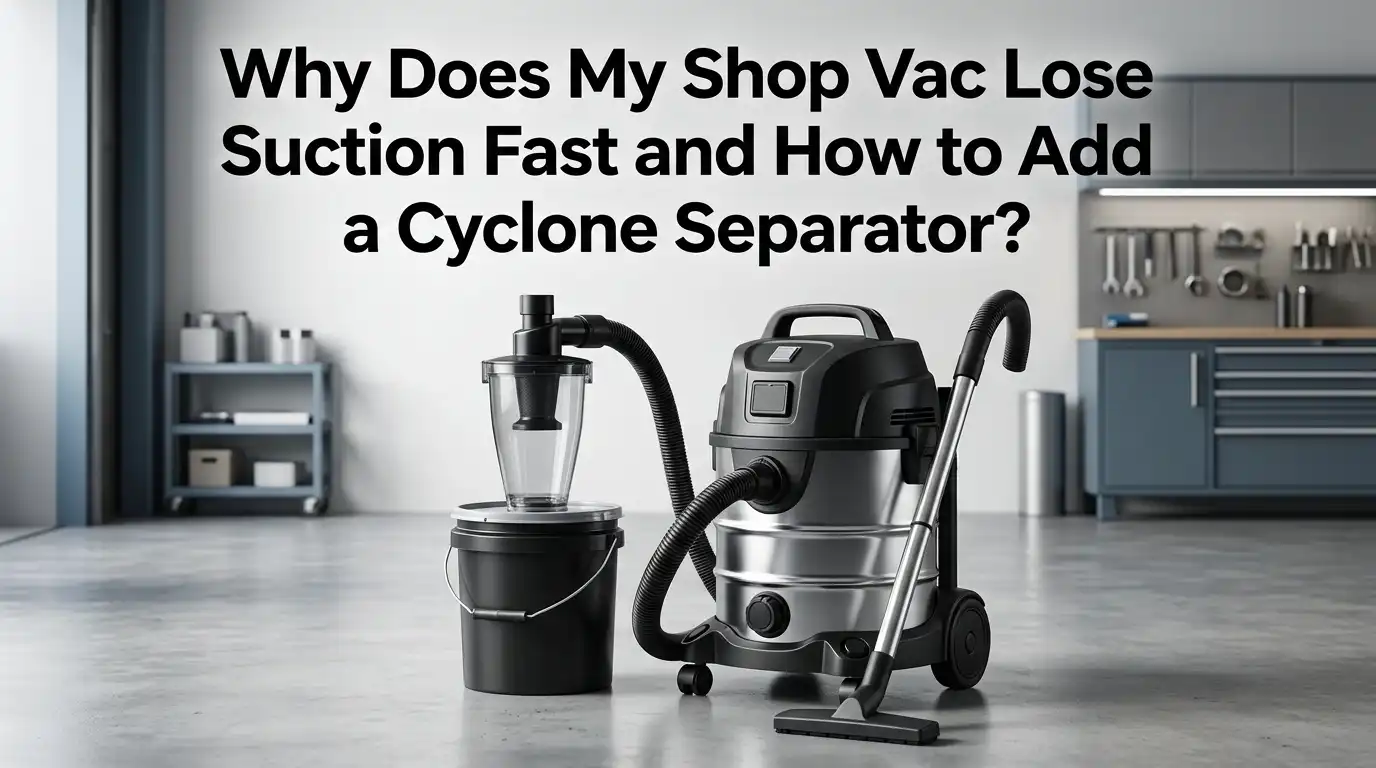
Why Does My Shop Vac Lose Suction Fast and How to Add a Cyclone Separator?
Your shop vac roared to life with strong suction last week. Today, it barely pulls a leaf off the floor. Sound familiar? Losing suction fast is the most common complaint among shop vac owners, and the cause is usually simpler than you think. Even better, the fix often costs less than a pizza.
In this guide, you will learn the real reasons your shop vac chokes up so quickly. You will also discover how a cyclone separator can save your filter, your time, and your sanity.
We will walk through step by step setup, the pros and cons of each method, and the maintenance habits that keep your vacuum running like new. Let us get your suction back.
Key Takeaways
- Clogged filters are the top reason your shop vac loses suction fast. Fine dust coats the pleats within minutes, choking airflow even when the canister looks empty.
- A cyclone separator catches 95 to 99 percent of debris before it ever touches your filter. This single upgrade can make one filter last for years instead of weeks.
- Hose blockages, full canisters, and air leaks also rob suction power. Always check these three things first before assuming the motor has failed.
- Two bucket DIY cyclones cost under thirty dollars and work nearly as well as expensive store bought units. They are perfect for weekend builders.
- Lid mounted cyclones are the easiest upgrade for beginners. You just snap them on top of a five gallon bucket and connect two hoses.
- Regular filter cleaning and bag use add years to your shop vac. Tap the filter outside, rinse it monthly, and use collection bags for drywall or sawdust.
What Causes a Shop Vac to Lose Suction So Quickly?
A shop vac depends on steady airflow through a clean path. When anything blocks that path, suction drops in seconds. The most frequent culprit is a clogged filter coated with fine dust. Even a thin layer of drywall powder or sanding dust can slash airflow by half.
Other common reasons include a full debris tank, a clogged hose, or a stuck float ball inside the canister. Air leaks around the lid gasket or hose port also matter. Each tiny gap reduces the pressure your motor can build.
In short, your motor is probably fine. The airflow path around it is the real problem. Fix the airflow, and the suction returns instantly.
How a Dirty Filter Kills Suction Faster Than Anything Else
The filter is the lungs of your shop vac. Fine dust particles cling to the pleats like dust on a fan blade. Within minutes of vacuuming drywall, sawdust, or ash, those pleats clog solid. Air cannot pass, and suction collapses.
Many users blame the motor when the filter is the real villain. A visual check often misses the problem because the outside of the filter can look clean while the inside is packed.
Pros of regular filter cleaning: It is free, takes two minutes, and restores full suction.
Cons: Dust gets everywhere when you tap or brush the filter. Wet rinsing also requires full drying time, sometimes a full day, before reuse.
Why Your Hose and Wand Might Be Hiding a Blockage
A blocked hose is sneaky. The motor still hums, the canister stays empty, and yet nothing gets sucked up. Long chips, screws, plastic wrappers, and clumps of pet hair often lodge inside the hose bend or wand joint.
To check, disconnect the hose and look through it toward a light. If you cannot see the light clearly, something is stuck. Push a long broom handle through gently to clear it.
Pros of hose checks: Free, fast, and solves the problem in under five minutes.
Cons: You may need to remove the hose every few days if you work with long debris like wood shavings or twine. Some hoses also crack at the cuff over time, creating hidden leaks.
The Float Ball and Full Tank Problem Most Owners Miss
Inside your shop vac sits a small float ball or float cage. Its job is to block the motor inlet if water rises too high. This stops water from frying your motor. But the float can get stuck in the up position from dust, debris, or tilting the vac.
When that happens, the vac loses suction even though everything else looks fine. Many users have no idea this part exists.
To fix it, open the lid, find the float assembly near the motor inlet, and gently push it down. Clean off any gunk. Also empty the tank, since a full canister starves the motor of airflow long before the debris reaches the top.
Air Leaks: The Silent Suction Killer
A shop vac builds pressure by creating a sealed system. Any leak breaks that seal and steals suction. Common leak spots include the lid gasket, the hose cuff, the drain plug on wet/dry models, and accessory connections.
Run your hand around the lid edge while the vac runs. If you feel air pulling in anywhere except the hose port, you have a leak. Replace cracked gaskets and wrap loose connections with electrical tape or a hose clamp.
Pros of sealing leaks: A quick fix that often doubles suction. Gaskets cost a few dollars.
Cons: Older shop vacs may have warped lids that never seal perfectly again. In that case, the whole lid assembly may need replacement.
What Is a Cyclone Separator and How Does It Work?
A cyclone separator is a simple device that spins air in a tight vortex before it reaches your shop vac. Heavy dust and debris get thrown outward by centrifugal force. They drop into a collection bucket. Only clean air passes through to your vacuum.
Think of it like a tornado in a bucket. The swirling motion separates 95 to 99 percent of debris before it can clog your filter.
The result is dramatic. Your filter stays clean for months. Your suction stays strong all day. Emptying becomes easy because all the dust sits in one bucket, not packed around your filter pleats. It is the single best upgrade for any shop vac user who handles lots of dust.
Lid Style Cyclone Separators: The Easy Plug and Play Option
Lid style cyclones are pre molded plastic tops that snap onto a standard five gallon bucket. They have two ports, one for the inlet hose from your tool, and one for the outlet hose to your shop vac. Setup takes about ten minutes.
You attach your tool hose to the inlet, run a second hose from the outlet to your shop vac, and seal everything with hose clamps. Dust spirals down into the bucket while clean air flows to the vac.
Pros: Very easy to install, no cutting or drilling, works right out of the box, and easy to empty.
Cons: Performance varies between brands. Cheaper lids may leak air or pop off under strong suction. They also need a very tight bucket seal to work well.
Two Bucket DIY Cyclone Builds: Cheap and Effective
A two bucket cyclone is a popular DIY project. You stack two five gallon buckets with a baffle disc between them. The top bucket has the cyclone lid or a homemade port setup. The bottom bucket collects the dust.
This design increases capacity and improves separation because the baffle stops dust from being pulled back up. Total cost is often under thirty dollars including buckets, baffle, hoses, and clamps.
Pros: Big capacity, cheap to build, customizable to your shop, and easy to repair.
Cons: Takes a couple of hours to build, requires basic drilling and cutting, and stacks taller than a single bucket setup. It can also tip over if not secured to a cart.
Step by Step: How to Install a Cyclone Separator on Your Shop Vac
Here is the simple installation process. Step one: gather your cyclone lid, a sturdy five gallon bucket, two lengths of shop vac hose, two hose clamps, and a screwdriver.
Step two: Press the cyclone lid firmly onto the bucket. Make sure the gasket sits flush all the way around. Any gap will leak air and reduce performance.
Step three: Connect one hose from your tool or floor wand to the inlet port. Step four: Connect the second hose from the outlet port to your shop vac inlet. Tighten both clamps.
Step five: Turn on the vac and test by vacuuming sawdust. Watch the dust spiral into the bucket. If dust still reaches the shop vac, check for air leaks around the lid and re seat it firmly.
Best Practices to Keep Your Cyclone Working at Peak Performance
Once installed, a cyclone needs little maintenance, but a few habits keep it running great. Empty the bucket before it is half full. A full bucket disrupts the vortex and lets dust escape to your shop vac.
Keep the lid sealed tight every time you reattach it. Check the gasket monthly for cracks or compressed spots. Replace it if it no longer springs back.
Use rigid hoses where possible between the cyclone and the shop vac. Flexible hoses cause more pressure drop and reduce suction. Also, keep both hoses as short as you can. Every extra foot of hose costs you a bit of airflow.
Finally, anchor your cyclone to a small cart or board. A stable base prevents tipping during heavy use and keeps everything moving with you around the shop.
Filter Care Tips That Work Hand in Hand With a Cyclone
Even with a cyclone, your filter still needs care. Tap the filter outside every few uses to knock loose any fine dust that made it through. Do this gently to avoid cracking the pleats.
For washable filters, rinse them with cool water once a month. Never use soap, as it can clog the pores. Let the filter air dry completely, usually 24 hours, before putting it back in.
Pros of regular filter care: Extends filter life by years, maintains strong suction, and prevents motor strain.
Cons: Takes time, and wet filters cannot be used immediately. Keeping a spare dry filter on hand solves this and lets you swap and keep working.
Using Collection Bags for Even Better Dust Control
Collection bags sit inside your shop vac canister and catch dust before it reaches the filter. Paired with a cyclone separator, they form a triple barrier system. Cyclone first, bag second, filter third.
Drywall bags, fine dust bags, and HEPA bags all serve different needs. Drywall bags handle the finest powders, while standard bags work well for sawdust and general debris.
Pros: Clean disposal, no dust cloud when emptying, longer filter life, and better air quality in your shop.
Cons: Bags are a recurring cost, and they slightly reduce overall airflow. Some bags also tear if you suck up sharp debris like screws or staples, so use them mainly for fine dust work.
When to Replace Parts Versus Repair Your Shop Vac
Sometimes maintenance is not enough. If your motor sounds different, smells burnt, or sparks, stop using the vac. Motor brushes wear out after years of use and may need replacement.
Cracked lids, broken float cages, and torn hoses are usually cheap to replace. Check your model number and search for parts online or at the manufacturer site.
Pros of repair: Saves money, keeps a familiar tool in service, and reduces waste.
Cons: Some older models have discontinued parts. In those cases, replacement may be the only option. If your vac is over ten years old and needs a motor, buying a new unit often makes more financial sense than rebuilding the old one.
FAQs
How often should I clean my shop vac filter?
Clean the filter every two to three uses for heavy dust work like sanding or drywall. For general cleanup, once a month is enough. With a cyclone separator installed, you can stretch that to every few months because so little dust reaches the filter.
Can I use any bucket for a DIY cyclone separator?
Yes, but a standard five gallon bucket works best with most pre made cyclone lids. Make sure the bucket walls are thick and rigid. Thin buckets can collapse under strong suction. Always check the lid manufacturer’s recommended bucket size before buying.
Will a cyclone separator reduce my shop vac suction at the tool?
Slightly, yes. Adding any extra hose or device causes a small pressure drop. But the suction loss is tiny compared to what you gain by keeping your filter clean. Most users notice stronger overall performance because the filter never clogs.
Do cyclone separators work for wet pickup?
No. Cyclones are designed for dry dust and debris. Water and wet sludge will pool in the bucket and can splash into your shop vac. For wet pickup, remove the cyclone and use your shop vac alone with the filter and float ball in place.
Why does my shop vac still lose suction after I added a cyclone?
Check for air leaks first. Any gap in the lid seal lets dust bypass the cyclone and clog your filter. Also empty the bucket regularly and inspect both hoses for blockages. If everything is sealed and clear, your filter may already be coated and need cleaning.
Can a cyclone separator damage my shop vac?
No. A properly installed cyclone reduces strain on your motor by keeping airflow steady and the filter clean. The only risk is using one for wet pickup, which can let water reach the motor. Stick to dry use and your shop vac will last longer than ever.

Hi, I’m Leah Ray — the voice behind CraftBench Vault. I’m a passionate woodworking enthusiast dedicated to reviewing the best wood cutting tools and woodworking products. Through honest research and hands-on experience, I help fellow crafters make smarter buying decisions. Welcome to my workshop!