How to Stop Carpenter Bees From Boring Into Wood?
Every spring, homeowners across the country face the same frustrating problem. Carpenter bees return to their favorite spots and drill perfectly round holes into decks, fascia boards, eaves, and fences. These large, buzzing insects may look harmless, but the tunnels they create can cause serious structural and cosmetic damage over time.
If you have noticed small piles of sawdust below round holes in your wood, you already have a carpenter bee problem. The good news is you can stop it.
This guide gives you clear, practical, step by step solutions to prevent carpenter bees from boring into your wood. You will learn natural methods, physical barriers, repair strategies, and long term prevention tips that actually work.
In a Nutshell
- Carpenter bees prefer bare, untreated, and softwood surfaces. They drill half inch round holes and create tunnels that can stretch six to ten inches deep. Over several seasons, this repeated boring weakens the wood and invites moisture damage and woodpecker attacks.
- Painting, staining, or varnishing exposed wood is one of the most effective long term deterrents. Carpenter bees strongly prefer unfinished wood. A solid coat of paint can reduce nesting activity significantly.
- Natural repellents like almond oil, citrus oil, and peppermint oil can discourage bees from drilling. These need frequent reapplication but offer a chemical free option for homeowners who want to protect pollinators.
- Filling existing holes is critical. If you leave old tunnels open, bees will return to them year after year. Use steel wool, wood putty, or caulk to seal holes after treatment.
- Replacing softwood with composite materials, vinyl, or hardwoods like ipe and black locust offers a permanent fix. Carpenter bees physically cannot bore into these materials, which makes them ideal for high risk areas.
- Carpenter bee traps can reduce local populations when placed near active nesting areas. They work best as part of a larger prevention plan, not as a standalone solution.
How to Identify Carpenter Bee Damage on Your Property
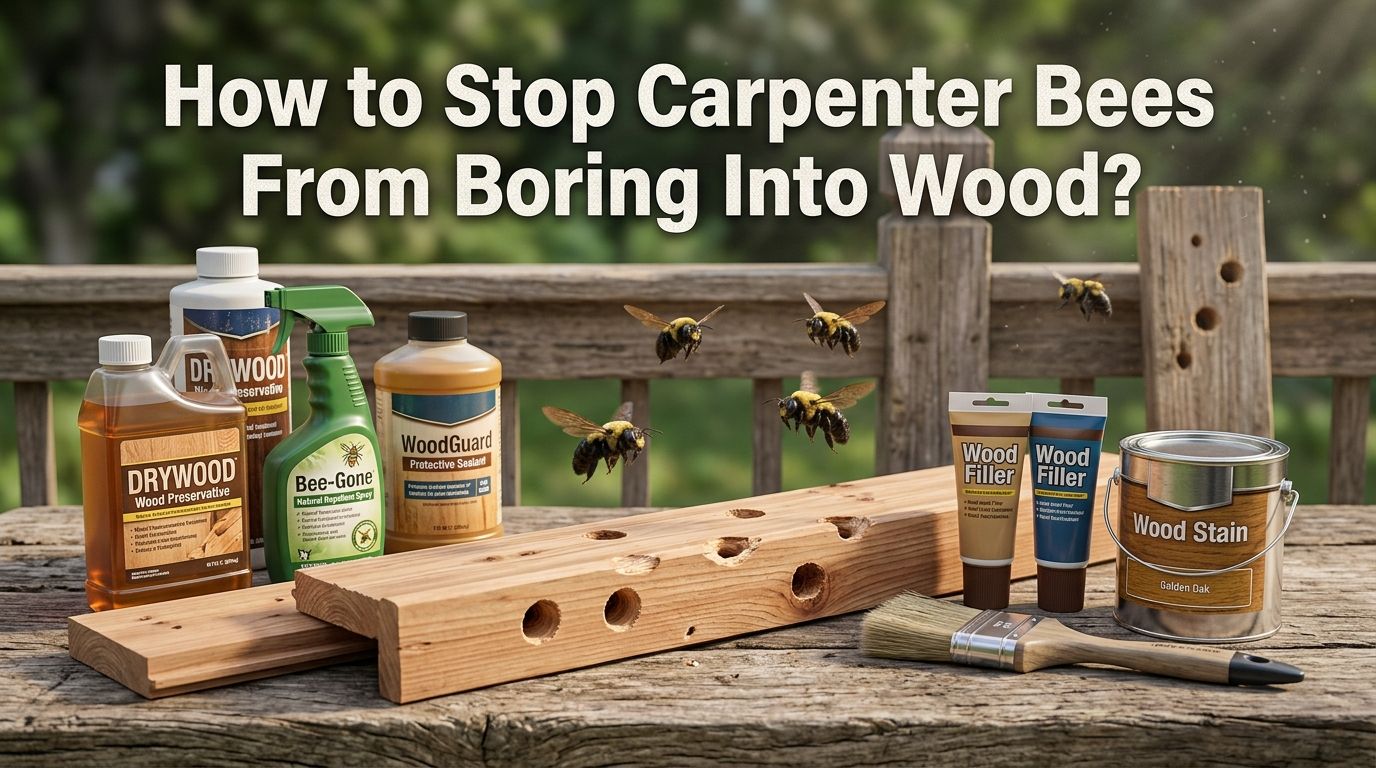
The first step to solving a carpenter bee problem is knowing what to look for. Carpenter bees drill perfectly round entry holes about half an inch in diameter. These holes usually appear on the underside of wood surfaces like eaves, fascia, deck rails, and pergolas.
Look for small piles of coarse sawdust (called frass) directly below the holes. You may also see yellowish brown staining near the entry point. This stain comes from bee excrement.
Inside the wood, carpenter bees turn at a 90 degree angle and bore tunnels that can run six inches or more along the grain. Female bees lay eggs inside these tunnels and partition them with chewed wood pulp. If left untreated, bees reuse and extend these galleries each year, which compounds the damage.
How to Understand Why Carpenter Bees Target Certain Wood
Carpenter bees do not eat wood. They chew through it to create nesting chambers for their larvae. They are strongly attracted to bare, weathered, and unpainted softwoods like pine, cedar, redwood, and cypress.
Wood that is soft enough to drill and dry enough to nest in makes an ideal target. Sun exposed surfaces that have lost their finish are especially vulnerable. Fascia boards, deck railings, porch ceilings, and fence posts are common hotspots.
Bees tend to avoid painted or varnished surfaces because the coating makes the wood harder to penetrate. They also avoid very hard woods and non wood materials. Understanding these preferences helps you focus your prevention efforts where they matter most.
How to Use Paint and Finish to Deter Carpenter Bees
One of the simplest and most effective ways to stop carpenter bees is to paint or stain all exposed wood surfaces. Carpenter bees overwhelmingly prefer bare, untreated wood. A quality exterior paint creates a physical and chemical barrier they dislike.
Oil based paints and polyurethane finishes work especially well. Latex paint also helps but may need more frequent reapplication. The key is full coverage with no bare patches left exposed.
If you prefer a natural wood look, use a pigmented exterior stain or a clear coat finish. Even a light tint helps. Reapply your finish every one to three years depending on sun exposure and weather conditions.
Pros: Low cost, easy to apply, protects against weathering too, widely available.
Cons: Requires regular maintenance, does not stop bees from existing tunnels, some homeowners dislike the look of painted wood on rustic structures.
How to Repel Carpenter Bees With Natural Essential Oils
If you want a chemical free approach, essential oils offer a natural repellent option. Carpenter bees are sensitive to strong scents like almond oil, peppermint oil, citrus oil, tea tree oil, and lavender oil.
To make a spray, mix 10 to 20 drops of peppermint or citrus essential oil with one cup of water and a small squirt of dish soap in a spray bottle. Shake well and spray the mixture on wood surfaces where bees are active. Focus on entry holes, eaves, and any bare wood.
You can also soak cotton balls in almond oil and place them near nesting areas. Reapply the spray every few days, especially after rain. This method works best as a short term deterrent while you prepare longer lasting solutions.
Pros: Non toxic, safe around children and pets, affordable, protects pollinators.
Cons: Requires frequent reapplication, less effective in heavy rain, may not stop determined bees from established nesting sites.
How to Seal and Repair Existing Carpenter Bee Holes
Leaving old carpenter bee holes open is one of the biggest mistakes homeowners make. Open tunnels attract returning bees and invite moisture, mold, and woodpecker damage. Sealing holes is essential for long term control.
Wait until fall or early winter to plug holes, as this is when bees are least active. First, insert a small piece of steel wool into the hole to block re entry. Then fill the hole with wood putty, caulk, or a wooden dowel. Sand the surface smooth after the filler dries.
For active holes during spring or summer, you can apply a natural repellent inside the tunnel before sealing. This discourages bees from chewing back through the plug. After sealing, paint or finish over the repair for added protection.
Pros: Prevents reuse of existing tunnels, stops moisture intrusion, restores the look of damaged wood.
Cons: Requires timing (best in off season), bees may bore new holes nearby, does not solve the root attraction to the wood.
How to Build or Use Carpenter Bee Traps Effectively
Carpenter bee traps work by mimicking nesting holes. The trap has angled entry holes drilled into a wooden block. Bees enter the holes, move toward light inside the trap, and fall into a collection jar or bottle below.
You can build a simple trap from a 4×4 block of untreated wood and a plastic bottle. Drill half inch holes at upward angles into the block, then drill a larger hole at the bottom that connects to the bottle. Hang the trap near areas of high bee activity, ideally within a few feet of existing damage.
Traps work best when placed early in the spring before bees establish new nests. They reduce local populations but do not eliminate infestations on their own. Use them alongside sealing, painting, and repellent strategies.
Pros: Chemical free, reusable, can significantly reduce bee numbers in a targeted area, easy to build.
Cons: Does not prevent all boring, needs regular emptying, works best as a supplemental tool, some traps catch non target insects.
How to Apply Borate Treatments to Protect Wood Long Term
Borate based wood treatments offer one of the most reliable long term defenses against carpenter bees. Products containing disodium octaborate tetrahydrate penetrate the wood and make it unpalatable to boring insects.
Apply the borate solution directly to bare, unfinished wood using a brush, roller, or pump sprayer. The treatment soaks into the grain and remains effective for years. It works on decks, log cabins, fences, and other wood structures.
Borate treatments are most effective on raw wood before a finish is applied. They can also be used on previously unfinished surfaces after light sanding. Once dry, you can paint or stain over the treated wood for even more protection.
Pros: Long lasting, penetrates deep into wood, also deters termites and other wood boring insects, low toxicity to humans and pets.
Cons: Must be applied to bare wood, not effective over existing paint, requires dry conditions during application.
How to Replace Vulnerable Wood With Bee Resistant Materials
For areas that suffer repeated carpenter bee attacks year after year, replacing the wood entirely may be the smartest long term investment. Carpenter bees cannot bore into composite lumber, vinyl, PVC trim, fiber cement, or aluminum.
Very hard wood species like ipe, black locust, and teak also resist carpenter bee boring because the wood is too dense for their mandibles. These materials are ideal for replacing fascia boards, trim, railings, and porch ceilings in high risk zones.
While the upfront cost is higher, you save money on annual treatments, repairs, and refinishing. This approach eliminates the problem permanently in the replaced areas.
Pros: Permanent solution, zero maintenance for bee prevention, adds value to your home, no chemicals needed.
Cons: Higher initial cost, may change the appearance of your home, not practical for entire structures like log homes.
How to Use Dust and Residual Insecticides Safely
If natural methods are not enough, residual insecticide dusts can be applied directly into active carpenter bee tunnels. Diatomaceous earth is a popular non toxic option. It is made of microscopic fossilized algae that damage insect exoskeletons.
Apply the dust with a hand duster or puff bottle directly into the entrance hole. The bees carry the dust deeper into the tunnel as they move in and out. Leave the hole open for a few days so bees continue to contact the dust, then seal the hole.
For stronger options, boric acid dust can also be used in the same way. Always wear a dust mask and gloves during application. Apply in the evening when bees are less active.
Pros: Targets bees directly in their tunnels, diatomaceous earth is non toxic to mammals, boric acid is highly effective.
Cons: Requires precise application, dust can irritate lungs if inhaled, chemical dusts may harm other beneficial insects if misapplied.
How to Redirect Carpenter Bees to Alternative Nesting Sites
A creative and eco friendly strategy is to give carpenter bees a better place to nest. You can set up a dedicated bee nesting block away from your home. Use a piece of untreated softwood and drill half inch holes at least four inches deep.
Mount the block in a sunny, sheltered spot at least 20 to 30 feet from your house. Some homeowners place these blocks near gardens since carpenter bees are excellent pollinators. By offering an easy alternative, you reduce the pressure on your home’s wood.
This method works best when combined with repellents and finishes on your home’s wood. The idea is to make your house less attractive while making the nesting block more attractive.
Pros: Supports pollinator populations, non destructive, easy to set up, free or very low cost.
Cons: No guarantee bees will use the block, may attract more bees to the general area, requires pairing with other prevention methods.
How to Time Your Prevention Efforts for Maximum Results
Timing plays a huge role in carpenter bee control. Adult carpenter bees emerge in early to mid spring, usually April or May, depending on your climate. This is when mating and nesting activity peaks.
The best time to paint, stain, or apply borate treatments is late winter or early spring before bees become active. If you wait until you see holes, the damage has already started.
Seal existing holes in late fall or winter when tunnels are empty. Set out traps in early spring so they are in place before the first bees arrive. Apply essential oil sprays weekly starting in early spring and continue through the active season.
A well timed prevention plan each year takes very little effort but produces far better results than reacting after the damage is done.
How to Know When to Call a Professional Pest Control Service
Sometimes a carpenter bee problem grows beyond what DIY methods can handle. If you find dozens of holes across multiple surfaces, or if the same areas are damaged every year despite your efforts, professional help may be worth the investment.
Pest control professionals can assess the extent of the damage and apply targeted treatments. They have access to stronger products and can identify entry points you may have missed. For log homes and large wooden structures, professional treatment is often the most practical choice.
A structural inspection may also be needed if years of boring have weakened beams, posts, or joists. Water damage from unsealed tunnels can compound the problem and create hidden rot.
Getting a professional assessment every few years gives you peace of mind and helps you catch serious issues early.
Frequently Asked Questions
How do carpenter bees choose which wood to bore into?
Carpenter bees prefer bare, untreated softwoods like pine, cedar, and redwood. They look for dry, weathered surfaces that are easy to drill. Wood that is painted, stained, or very hard is much less likely to be targeted. South facing surfaces that get a lot of sun exposure tend to attract the most bee activity.
How do you stop carpenter bees without killing them?
You can deter carpenter bees with essential oil sprays, paint or stain on bare wood, and alternative nesting blocks. Almond oil, peppermint oil, and citrus oil are effective natural repellents. Traps can also redirect bees away from your home. These methods let you protect your wood while keeping these important pollinators alive.
How long does carpenter bee damage take to become serious?
A single bee creates modest damage in one season. However, carpenter bees reuse and extend tunnels every year. After three to five seasons of repeated boring in the same area, tunnels can weaken the wood significantly. Secondary damage from woodpeckers and moisture makes the problem worse over time.
How effective are carpenter bee traps on their own?
Traps can reduce the number of bees around your home, but they rarely solve the problem completely on their own. They work best as part of a broader strategy that includes sealing holes, painting wood, and applying repellents. Place traps near active nesting areas in early spring for the best results.
How do you know if a carpenter bee hole is still active?
An active hole will have fresh, light colored sawdust below it. You may also see bees hovering near the entrance. Staining or dark discoloration around the hole often indicates activity. If the sawdust is old and the hole looks weathered with no bee activity, the tunnel may be abandoned and ready to seal.
How often should you reapply natural repellents for carpenter bees?
Essential oil sprays typically need reapplication every three to seven days, especially after rain. Almond oil applied directly to surfaces lasts a bit longer. Consistency is key with natural repellents. Pair them with longer lasting solutions like paint, borate treatment, or material replacement for the best protection.

Hi, I’m Leah Ray — the voice behind CraftBench Vault. I’m a passionate woodworking enthusiast dedicated to reviewing the best wood cutting tools and woodworking products. Through honest research and hands-on experience, I help fellow crafters make smarter buying decisions. Welcome to my workshop!