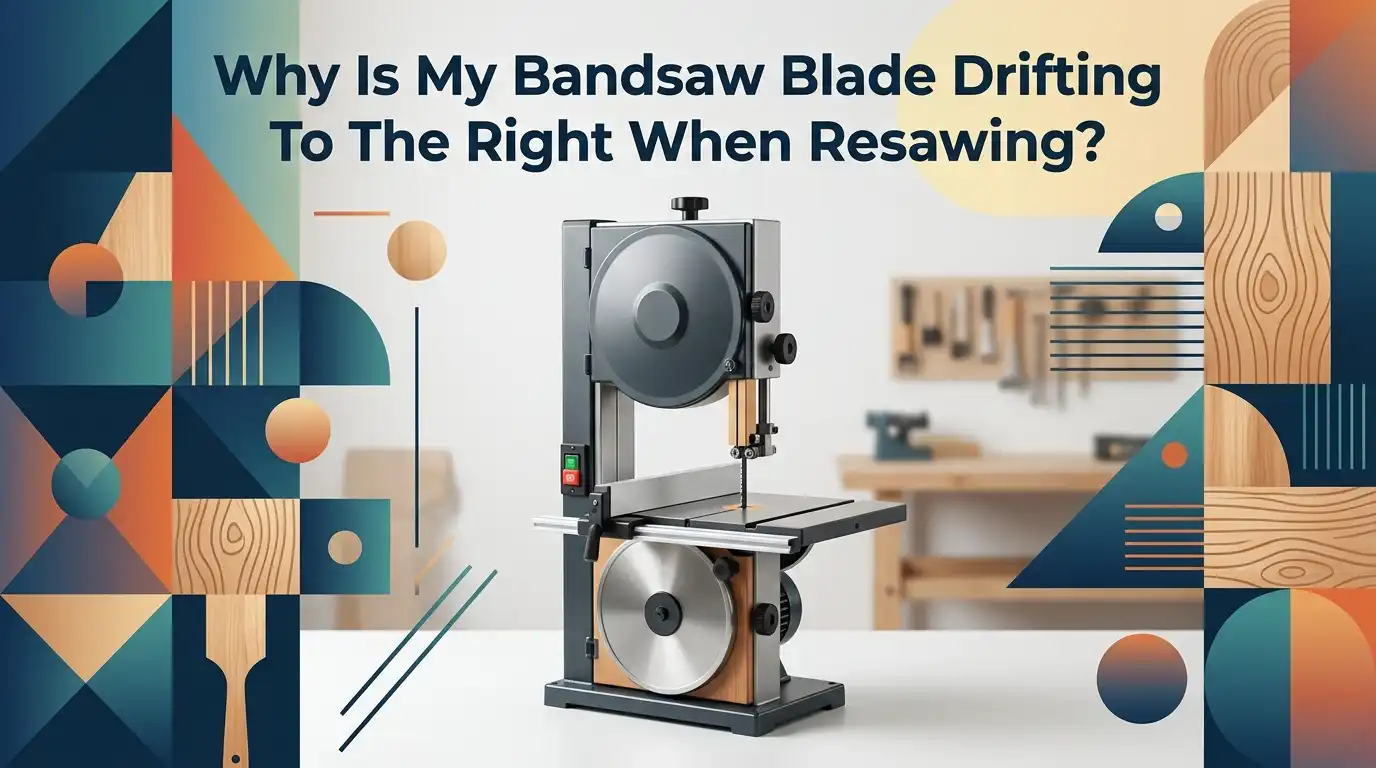
Why Is My Bandsaw Blade Drifting To The Right When Resawing?
Resawing should feel smooth and controlled. You push a board through, and the blade slices a clean, even sheet. But sometimes the blade pulls hard to the right.
Your cut wanders. Your boards come out wedge shaped. Your wood gets wasted. This problem frustrates beginners and seasoned woodworkers alike.
Blade drift to the right is one of the most common bandsaw complaints. The good news is that it is fixable. You do not need a new machine. You usually need a few small adjustments. This guide walks you through every cause and every fix in plain steps.
Key Takeaways
- A dull or unevenly worn blade is the number one cause. When teeth wear faster on one side, the blade pulls toward the sharper side. Replacing the blade often solves the problem instantly.
- Low blade tension makes the blade flex and wander. A loose blade cannot hold a straight line under resaw pressure. Proper tension keeps the blade rigid and true.
- Misaligned guides and bearings force the blade off course. Side bearings set too far away let the blade twist. Setting them a hair away from the blade restores control.
- Blade tracking on the wheel matters a lot. The blade should ride on the crown of the tire. Bad tracking creates constant sideways pull.
- You can fix drift by adjusting your fence angle. Match the fence to the blade’s natural drift line. This works as a quick fix when other causes are ruled out.
- Feed rate and technique affect drift too. Feeding too fast or twisting the board makes drift worse. Slow, steady feeding keeps the cut clean.
What Bandsaw Blade Drift Actually Means
Blade drift happens when the blade does not cut along the line you expect. Instead, it pulls to one side. When it drifts right, your cut angles away from your fence or your marked line.
Drift is not always the machine’s fault. It is often the blade or the setup. The blade follows the path of least resistance. If one side cuts easier than the other, the blade leans that way.
Resawing makes drift worse than normal cutting. You are cutting tall, thick boards. The blade has more wood to push through. Any small flaw in the blade or setup gets magnified. A blade that cuts fine on thin stock can drift badly on a six inch board.
Understanding this helps you stay calm. Drift is a symptom, not a mystery. Once you find the root cause, the fix is simple.
A Dull Or Unevenly Worn Blade Is The Top Cause
This is the first thing to check. A dull blade loses its bite. When teeth wear unevenly, one side stays sharper than the other. The sharper side cuts faster. The blade then pulls toward that side.
If your blade drifts right, the right side teeth may be duller. Worn teeth force the blade to lean toward the part that still cuts well. Hitting a nail, screw, or hard knot can damage one side fast.
To test, run a slow cut in scrap. Watch which way the blade leans. Then inspect the teeth under good light. Look for shiny, rounded tips. Sharp teeth look crisp and pointed.
Pros of replacing the blade: It often fixes drift in seconds. It improves cut quality across the board. It is a clear, simple action.
Cons: Blades cost money. You may waste a blade that has life left. You still need to check setup if drift continues.
Check Your Blade Tension First
Low tension is the second biggest culprit. A loose blade flexes under pressure. When you push a thick board into it, the blade bends sideways. That bend shows up as drift to the right.
Resawing demands high tension. The taller the cut, the more force on the blade. A blade that feels fine for thin work may sag under resaw load. Tension keeps the blade rigid and straight.
To check, set your saw’s tension gauge to match the blade width. If your gauge is unreliable, use the flex test. Push the blade sideways with one finger about an inch above the table. It should flex only about a quarter inch.
Pros of higher tension: It stops flex and drift. It gives cleaner, straighter cuts. It costs nothing to adjust.
Cons: Too much tension stresses the blade and bearings. It can shorten blade life. Always release tension when the saw sits unused.
Inspect The Blade Tracking On The Wheel
Tracking is how the blade rides on the wheels. Most bandsaw wheels have a slight crown, like a gentle hill in the middle. The blade should ride on the top of that crown.
If the blade tracks too far forward or back, it sits at an angle. That angle pushes the cut off line. The blade then drifts right as it tries to follow the tilted path.
To adjust, remove the wood and open the wheel cover. Spin the upper wheel by hand. Watch where the blade sits on the tire. Use the tracking knob to move the blade to the center crown.
The popular Snodgrass method centers the blade gullets on the crown. The teeth hang just off the front. This keeps the body of the blade supported and stable.
Pros: It fixes drift caused by bad blade position. It improves overall blade stability. It takes only a minute.
Cons: You must open the cover each time. Settings change slightly with each new blade. Worn tires make tracking harder to hold.
Set Your Side Guides And Bearings Correctly
Your guides control side to side movement. They sit just behind and beside the blade. If the side bearings sit too far away, the blade twists during the cut. That twist creates drift.
The fix is precise. Set each side bearing a hair away from the blade. They should not press the blade, but they should be close enough to stop any sideways lean. A sheet of paper makes a good spacer.
Check both the upper and lower guides. Many people forget the lower set under the table. Both must be tight and adjusted. Loose guides float and let the blade wander.
Pros of tight guide setup: It stops sideways twist fast. It often cures drift on its own. It improves accuracy on every cut.
Cons: It takes patience to dial in. Guides too tight create heat and friction. You must recheck them when you change blades.
Position The Thrust Bearings Behind The Blade
The thrust bearing sits behind the blade. It stops the blade from being pushed backward as you feed wood. If this bearing is too far back, the blade flexes rearward and loses its line.
When the blade flexes, the cut wanders. This often shows up as drift during heavy resaw cuts. The blade has nothing solid to push against.
To set it, place the bearing just behind the blade body. Leave a tiny gap, about the thickness of a dollar bill. The blade should only touch the bearing when you start cutting wood. It should spin freely when the saw runs idle.
Check both the top and bottom thrust bearings. Both need the same care.
Pros: It supports the blade under load. It stops rearward flex and drift. It protects the blade from over bending.
Cons: Too much contact wears the bearing fast. It creates noise and heat. You must reset it for each blade change.
Use The Right Blade For Resawing
Blade choice matters more than many people think. Narrow blades flex and drift easily during resawing. They cannot hold a straight line through thick stock.
For resawing, use a wider blade, ideally half an inch or wider. A three quarter inch or one inch blade stays stiff. Wide blades resist sideways pull and track straight.
Tooth count matters too. Use a blade with fewer teeth, around three teeth per inch. Big gullets clear sawdust from deep cuts. Clogged gullets cause heat, burning, and drift.
A blade made for resawing has the right set and design. A general blade struggles in deep cuts.
Pros of a proper resaw blade: It cuts straight and clean. It clears chips well. It reduces drift right away.
Cons: Wide blades cost more. They do not cut tight curves. Your saw must handle the extra width and tension.
Adjust Your Fence To Match The Drift Angle
Sometimes drift remains even after good setup. Every blade has a tiny natural drift angle. You can work with it instead of fighting it. This is the drift angle method.
First, draw a straight line on a scrap board. Cut freehand along the line. Let the blade follow its natural path. Do not force the board straight. Stop midcut and hold the board still.
Now look at the angle of the board against the table. That angle is your drift angle. Mark it. Then loosen your fence and set it to match that exact angle. Lock it down.
Pros: It lets you resaw with a fence even when slight drift exists. It gives repeatable, straight cuts. It needs no new parts.
Cons: You reset the fence for every new blade. It treats the symptom, not the cause. Some woodworkers prefer to fix the real issue first.
Try A Single Point Pivot Block Instead Of A Fence
A pivot block is a simple alternative to a fence. It is a rounded block clamped to your table. The blade contacts the wood at one point. This lets you steer the board by hand.
With a pivot block, you follow your marked line. If the blade drifts, you simply turn the board slightly to stay on track. The single contact point gives you full freedom to correct.
This method shines when drift is hard to remove. It does not trap the board like a flat fence. You stay in control the whole cut.
To use it, clamp the block at the blade’s cutting edge. Mark your line on the board. Feed slowly and follow the line with small steering moves.
Pros: It works around drift completely. It gives you total control. It costs almost nothing to make.
Cons: It needs steady hands and practice. Cuts are less hands off than with a fence. Results depend on your skill and focus.
Check Wheel Alignment And Coplanar Setup
If drift keeps coming back, look at your wheels. The two wheels should sit in the same flat plane. This is called coplanar alignment. When wheels are out of line, the blade rides at an angle and drifts.
To check, place a long straightedge across both wheels. They should touch the straightedge evenly at top and bottom. Gaps mean the wheels are not aligned.
Adjustment varies by machine. Some saws let you shim the upper wheel. Others adjust the lower wheel position. Read your manual before you change anything here.
This is a deeper fix. Most drift comes from the blade, tension, or guides. But a misaligned wheel causes stubborn drift that no blade swap will cure.
Pros: It fixes drift at the source. It improves every cut you make. It is a permanent fix once done.
Cons: It takes time and care. Not all saws adjust easily. A mistake here can make tracking worse.
Slow Down Your Feed Rate And Watch Your Technique
Your hands play a big role. Feeding too fast forces the blade and makes it drift. A rushed cut overloads the teeth. The blade pushes sideways to escape the pressure.
Feed slowly and steadily. Let the blade do the work. Use even pressure straight into the cut. Do not twist or shove the board. Twisting the wood pulls the blade off line instantly.
Keep your board flat against the table and fence. Use a push stick for safety near the blade. Support long boards so they do not tip or drag.
Burning marks on your wood often mean you are feeding too slow or the blade is dull. Find the steady middle pace.
Pros: Good technique cuts drift fast. It costs nothing. It improves safety and cut quality.
Cons: It takes practice and patience. Slow feeding takes more time. Bad habits are hard to break at first.
Clean The Blade And Wheels Of Built Up Resin
Buildup causes hidden drift. Pitch and resin stick to the blade and wheels over time. This gunk changes how the blade rides and cuts.
A dirty blade cuts unevenly. Resin on one side adds drag. That drag pulls the cut to one side. Pitch on the wheels also disturbs tracking.
To clean the blade, remove it and wipe it with a blade cleaner or simple cleaner spray. Use a brass brush to scrub the teeth and gullets. Wipe the wheel tires with a clean rag too.
Do this often, especially after cutting pine, cherry, or other sappy woods. Clean tools work better and last longer.
Pros: It restores smooth cutting. It improves tracking and reduces drift. It extends blade life.
Cons: It takes a few minutes each time. You must remove the blade to clean it well. Strong cleaners need careful handling.
When To Replace Parts Versus Adjust Settings
Knowing when to adjust and when to replace saves frustration. Start with the cheapest, fastest fixes first. Check tension, guides, and tracking before you buy anything.
If your blade is old, dull, or damaged, replace it. A worn blade fights every other fix you try. No amount of tuning will fix bent or dull teeth.
Worn tires also cause lasting drift. If the rubber is cracked, glazed, or grooved, new tires help. Bad bearings that wobble or grind need replacing too.
Adjust first, replace second. But do not waste hours tuning a blade or part that is past its life.
Pros of replacing worn parts: It gives a true, lasting fix. It restores full performance. It removes guesswork.
Cons: Parts cost money. Some swaps take time and tools. You may replace a part that was still usable.
Frequently Asked Questions
Why does my bandsaw only drift when resawing and not on thin cuts?
Resawing puts much more load on the blade. Thick boards need more force to cut. Any weakness in tension, blade sharpness, or setup shows up under that load. Thin cuts hide these flaws because the blade faces little resistance.
Can a brand new blade still cause drift?
Yes. A new blade can have an uneven tooth set from the factory. It can also drift if your tension, guides, or tracking are off. A new blade rules out wear, but it does not fix setup problems on your saw.
How tight should my bandsaw blade be for resawing?
Set tension to match the blade width on your gauge, or use the flex test. Push the blade sideways one inch above the table. It should flex only about a quarter inch. Resawing needs full, proper tension to keep the blade stiff.
Is fixing the drift angle better than fixing the fence?
Fixing the real cause is best. Adjusting the fence to the drift angle is a quick workaround. It helps you cut straight today. But solving the blade, tension, or guide issue gives you a cleaner long term result.
How often should I clean my bandsaw blade?
Clean it whenever you notice buildup or after cutting sappy woods. For heavy use, clean it every few sessions. A quick wipe and brush keeps resin from causing drag and drift. Clean blades cut straighter and last longer.
Why does my blade pull right even after I replace it?
Check your guides, thrust bearings, and tracking next. The new blade rules out wear. If drift remains, the cause is in your setup or wheel alignment. Work through tension, guides, and coplanar checks one at a time.

Hi, I’m Leah Ray — the voice behind CraftBench Vault. I’m a passionate woodworking enthusiast dedicated to reviewing the best wood cutting tools and woodworking products. Through honest research and hands-on experience, I help fellow crafters make smarter buying decisions. Welcome to my workshop!