How To Fix A Bandsaw Blade That Keeps Popping Off The Wheels?
A bandsaw blade that keeps popping off the wheels can turn a normal shop day into a long and frustrating one. The good news is that this problem usually has a clear cause.
In most cases, the blade comes off because of poor tracking, low tension, worn tires, bad guide settings, wheel alignment trouble, or a blade that simply does not fit the job. You do not need guesswork here. You need a calm process.
I researched current manufacturer manuals and trusted woodworking setup guides before writing this post. The steps below follow the same core advice that shows up again and again in real troubleshooting.
In a Nutshell
- Start with safety first. Unplug the saw, open the doors, and turn the wheels by hand. A calm check helps you spot the real issue before you make changes that hide it.
- Check the basic setup before anything else. Make sure the blade is the right length and width for your saw. Then confirm the teeth point down into the table. A wrong blade or wrong install can throw everything off.
- Set tension before fine tuning tracking. A loose blade is one of the most common reasons a blade walks off the wheels. Too much tension is bad too, so aim for the correct range, not the highest number you can force.
- Track the blade by hand, not with hope. Spin the upper wheel slowly and adjust the tracking a tiny amount at a time. The blade should stay steady on the wheel. If it keeps drifting, look at the tires and wheel alignment next.
- Do not ignore guides, bearings, and tires. Side guides that pinch the blade, thrust bearings that sit too close, and worn tires with flat spots can all push the blade off line. Small parts cause big problems on a bandsaw.
- If the setup keeps changing, inspect for worn parts. A dull blade, a bad weld, damaged tires, dirty wheel surfaces, or wheels that are out of plane can keep the same issue coming back. A fast fix is nice, but a full tune up lasts longer.
Why a bandsaw blade pops off the wheels
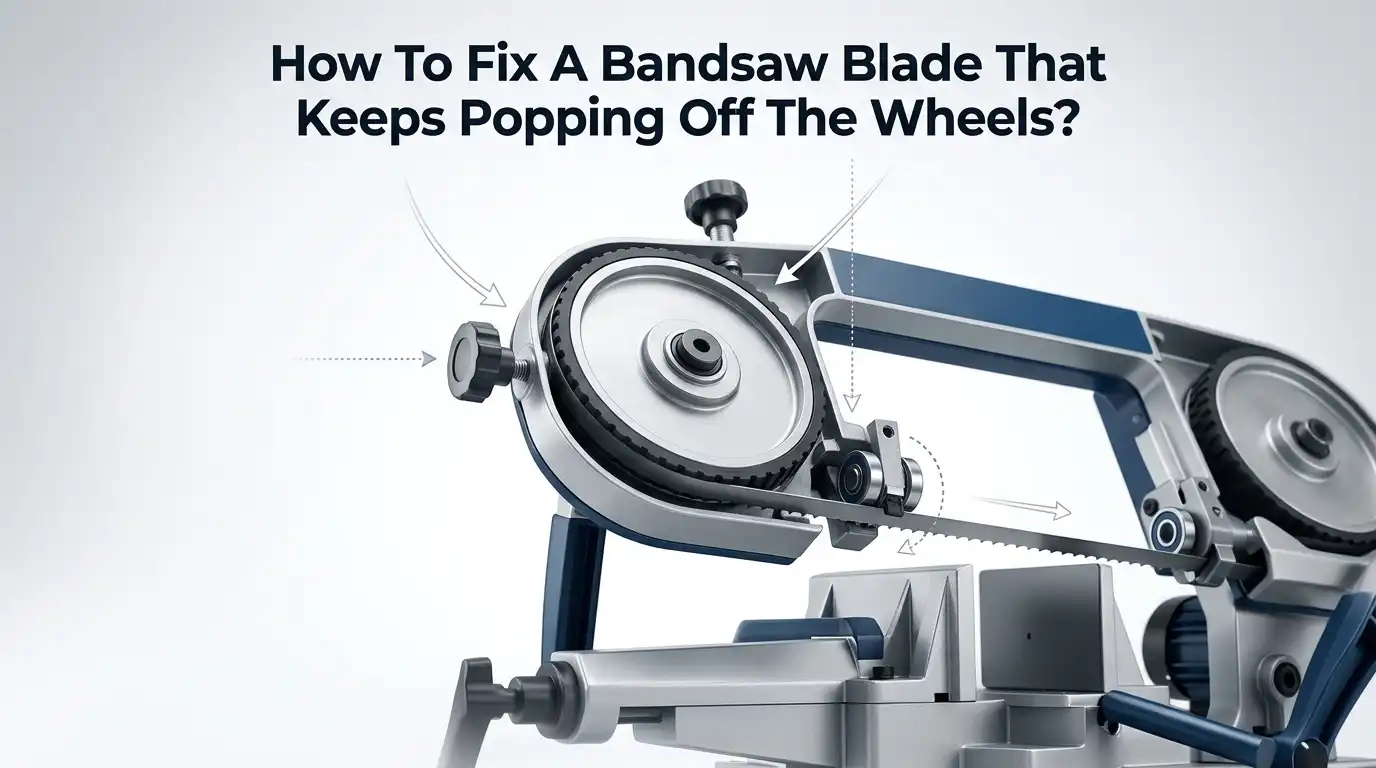
A bandsaw blade stays on the wheels only when several parts work together. The blade needs the right tension. The tracking needs to be set right. The tires need a good shape. The guides need to support the blade without forcing it. The wheels also need to line up well.
If one part is off, the blade can start to walk forward or backward. Then it slips off. Low tension is a common cause. Worn tires are another big one. A poor blade match can also do it, especially if you use a very narrow or damaged blade for heavy cuts.
The good part is this. The problem is rarely random. The pros of a full check are clear. You find the root cause and stop repeat trouble. The cons are simple too. It takes a little time and patience. Still, that time saves far more time than fighting the same issue all week.
Start with a safe shutdown and a calm inspection
Before you touch anything, unplug the saw. Open the wheel doors. Lower the guide post. Then look at the whole blade path from top wheel to bottom wheel. This first look matters because it shows you what is wrong before adjustments hide the clues.
Check if the blade is hanging forward, riding too far back, or twisted. Look for sawdust packed on the tires. Look for a damaged tire edge. Spin the wheels by hand and watch for wobble. A slow visual check often tells you more than ten random adjustments.
The pros of this method are safety and accuracy. You work without panic and reduce the chance of forcing the wrong fix. The cons are that it feels slow if you want a fast answer. Do it anyway. Most tracking problems start to make sense the moment you stop the saw and really look.
Make sure the blade is the right size for your saw
A blade that is the wrong length will never track well for long. If it is too long, tension may never get high enough. If it is too short, you may force the saw past its safe range. Check your saw manual and confirm the exact blade length your machine needs.
Blade width matters too. A very narrow blade can be harder to keep stable during straight heavy cuts. A wide blade may not suit tight curves or small saws. Use the blade size your saw supports and match the width to the work you plan to do.
The pros of using the correct blade size are better tracking, less stress on the saw, and easier setup. The cons are minor. You may need more than one blade size in the shop. That is normal. One blade cannot do every job well, and forcing it often leads to the wheel popping problem.
Install the blade the right way every time
A blade can come off the wheels if it is installed backward, twisted, or seated poorly. The teeth should point down toward the table at the front cutting edge. That sounds basic, but it is a very real mistake after a rushed blade change.
Seat the blade on both wheels and center it roughly before you add full tension. On many saws, the blade rides near the center of the tire. On some setups, wider blades may sit a little differently. Follow your saw manual first if it gives a specific wheel position.
The pros of careful blade install are obvious. You remove simple errors before chasing deeper issues. The cons are only that you must slow down and check your work. That small pause helps a lot. A clean install gives you a stable starting point for tension, tracking, and guide setup.
Set blade tension with care, not force
Too little tension lets the blade wander and climb off the wheels. Too much tension can stress the blade, wheel bearings, and saw frame. The goal is correct tension, not maximum tension. Start with your saw scale if it has one, then fine tune from there.
A simple shop method is the finger deflection check. With guides backed off, press the blade sideways on the open span. It should move a little, not a lot. Another common method is the flutter test. That method can work well if you know the steps and use care.
The pros of the scale method are speed and repeat use. The cons are that many saw scales are not exact. The pros of the flutter method are better real world feel. The cons are that it takes more care and confidence. Never crank tension blindly. That often makes the problem worse.
Track the blade by hand before you power up
Tracking should be adjusted with the saw off while you turn the upper wheel by hand. Make a very small tracking change, rotate the wheel, and watch where the blade wants to settle. Keep going until the blade stays in a steady position on the wheel.
This is one of the most useful fixes for a blade that keeps popping off. If the blade tracks too far forward or too far back, it can slip right off. Small adjustments matter here. A tiny turn can move the blade more than you expect.
The pros of hand tracking are safety, control, and clear feedback. The cons are that it takes a few minutes and some patience. That is worth it. Do not skip straight to cutting. If the blade will not stay stable during hand rotation, it will not behave once the motor starts.
Reset the side guides and thrust bearings after tracking
Many people adjust the guides too soon. That creates a false problem because the guides push the blade while you are still trying to set tracking. Back the guides away first. Track the blade. Then bring the guides back in after the blade is running where it should.
Set the side guides just behind the tooth gullets, not on the teeth. Keep them very close, but do not let them pinch the blade at idle. Set the thrust bearing just behind the blade so it supports under load, not all the time. Guides should support, not steer.
The pros of proper guide setup are cleaner cuts, better blade support, and less twist in the blade. The cons are that guide adjustment can feel fussy on some saws. Still, it matters a lot. Tight guides, crooked guides, or guides touching the teeth can push a good blade right off course.
Clean and inspect the tires on both wheels
Bandsaw tires do more than hold the blade. Their shape helps the blade track. If the tires are dirty, flat, cracked, loose, or worn unevenly, the blade can drift and jump off. Resin, pitch, and packed dust also reduce grip and change blade position.
Use a clean cloth and the cleaner your saw maker allows. Inspect the tire crown or top shape. Look for flat spots, chunks missing, or edges that are breaking down. Spin the wheel and watch for a section that lifts or dips. A worn tire often hides in plain sight.
The pros of cleaning tires are low cost and fast results. The cons are that cleaning only helps if dirt is the real cause. Replacing tires has bigger pros if they are worn. You restore proper tracking support. The cons are extra cost and more setup time. If the tire is damaged, replacement wins.
Check if the wheels are out of line
If your blade position looks different on the top and bottom wheels, the wheels may be out of plane. That can force you to fight the tracking knob every time you change blades. It can also make a blade walk off even after good tension and guide setup.
A straightedge check can help. With the blade tensioned for normal work, place a straightedge across the wheel faces as your saw design allows. Then see if the other wheel sits in the same plane. Wheel alignment affects everything from tracking to cut quality.
The pros of checking wheel alignment are big. You uncover a root cause that simple tuning cannot solve. The cons are that adjustment may be more advanced than guide or tension changes. Do not rush it. If your saw manual shows shims or axle adjustments, follow that path with care.
Inspect the blade for damage, dullness, or a bad weld
Sometimes the saw is fine and the blade is the real problem. A blade with a bad weld, bent band, dull teeth, or worn back edge may refuse to track well. You may hear a click each time the weld passes. You may also see the blade jump at one spot on every wheel turn.
Take the blade off and inspect it in good light. Look at the weld line. Check for cracks, twists, or a section that looks bell mouthed or worn more than the rest. A damaged blade cannot be tuned into health. It needs to go.
The pros of replacing a bad blade are fast relief and more stable cutting. The cons are cost and the need to keep a spare blade on hand. That spare is worth it. If you waste an hour tuning around a bad blade, the new blade is usually the cheaper choice anyway.
Match the blade to the cut and slow your feed rate
A blade can pop off because the cut loads it too hard. Feeding stock too fast pushes the blade backward into the thrust bearing and side guides. It can also twist the blade, especially in curves or thick stock. The saw then loses its stable path on the wheels.
Use a wider blade for straight resaw work and a narrower blade for tighter curves. Pick a tooth pattern that suits the material. Then feed at a steady pace. Let the blade cut. Do not shove the work. A bandsaw likes steady pressure, not force.
The pros of changing feed rate are instant and free. The cons are that slower cutting can test your patience. Using the right blade for the job has clear pros too. You reduce strain and get better cuts. The cons are simple. You need more than one blade type in regular use. That is part of good bandsaw work.
Replace worn parts in the right order
If the blade still comes off after the basic setup, stop chasing tiny adjustments and look for worn parts. Common trouble parts include tires, guide bearings, guide blocks, tension springs, wheel bearings, and tracking hardware. One loose or worn part can undo everything else.
Replace the parts that directly affect blade path first. That usually means the blade, the tires, and worn guide parts. Then check the tension system and wheel bearings if the problem stays. Fixing the path first gives you the best shot at a lasting result.
The pros of part replacement are long term stability and less repeat tuning. The cons are cost and time. Still, worn parts do not heal. If your saw is older, a fresh set of tires and guides can transform how it tracks. That often works better than endless adjustment of tired hardware.
Build a repeatable setup routine so the problem stays gone
The best fix is a routine you can repeat every time you change blades. Start with the saw unplugged. Install the blade correctly. Add basic tension. Track it by hand. Set final tension. Adjust guides and thrust bearings. Spin the wheels again. Then make a short test cut in scrap wood.
This order matters because each step supports the next one. If you jump around, you can create a new problem while trying to fix the old one. A simple routine beats random tweaking every single time. That is how you make the fix stick.
The pros of a routine are speed, confidence, and fewer surprises later. The cons are small. You must stick to the same order even when you feel rushed. Do that, and your bandsaw becomes easier to trust. Most blades that keep popping off are really asking for a better setup habit.
Frequently Asked Questions
Should a bandsaw blade sit in the exact center of the wheel?
Many saws work best with the blade near the center of the tire, but not every saw uses the exact same blade position. Some saws, blade widths, and wheel styles track a little differently. The safest move is to check your manual and then set tracking so the blade runs stable without drifting. If it stays put by hand and during a short test run, you are close.
Can low blade tension really make the blade pop off?
Yes. Low tension is one of the most common causes. A loose blade can wander, twist, and ride off the wheel edge. That said, too much tension can also create trouble by stressing the saw and the blade. Aim for correct tension, not maximum tension. If your saw scale seems doubtful, use a careful real world method to fine tune it.
Should the guides touch the blade all the time?
No. The side guides should sit very close, but they should not pinch the blade when it is idle. The thrust bearing should also sit just behind the blade so it supports during cutting pressure, not all the time. If the guides touch constantly, they can heat the blade and push it out of line. Support is good. Forcing is bad.
How do I know if the tires need replacement?
Look for cracks, flat spots, missing chunks, loose fit, or a worn shape. Also look for heavy dirt, resin, and pitch buildup. Clean tires can often improve tracking fast, but damaged tires usually need replacement. If the blade refuses to stay in place even after good tension and tracking, worn tires should move high on your suspect list.
Can a bad blade weld cause tracking trouble?
Yes. A poor weld can create a click, bump, or jump every time that section passes the guides or wheels. It may also make the blade ride unevenly. If you see one trouble spot on every full turn, inspect the weld closely. A blade with a bad weld is rarely worth long setup work. Replacing it is often the best answer.

Hi, I’m Leah Ray — the voice behind CraftBench Vault. I’m a passionate woodworking enthusiast dedicated to reviewing the best wood cutting tools and woodworking products. Through honest research and hands-on experience, I help fellow crafters make smarter buying decisions. Welcome to my workshop!