How To Fix Table Saw Kickback Issues When Ripping Boards?
Kickback is the scariest thing that can happen at a table saw. One second you push a board through the blade, and the next second that board flies back at your chest at over 50 feet per second.
It happens in less than a blink. The wood can punch through a wall, break a rib, or pull your hand straight into the spinning teeth. If you rip boards often, you have probably felt that sudden jolt at least once.
The good news is simple. Kickback is not random, and it is not bad luck. It follows clear physical causes that you can fix. Once you understand why a board lifts and launches, you can stop it before you flip the switch.
In a Nutshell:
- Kickback has three core causes. The board binds between the blade and fence, the board drifts into the rising rear teeth, or the kerf pinches shut on the blade. Fix these three and you stop most kickback.
- Your riving knife is your best friend. This curved metal plate sits behind the blade and stops the kerf from closing. Never rip without it unless you run a dado stack.
- Fence alignment matters more than you think. A fence that angles toward the blade at the rear creates a deadly funnel. Keep it parallel or angle it slightly away from the blade.
- Your body position can save your life. Always stand to the side of the board, never directly behind it. A flying board cannot hit a spot where you are not standing.
- Good push sticks and featherboards give you control. They keep the board flat, tight to the fence, and away from your hands during the whole cut.
- Properly milled wood prevents binding. A board with a straight, jointed edge and a flat face rides smoothly and does not twist into the blade.
What Table Saw Kickback Actually Is
Kickback is when your table saw blade grabs the wood and throws it back toward you. The blade spins toward you at the front and away from you at the back. When wood touches the rising teeth at the rear of the blade, those teeth lift it and fling it. This happens at staggering speed.
Tests with high speed cameras show a board can launch in around three thousandths of a second. That is far faster than any human reaction time. A 1.5 pound piece of walnut can hit with roughly 140 pounds of force.
You cannot dodge it and you cannot catch it. Your only defense is prevention. Understanding this speed is the first step, because it shows why “being careful in the moment” is never enough on its own.
The Three Main Causes Of Kickback When Ripping
Every kickback traces back to one of three causes. First, the board gets pinched between the blade and the fence. When the wood binds, the blade shoves it back harder than you can push it forward.
Second, the board drifts sideways over the back of the blade, and the rear teeth catch it like a slingshot. Third, the kerf squeezes shut behind the blade and clamps onto the spinning steel.
Knowing which cause you face tells you which fix to use. Pinching points to a fence problem or a thin rip gone wrong. Drifting points to feed technique or unmilled wood.
A closing kerf points to internal wood stress or a missing riving knife. Most real kickbacks combine two of these. Keep these three pictures in your head, because every solution below targets at least one of them.
How To Align Your Rip Fence Parallel To The Blade
A misaligned fence is the most common hidden cause of kickback. The worst setup is a fence that toes in toward the blade at the rear. This makes the gap narrower at the back, which funnels the board straight into the rising teeth. You must check and fix this first.
Here is the step by step method. Mark one tooth on your blade with a marker. Rotate that tooth to the front and measure the distance from the fence to the tooth.
Then rotate the same tooth to the rear and measure again. Using the same tooth removes any blade warp from your reading. Adjust the fence until both numbers match within a few thousandths of an inch.
Pros: This fix costs nothing, takes ten minutes, and solves binding at the root.
Cons: Some budget fences drift out of alignment over time, so you must recheck them regularly.
The Power Of Toeing The Fence Out Slightly
Once your fence sits parallel, you can add a small safety margin. Many experienced woodworkers angle the fence outward by about one sixty fourth of an inch at the rear of the blade. This is called toeing out. It means the gap between blade and fence is slightly wider behind the blade than in front of it.
Why does this help? The board passes the front of the blade, then moves away from the rear teeth instead of into them. This tiny gap removes the funnel effect completely. Set it by loosening your fence, nudging the back end away from the blade a hair, and locking it down.
Pros: It builds in protection even if your fence shifts a little.
Cons: Too much toe out leaves a rough cut edge or burns the wood, so keep the angle small.
Why The Riving Knife Is Your Most Important Tool
If you remember one thing from this guide, remember this. The riving knife is the single best defense against kickback. It is a curved metal plate that sits right behind the blade. It fills the kerf so the wood cannot drift into the rear teeth and cannot pinch shut on the blade.
The riving knife rises, falls, and tilts with the blade. This means you can leave it on for almost every cut, including bevels and thin rips.
All table saws sold since around 2007 include one by law. Set it just below the top of the blade and align it with the side of the teeth that face the fence. The only time you remove it is for dado cuts.
Pros: It stops two of the three kickback causes at once and needs no resetting.
Cons: It must come off for non through cuts like grooves, and you must remember to put it back.
Splitters For Older Saws Without A Riving Knife
If you own an older table saw, you may not have a riving knife. You cannot retrofit a riving knife onto most legacy saws, but you can add a splitter. A splitter does the same basic job. It sits behind the blade and keeps the kerf open so the wood does not pinch.
The difference is that a splitter stays fixed and does not move with the blade. When you lower the blade for thin stock, the gap grows, which weakens its protection. A great option is a zero clearance insert with a built in splitter. You glue a thin wooden or aluminum fin into the kerf slot of the insert.
Pros: A splitter is cheap, easy to make, and far better than running bare.
Cons: It does not adjust with blade height and must be removed for non through cuts.
Setting Up Featherboards The Right Way
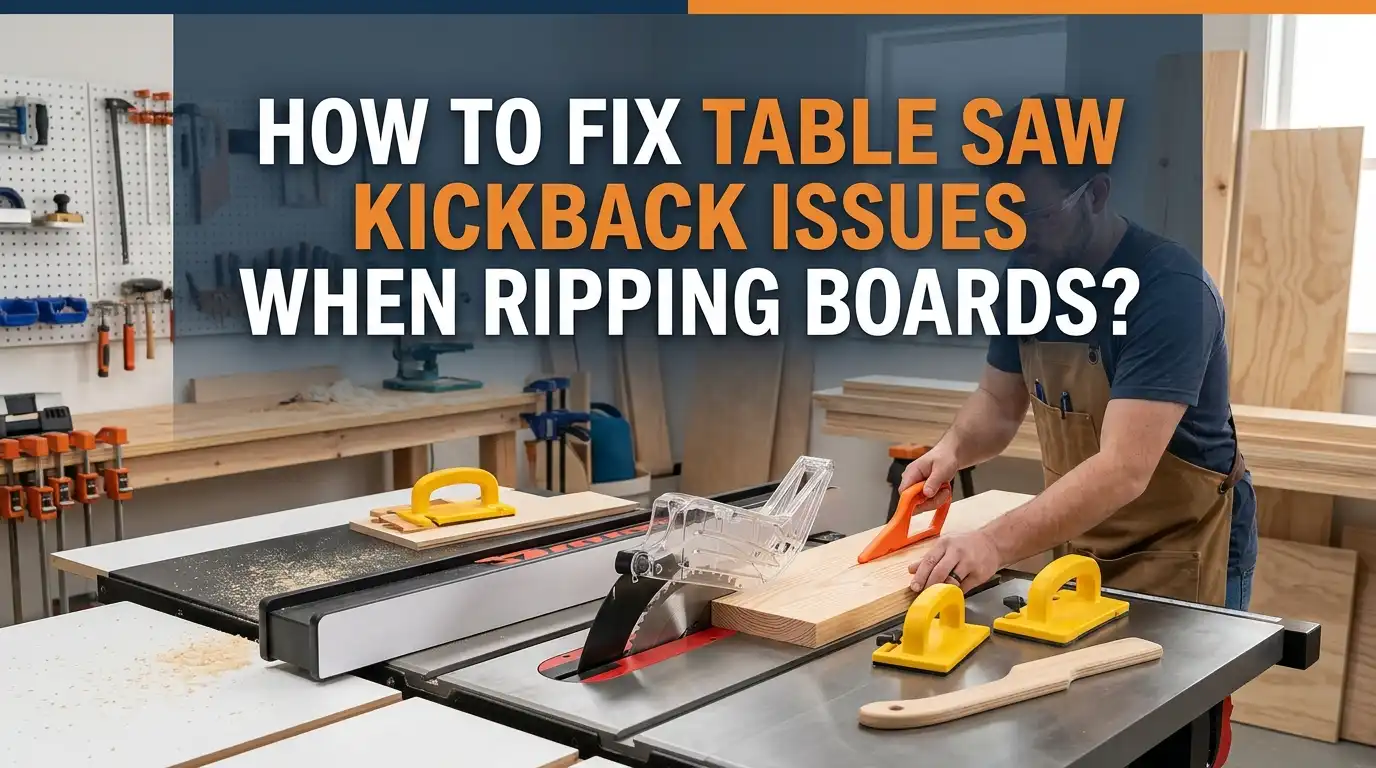
A featherboard is a board with flexible angled fingers that press your stock tight against the fence. This keeps the wood from drifting sideways into the rear teeth. It is the next best thing after a riving knife, especially for long rips and thin strips.
Here is the critical rule. Always place the featherboard in front of the blade, never beside it or behind it. If you press the offcut against the blade behind the cut, you create kickback instead of preventing it. Set the fingers so they flex firmly against the board before the wood reaches the blade, then clamp the featherboard down hard.
Pros: It gives steady sideways pressure and frees your hands to push safely.
Cons: You usually must reset it for every new board width, which slows you down a little.
Using Push Sticks And Push Blocks Correctly
Your hands should never get close to the blade during a rip. A good push stick keeps your fingers safe and gives you control over the board. The thin plastic push sticks that come with many saws only push forward. They do not stop the board from lifting or drifting.
A better tool is a long push block with a wide base. It lets you push the board forward, press it down into the table, and hold it tight against the fence all at once. Use the simple rule of thumb: spread your hand wide, and if your thumb to pinky span is wider than the gap between blade and fence, grab a push stick.
Pros: Push blocks add three directions of control and keep your hands far from danger.
Cons: The heel can wear down over time, so check and replace worn push sticks.
Milling Your Stock Before You Rip
Crooked wood causes kickback even with perfect saw setup. A board that is bowed, cupped, or twisted cannot ride a fence in a straight line. It rocks and shifts, and that movement steers it into the rear teeth.
Before you rip, make sure your board has one flat face and one straight, square edge. The flat face lays on the table, and the straight edge rides against the fence. If you have a jointer, use it.
If not, a planer sled or a straight edge jig works too. Also let kiln dried lumber sit in your shop for a few days. This lets the wood settle so it does not pinch the blade as internal stress releases mid cut.
Pros: Milled stock cuts cleaner, safer, and more accurately.
Cons: It adds prep time and may need tools you do not yet own.
Standing In The Safe Zone Every Time
You cannot always prevent kickback with perfect setup, so your body position is your last line of defense. Slow motion footage shows that every kicked board flies toward the front of the saw. But the wood almost always twists off to one side as it launches.
The fix is simple. Stand to the side of the board you are ripping, on the opposite side from the fence, never directly behind it. This keeps your body out of the direct path. Keep your weight balanced so you do not fall forward toward the blade if something slips. Use a push stick so you never have to lean over the blade to finish the cut.
Pros: Costs nothing and protects you even when other defenses fail.
Cons: It feels awkward at first and takes practice to make it a habit.
Handling Thin Rips And Tricky Cuts Safely
Thin rips cause more kickback than almost any other cut. A narrow strip can wedge between the blade and fence and shoot back like an arrow. These cuts need extra care and a smarter approach.
The trick is to set up your cut so the thin piece is the offcut, not the piece trapped against the fence. Keep the wider section between the blade and fence, and let the thin strip fall away freely on the outside.
Always use a featherboard and a long push stick for these cuts. For repeat thin strips, a dedicated thin rip jig holds the spacing on the left side of the blade, away from the fence pinch point.
Pros: This method removes the pinch danger and keeps your hands clear.
Cons: It requires extra jigs and slower, more deliberate feeding.
Blade Height, Sharpness, And Anti Kickback Pawls
Small details on the blade itself affect kickback risk. Set your blade so only about one eighth of an inch, or one tooth tip, rises above the wood. A blade set too high contacts more of the board and grabs it more aggressively during a slip.
A sharp, clean blade also matters. A dull or pitch covered blade forces you to push harder, which raises the chance of binding and drift. Keep your blades clean and sharp. Many saws also include anti kickback pawls, which are small toothed arms that drag over the wood and dig in if it tries to fly back.
Pros: Correct blade height and sharp teeth reduce drag and binding for free.
Cons: Pawls can scratch the wood surface and sometimes get left off because they are fussy.
Building A Pre Cut Safety Routine
The best way to stop kickback is to build a habit you repeat before every rip. A quick checklist takes one minute and catches problems before they hurt you. Run through it every single time, even on a fast cut.
Check that your riving knife or splitter is installed. Confirm the fence sits parallel or toed out slightly. Set the blade height to one tooth above the stock. Place your featherboard in front of the blade and grab your push stick. Make sure your stock is milled flat and straight.
Then position yourself to the side, take a breath, and feed the board with steady forward, down, and sideways pressure. Push it fully past the back of the blade. If the cut ever feels like it is forcing, shut off the saw and find out why.
Frequently Asked Questions
What is the number one cause of table saw kickback when ripping?
The most common cause is a fence that is not parallel to the blade, especially one that angles toward the blade at the rear. This pinches the board between the blade and fence. The board then binds and launches back. Check your fence alignment first if you keep getting kickback.
Can I prevent kickback without a riving knife?
Yes, but it is harder and less safe. If your saw has no riving knife, install a splitter or a zero clearance insert with a built in splitter. Add a featherboard in front of the blade and always use a push stick. A riving knife is still the best tool, so use one if your saw supports it.
Why does my board pinch the blade in the middle of a cut?
This usually means the wood has internal stress that releases as you cut, closing the kerf onto the blade. A riving knife or splitter holds the kerf open and stops this. Letting your lumber acclimate to your shop for a few days before cutting also reduces this problem.
Where should I stand to avoid getting hit by kickback?
Stand to the side of the board, on the opposite side from the fence, never directly behind the blade. Every kicked board flies toward the front of the saw, so staying out of that direct line keeps you safe. Use a push stick so you never lean over the blade.
Is it safe to rip very thin strips on a table saw?
It can be, with the right setup. Arrange the cut so the thin strip is the offcut that falls free on the outside of the blade, not the piece trapped against the fence. Use a featherboard, a push stick, and a thin rip jig for repeat cuts. This removes the pinch danger.
Do anti kickback pawls really work?
They help, but they are a backup, not a primary defense. The toothed arms dig into the wood if it starts to fly back, slowing or stopping the launch. They work best combined with a riving knife and proper technique. Do not rely on pawls alone to keep you safe.

Hi, I’m Leah Ray — the voice behind CraftBench Vault. I’m a passionate woodworking enthusiast dedicated to reviewing the best wood cutting tools and woodworking products. Through honest research and hands-on experience, I help fellow crafters make smarter buying decisions. Welcome to my workshop!