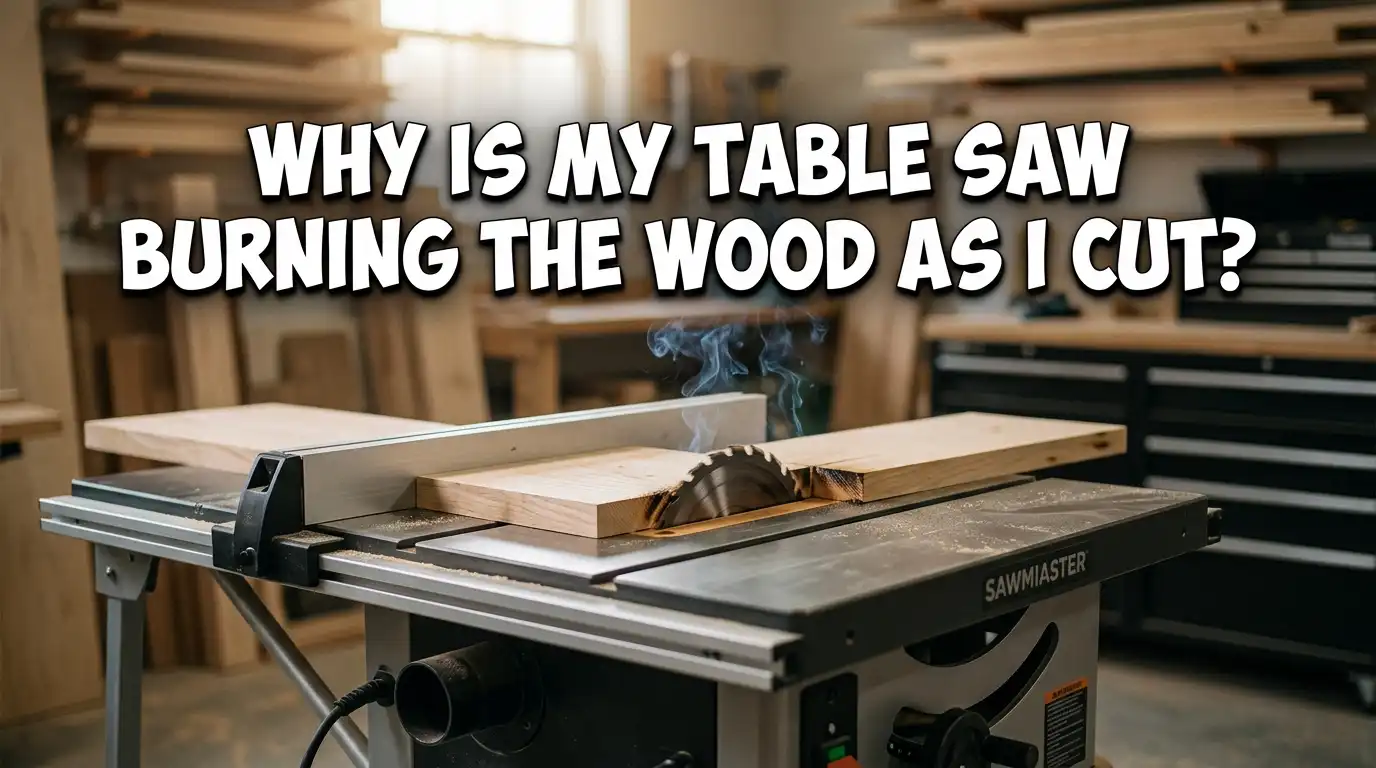
Why Is My Table Saw Burning the Wood as I Cut?
You make a cut, pull the board back, and there it is. A dark, scorched line running right along the edge. Burn marks on your wood are frustrating.
They look bad, they smell worse, and they mean extra sanding before you can finish your project. The good news is that burning wood is one of the most fixable problems on a table saw.
Most of the time, the cause is simple. A dirty blade, a tool that needs adjusting, or a small habit you can change. In this post, you will learn exactly why your table saw burns wood and how to stop it for good.
In a Nutshell:
- A dirty or dull blade is the number one cause. Pitch and resin build up on the teeth, create friction, and burn the wood. Clean the blade first and replace it if the teeth are worn.
- Your fence must sit parallel to the blade. Even a tiny misalignment causes the wood to rub against the side of the blade and scorch. Aim for the blade and fence to match within a few thousandths of an inch.
- Feed speed matters more than you think. Pushing the wood too slowly is the most common mistake. Keep the board moving at a steady, confident pace through the cut.
- The right blade for the job prevents heat. Use a rip blade with fewer teeth for ripping and a high tooth count blade for crosscuts. The wrong blade traps heat.
- Wood tension and moisture can pinch the blade. Damp or stressed boards close on the blade after the cut. A splitter or riving knife keeps the gap open.
- Burn marks are usually a sign of friction and heat. Fix the source instead of just sanding the marks away each time.
What Burn Marks on Wood Actually Mean
A burn mark is simply scorched wood. It happens when the blade rubs against the wood instead of slicing through it cleanly. That rubbing creates friction, and friction makes heat. When the heat builds up high enough, it darkens and burns the surface of the cut.
Think of it like rubbing your hands together fast. The faster and longer you rub, the hotter they get. A table saw works the same way. The blade should be cutting, not rubbing.
When you see burning, your saw is telling you that something is causing extra contact between the blade and the wood. Once you find that source of friction, the burning stops. Every fix in this post works by reducing heat and friction in some way.
Reason 1: Your Blade Is Dirty
A dirty blade is the most common cause of burning, and most people never think to check it. As you cut, sap, pitch, and resin from the wood stick to the teeth and the body of the blade. This buildup is invisible at a glance but it changes how the blade cuts.
The gunk dulls the cutting edge and makes the blade drag through the wood. More drag means more heat, and more heat means burn marks. Pine, cherry, and other resin heavy woods cause this fast.
To clean your blade: Remove it from the saw. Lay it in a shallow pan with a blade cleaner, simple green, or a citrus based degreaser. Let it soak for a few minutes. Scrub the teeth with an old toothbrush or brass brush. Rinse, dry it fully, and reinstall.
Pros: Cheap, quick, and often solves the problem completely.
Cons: You need to remove the blade, and harsh cleaners can damage the carbide if left soaking too long.
Reason 2: Your Blade Is Dull
If you clean the blade and still get burning, the blade may simply be worn out. A dull blade no longer slices cleanly. Instead, it pushes and rubs its way through the wood, and that friction scorches the surface.
You can spot a dull blade in a few ways. The cuts feel harder to push. The motor sounds like it is working too hard. The wood comes out rough or fuzzy on the edge. A sharp blade should glide through the cut with little effort.
You have two choices here. You can send the blade to a sharpening service, or you can buy a new one. A quality carbide blade can be sharpened several times before it needs replacing.
Pros of sharpening: Cheaper than buying new and good for the environment.
Cons of sharpening: Takes time, and very cheap blades are not worth the cost to sharpen.
Reason 3: The Wrong Blade for the Cut
Using the wrong blade is a sneaky cause of burning. Blades are built for different jobs, and the tooth count makes a big difference in how much heat the cut produces.
A rip blade has fewer teeth, usually around 24. The big gaps between teeth, called gullets, clear sawdust fast and run cooler during long rip cuts. A crosscut blade has many teeth, often 60 to 80, for smooth cuts across the grain.
Here is the trap. If you use a high tooth crosscut blade to rip a long board, the many teeth and small gullets trap heat. That trapped heat burns the wood. The blade simply cannot clear the sawdust fast enough.
Pros of matching the blade: Cleaner cuts, less heat, and an easier feed.
Cons: You may need to own two or three blades and switch between them.
Reason 4: Your Fence Is Not Parallel to the Blade
This is one of the biggest causes of burning during rip cuts, and it catches almost everyone. If the fence is not perfectly parallel to the blade, the wood gets squeezed against the side of the blade as it passes through.
The back of the blade then rubs the wood instead of letting it slide free. That rubbing creates heat right where the burn shows up. You will often see the scorch on the fence side of the cut.
To check alignment: Mark one tooth on the blade. Measure from that tooth to the fence at the front. Rotate the blade and slide the wood back, then measure that same tooth at the rear. The two measurements should match within about 0.003 inches. Adjust the fence until they do.
Pros: Fixes burning permanently and improves every cut you make.
Cons: Takes patience and a careful measuring tool to get right.
Reason 5: The Blade Is Not Aligned with the Miter Slot
Before you blame the fence, check the blade itself. The blade should sit parallel to the miter slot in your table. Many fences are set by referencing the miter slot, so if the blade is off, everything else is off too.
When the blade leans even slightly to one side, the body of the blade scrapes the wood as it passes. This rubbing scorches both the wood and the blade. It can also cause kickback, so this fix improves safety as well.
To check: Use a combination square or dial indicator. Measure from the miter slot to the same marked tooth at the front and back of the blade. Adjust the trunnions under the table until both readings match.
Pros: Solves burning, kickback risk, and rough cuts all at once.
Cons: Adjusting trunnions can be fiddly and may require crawling under the saw.
Reason 6: You Are Feeding the Wood Too Slowly
Many people slow down because they feel nervous near the blade. That instinct makes sense, but feeding too slowly is a top cause of burning. When the wood barely moves, the same spot on the blade spins against it over and over.
That repeated contact builds heat fast and scorches the surface. The blade needs to keep biting fresh wood to stay cool. A steady feed gives each tooth a clean piece to cut.
The fix: Push the board through at a confident, steady pace. The motor should hum, not bog down or scream. Practice on scrap to find the right speed. A push stick keeps your hands safe so you can feed without hesitation.
Pros: Costs nothing and often fixes burning instantly.
Cons: Feeding too fast strains the motor and can cause rough cuts or kickback, so balance is key.
Reason 7: The Wood Is Pinching the Blade
Sometimes the wood itself is the problem. Boards hold internal tension and moisture. As you rip a board, that tension releases and the cut can close up behind the blade. The two halves squeeze together and pinch the spinning blade.
That pinch creates instant friction and burning, and it can also cause dangerous kickback. Green or damp wood does this far more than dry, seasoned lumber. Hardwoods like maple and oak are common offenders.
The fix: Use a splitter or riving knife behind the blade. This thin piece of metal keeps the cut open so the wood cannot close on the blade. Letting wet wood dry before cutting also helps a lot.
Pros: A riving knife stops pinching and greatly improves safety.
Cons: You cannot control wood tension fully, and some boards will always move.
Reason 8: Your Blade Height Is Wrong
Blade height changes how the teeth meet the wood, and that affects heat. If the blade sits too low, more of the tooth stays in the wood at one time. That longer contact builds heat and raises the chance of burning.
There are two schools of thought here. Some woodworkers raise the blade so only the bottoms of the gullets clear the top of the wood. A higher blade cuts more aggressively and stays cooler because the teeth pass through quickly. Others prefer a lower blade for safety.
The fix: For tricky cuts on burn prone wood, try raising the blade a bit higher than usual. Test on scrap first.
Pros: A higher blade reduces heat and cuts faster.
Cons: More exposed blade means a higher safety risk, so always use a guard and push stick.
Reason 9: Your Saw Lacks Enough Power
The motor on your saw plays a quiet role in burning. An underpowered saw struggles with thick hardwoods. When the motor cannot keep the blade spinning fast under load, the blade slows down inside the cut.
A slow blade rubs instead of slicing, and that rubbing burns the wood. You will hear the motor drop in pitch and bog down. This problem shows up most on contractor saws ripping thick oak or maple.
The fix: You cannot add power easily, but you can work around it. Take lighter cuts. Feed at a steady pace the motor can handle. Keep the blade sharp and clean so the saw works less hard. For very thick stock, make two passes at half depth.
Pros: Smart technique gets good results from a small saw.
Cons: A true fix means buying a more powerful saw, which costs real money.
Reason 10: Featherboards and Pressure Points
Featherboards help you make safe, accurate cuts by holding the wood against the fence. But if you place one wrong, it can press the wood into the blade and cause burning.
A featherboard set right next to or behind the blade pushes the cut wood against the spinning teeth. That extra pressure creates friction and scorches the edge. The same goes for pushing too hard sideways by hand.
The fix: Place the featherboard ahead of the blade, never beside or behind it. This holds the board steady before the cut without squeezing it against the blade during the cut. Let the wood move freely once it passes the teeth.
Pros: Correct placement gives safe, smooth, burn free cuts.
Cons: Setting up featherboards takes a moment, and bad placement makes things worse.
How to Remove Burn Marks That Are Already There
Sometimes the damage is done and you just want a clean board. The good news is that burn marks are usually shallow. They sit on the surface and come off without much trouble.
The simplest method is a smart cutting trick. Cut your board about an eighth of an inch oversized first. Then move the fence to the final size and take a thin skim cut. This shaves off the burned edge in one clean pass.
For boards you cannot recut, sanding works well. Start with 120 grit and work up to 180 or 220. A card scraper also removes burns fast without rounding the edge.
Pros of the skim cut: Fast, clean, and leaves a crisp edge.
Cons: Wastes a little wood, and you need extra width to start with.
Simple Habits to Prevent Burning for Good
The best way to stop burning is to build a few good habits into your routine. These small steps keep your saw cutting cool and clean every time you turn it on.
First, clean your blade often, not just when it looks dirty. A monthly soak keeps pitch from building up. Second, check your alignment every few months and after moving the saw. Settings drift over time.
Third, feed at a steady, confident pace. Do not creep through cuts. Fourth, keep a sharp blade ready and match the blade to the cut. Finally, use your riving knife on every cut it allows.
Pros: These habits prevent burning before it starts and make every cut better.
Cons: They take a little discipline and regular attention to keep up.
Frequently Asked Questions
Why does my table saw only burn on one side of the cut?
Burning on one side, usually the fence side, almost always points to alignment. Your fence or blade is not parallel, so the wood rubs against the blade on that side. Check that the blade sits parallel to the miter slot first, then set the fence parallel to the blade.
Can a brand new blade still burn wood?
Yes, a new blade can burn wood. The blade may be the wrong type for your cut, like a fine crosscut blade used for ripping. New blades also burn if your fence is misaligned, if you feed too slowly, or if the wood pinches the blade. A new blade does not fix a setup problem.
Does feeding wood faster always stop burning?
Faster feeding helps when you have been pushing too slowly, which is common. But feeding too fast strains the motor, leaves rough cuts, and raises kickback risk. The goal is a steady, confident pace, not a race. Listen to your motor and keep it humming steadily through the cut.
How often should I clean my table saw blade?
Clean your blade whenever cuts feel harder or the wood starts to scorch. As a habit, a monthly cleaning works well for regular use. If you cut a lot of pine, cherry, or other sappy woods, clean it more often. Pitch builds up faster than most people expect.
Is burning wood a sign my saw is dangerous?
Burning itself is mostly a quality issue, but it can point to risks. A pinching board or misaligned blade that causes burning can also cause kickback. If you notice burning along with the wood grabbing or the motor bogging down, stop and check your riving knife and alignment before continuing.
Will a riving knife stop all burning?
A riving knife stops burning caused by the wood pinching the blade, which is one common cause. It will not fix burning from a dirty blade, a dull blade, poor alignment, or slow feeding. Think of it as one tool that solves one specific cause. You still need to address the other reasons too.

Hi, I’m Leah Ray — the voice behind CraftBench Vault. I’m a passionate woodworking enthusiast dedicated to reviewing the best wood cutting tools and woodworking products. Through honest research and hands-on experience, I help fellow crafters make smarter buying decisions. Welcome to my workshop!